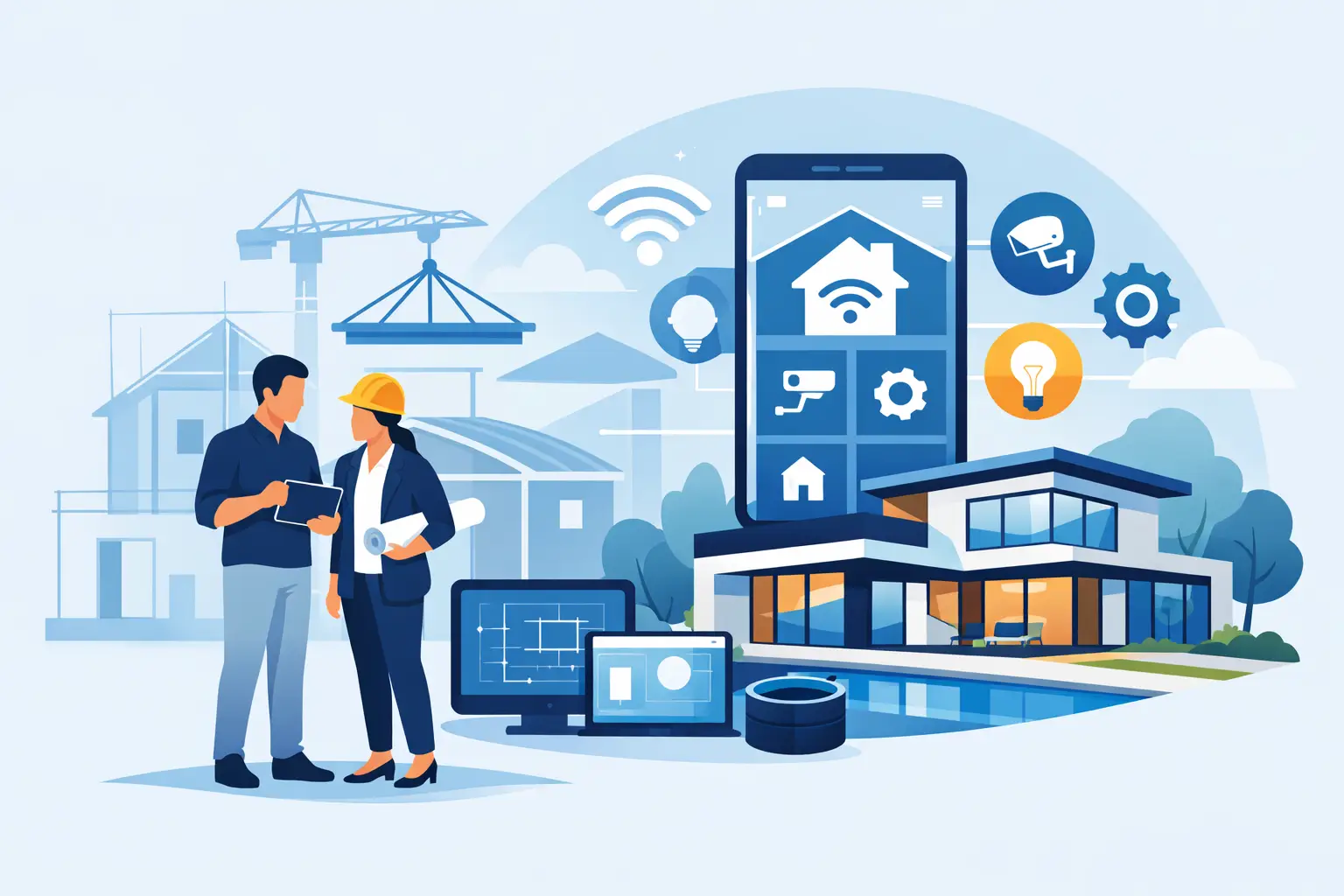
A custom home can be beautifully finished and still disappoint its owner if the Wi-Fi drops in the primary suite, the television wall was not planned for the equipment, or window treatments need multiple remotes. The right technology partner for custom home builders helps prevent those moments before drywall goes up. Their work is not an add-on at the end of a project. It is part of creating a home that feels comfortable, connected, and easy to live in from day one.
For builders, this is about more than adding another trade partner. It is about protecting the client experience, reducing late-stage changes, and delivering a finished home where every system has a thoughtful place.
Why Technology Planning Belongs in the Build Schedule
Low-voltage systems touch nearly every room in a modern custom home. Wi-Fi coverage depends on properly placed access points and wiring. Whole-home audio needs speaker locations that work with the ceiling plan. Motorized shades need power where the window design requires it. Television and projection systems need framing, conduit, power coordination, and a clean path for equipment.
When these decisions are delayed, the result is often visible compromise. Equipment gets squeezed into closets that run hot. Wires are exposed. Wireless coverage relies on a single router in the basement. A homeowner moves in with a collection of apps, remotes, and workarounds instead of simple control.
Early coordination gives the builder and homeowner more choices. It also makes pricing clearer. A client can decide where they value higher-performance audio, dedicated theater space, stronger outdoor Wi-Fi, or automated shades while changes are still practical. That is far easier than opening finished walls or revising millwork late in the project.
What a Technology Partner for Custom Home Builders Should Provide
A capable integration partner does not simply install products specified by someone else. They ask how the home will be used, translate those answers into a plan, and coordinate with the people building the home.
That begins with a discovery conversation. Will the family work from home? Are there children with different entertainment needs? Is the home designed for frequent gatherings? Are there large areas of glass where glare and privacy matter? Does the owner want technology to disappear into the architecture, or is a dedicated media room part of the vision?
The answers shape the system design. A well-planned technology package may include structured wiring, managed Wi-Fi, distributed audio, lighting control, television placement, theater design, and motorized window treatments. The best combination depends on the home, the homeowner, and the budget. Not every home needs every feature, but every home benefits from a plan.
A clear infrastructure plan
The infrastructure behind the walls is where long-term flexibility begins. Structured wiring provides dependable pathways for network connections, media equipment, future upgrades, and devices that perform better with a wired connection. Conduit in strategic locations can also save a homeowner from costly revisions years later.
This planning should account for more than the obvious rooms. Outdoor living spaces, home offices, garages, guest suites, and lower levels all have different connectivity needs. A technology partner should identify those needs early rather than assuming one central location will serve the entire property.
Coordination with the build team
Custom construction is a sequence of dependencies. Electricians need to know where power is required. Framers need details for recessed speakers, television backing, and projection components. HVAC planning can affect equipment locations. Interior designers may need fixture details, keypad finishes, speaker grille options, and shade fabric samples.
A dependable partner communicates clearly with the builder and trades. They provide plans that can be used in the field, attend coordination meetings when needed, and keep decisions moving. The goal is not to make the project more complicated. It is to keep technology work organized so the job stays on schedule.
A homeowner experience that feels natural
Homeowners do not want a technical manual for ordinary tasks. They want to adjust lights, enjoy music, watch a game, lower shades, and get reliable internet without thinking about the systems making it happen.
That requires more than quality equipment. It requires thoughtful programming, clean installation, and a handoff process that makes the homeowner comfortable. The controls should be intuitive. Equipment should be accessible for service without becoming part of the room’s visual clutter. The system should fit daily routines rather than asking the family to adapt to it.
The Builder Benefits Are Practical
A strong technology relationship supports the builder’s reputation as much as the homeowner’s lifestyle. Clients remember the details they use every day. They notice whether video calls are clear in the office, whether music is easy to enjoy on the patio, and whether the great room television looks intentional rather than improvised.
There are practical project benefits as well. With the right partner, builders can expect fewer change orders caused by missed low-voltage requirements, clearer responsibility between trades, and less last-minute pressure around move-in. A documented plan also helps when homeowners request an upgrade after closing, since the original system design is already understood.
For builders who complete several homes each year, consistency matters. A trusted partner learns the team’s standards, preferred construction methods, and common client requests. That familiarity can make each project more efficient while still allowing the home to feel personal.
Questions to Ask Before Choosing a Partner
Experience matters, but it should be matched with process. Before bringing a technology integrator into a custom build, ask how they approach design, coordination, installation, and support.
Start with these questions:
- How early do you prefer to join the project, and what information do you need from the builder?
- Can you provide a room-by-room plan that the electrician, framer, and designer can use?
- How do you handle equipment placement, ventilation, and service access?
- What is included in homeowner training and post-installation support?
- How do you plan for future needs without overspending on features the client may never use?
The responses reveal whether the company sees itself as an installer or a long-term project partner. A good answer should be specific, calm, and focused on the build process as well as the finished result.
Avoiding Common Technology Mistakes in Custom Homes
One of the most common mistakes is treating Wi-Fi as a single device purchase. Larger homes, dense construction materials, outdoor areas, and multiple connected devices call for a designed network, not a router placed wherever internet service enters the house. Coverage, capacity, and equipment placement should be considered together.
Another mistake is choosing television locations without considering viewing height, sunlight, speaker placement, equipment storage, and cable paths. A screen can be mounted almost anywhere, but a comfortable and polished viewing area takes more planning.
It is also easy to underestimate the value of centralized, well-labeled equipment. A tidy technology cabinet or dedicated equipment area makes troubleshooting, service, and future changes much easier. It does not need to be oversized or overly complex. It simply needs adequate space, power, cooling, and access.
Finally, avoid specifying every feature before learning how the homeowner lives. A focused system that works reliably is more valuable than a long feature list that creates confusion. The best designs put the right technology in the right places and leave room to grow when it makes sense.
A Better Experience at Move-In and Beyond
The final walkthrough is when careful planning becomes visible. The homeowner sees a clean television installation, hears audio that fills the rooms they use most, connects easily throughout the property, and controls key features without a stack of remotes. Just as important, they know who to call if they need help later.
Tri-County Technology works with custom home builders to make these details feel considered rather than complicated. From early design conversations through installation and support, the focus stays on practical systems that perform reliably and complement the home.
A well-built custom home should not ask its owners to troubleshoot their lifestyle. Plan technology early, coordinate it carefully, and give every system a simple role in making the home more enjoyable each day.


Comments are closed