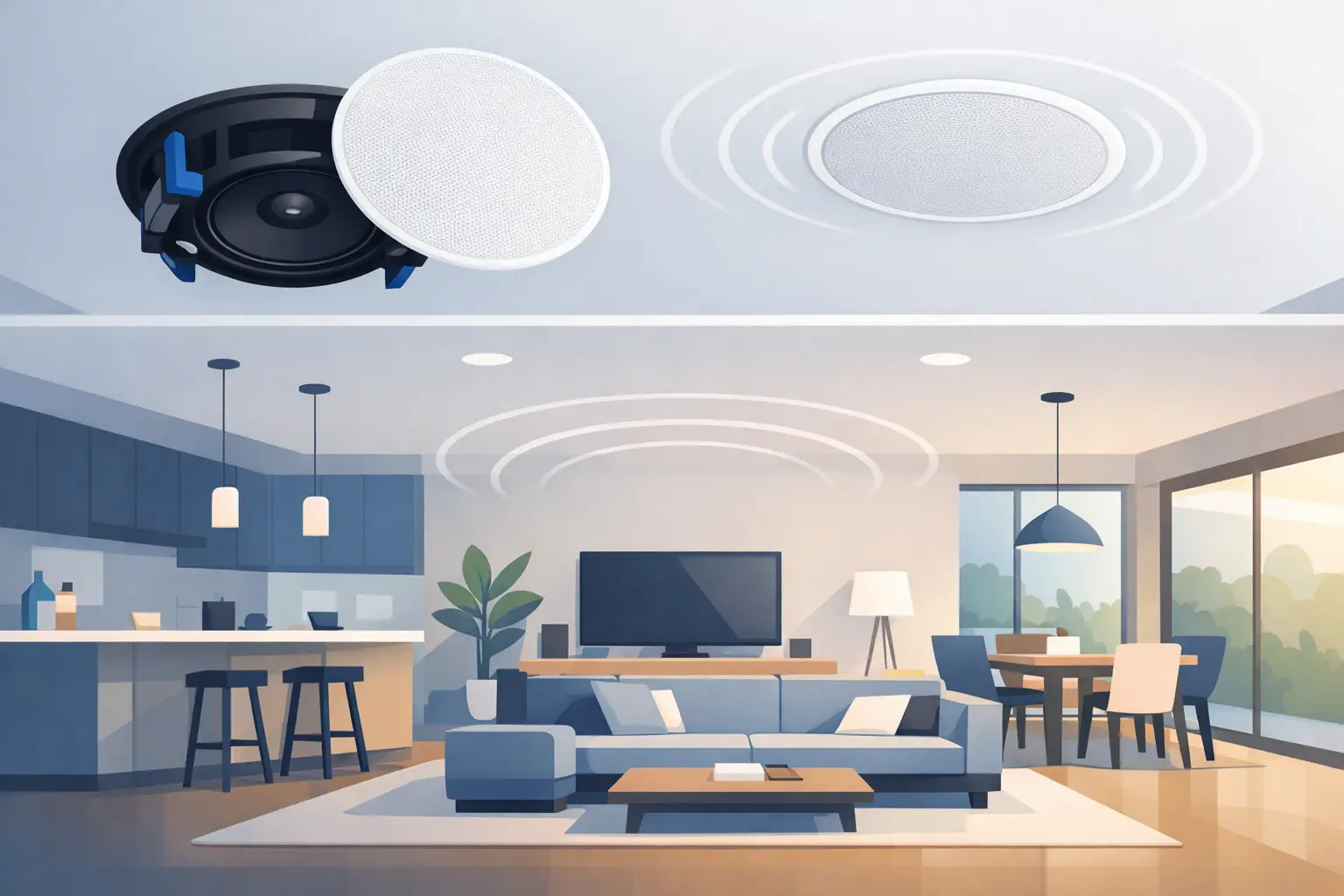
A great room can be the center of daily life: coffee in the kitchen, conversation at the island, a game on the TV, and music carrying through it all. That is also why ceiling speakers for open floorplans need more thought than a simple pair placed wherever there is open drywall. In a large, connected space, the goal is not just louder sound. It is comfortable, even coverage that feels natural from one activity area to the next.
A properly designed in-ceiling audio system keeps counters clear, avoids speaker clutter, and gives the room a finished appearance. More importantly, it makes music easy to enjoy at the volume people actually use every day. The right plan accounts for room size, ceiling height, furnishings, listening habits, and the way the home is divided into living areas.
Why Open Floorplans Change the Audio Plan
Traditional rooms have walls that contain sound and create obvious places for speakers. Open floorplans do not. A kitchen may flow directly into a dining area and family room, often with hardwood floors, tall ceilings, large windows, and other hard surfaces that reflect sound.
When a system is designed around only one listening spot, people near the speakers may hear music that is too prominent while people at the far end of the room hear very little. The usual response is to turn up the volume. That can make the room sound harsh rather than more enjoyable.
The better approach is distributed audio. Several carefully placed ceiling speakers can play at a lower, more comfortable level while filling the full footprint of the space. Instead of hearing one loud source, you experience consistent background music as you move from the kitchen to the sofa or dining table.
This matters especially in homes where music is part of the routine. A system should support a weeknight dinner, weekend entertaining, and quiet morning listening without asking anyone to rearrange the room around equipment.
Choosing Ceiling Speakers for Open Floorplans
Speaker quality matters, but layout matters just as much. A premium speaker placed in the wrong location cannot deliver the balanced coverage a large room needs. During the design process, consider these core decisions together rather than treating them as separate purchases.
Start with zones, not just square footage
An open floorplan may look like one large room, but it can serve several distinct purposes. The kitchen, dining area, family room, and adjacent patio door area may all benefit from music, yet they do not always need to operate the same way.
A single audio zone works well when the entire area is used as one shared space and the same music should play everywhere. Separate zones offer more flexibility when family members regularly use different areas for different activities. For example, someone may want soft music in the kitchen while the family room is focused on TV audio.
The right answer depends on how the space is lived in. Zoning adds equipment and planning, but it can make the system simpler to use in the long run because each area responds the way people expect.
Use more speakers at lower volume
For most open spaces, adding coverage is better than relying on a small number of speakers turned up high. Evenly spaced speakers reduce hot spots and help voices and instruments sound more balanced across the room.
The exact number depends on the room’s shape, ceiling height, and speaker model. A long kitchen and family room combination may need more coverage than a square great room with the same total square footage. Vaulted or two-story ceilings also change the plan because sound has farther to travel before reaching the listening area.
A professional design considers the speaker’s dispersion pattern, which is the area it covers effectively. Wider-dispersion speakers can be useful in some layouts, while more focused models may be a better fit for high ceilings or defined listening areas.
Match the speaker to the room’s purpose
Not every ceiling speaker needs to do the same job. In a kitchen or dining area, clear, balanced music at conversational volume is often the priority. In a family room where movies, sports, and focused music listening are common, ceiling speakers may be part of a larger system that includes TV audio, dedicated front speakers, or a subwoofer.
This is where expectations matter. In-ceiling speakers are excellent for whole-home music and ambient sound. They are not always the best primary choice for a theater-style front soundstage, where dialogue and on-screen action should feel anchored to the television. A well-planned system can combine both approaches without filling the room with visible components.
Do not overlook bass and detail
Ceiling speakers can deliver satisfying full-range sound, especially when selected and installed correctly. Still, open rooms can absorb or disperse lower frequencies, particularly when there are large volumes of air, vaulted ceilings, or multiple connected areas.
For homeowners who enjoy fuller music, a properly integrated subwoofer can add warmth and impact without requiring the main speakers to work too hard. Placement is important. A subwoofer does not need to dominate the room, but it should be located where it supports even bass rather than creating a boomy corner.
The source material also makes a difference. High-quality streaming services, reliable Wi-Fi, and a well-designed audio system help the music sound clean and consistent. If wireless coverage drops out at the far end of the house, the experience will not feel dependable no matter how good the speakers are.
Placement Details That Make a Big Difference
Speaker placement should follow the furniture plan and traffic flow, not just a symmetrical grid on a blueprint. In an open floorplan, the center of the room may be a walkway rather than a place where people spend time. The best speaker locations often sit over the seating, dining, and kitchen work areas instead.
Avoid placing speakers directly above a primary seat when possible. Sound arriving from slightly in front of or around the listening position generally feels more natural than sound focused straight down from overhead. At the same time, speakers should not be pushed too close to walls, cabinets, beams, or HVAC elements that may affect sound or limit installation options.
Ceiling height deserves early attention. An eight- or nine-foot ceiling offers a very different listening experience from a twelve-foot vaulted ceiling. In higher spaces, the system may need speakers with different coverage characteristics, added speakers, or careful aiming to maintain clarity at normal listening levels.
For new construction and renovations, planning before drywall is installed offers the most flexibility. Wiring can be routed cleanly, speaker locations can be coordinated with lighting and architectural details, and future expansion can be considered without opening finished ceilings later. Retrofit installations are also very achievable, but they benefit from a site visit and a clear understanding of what is behind the drywall.
Controls Should Feel Effortless
The best audio system is one people use. That means control should be straightforward, whether it is through a familiar app, a wall keypad, or a simple voice command. A homeowner should be able to choose a source, adjust volume, and select rooms without sorting through complicated menus.
For open-concept homes, one-touch scenes can be particularly helpful. A morning setting might play a favorite playlist in the kitchen at a gentle volume. An entertaining setting could bring music to the kitchen, dining area, and adjacent living space together. These controls should fit naturally into the household routine, not become another device to manage.
Clean installation supports that simplicity. Properly matched grilles can blend into the ceiling, equipment can be organized in a practical location, and wiring remains out of sight. The room keeps its architectural character while the sound is ready whenever it is wanted.
A Better Result Starts with a Listening Plan
Before choosing speaker sizes or finishes, think about how the room sounds during real life. Where do people gather? Which areas need music most often? Is the priority casual background listening, TV and movie sound, entertaining, or a combination of all three?
Tri-County Technology designs audio systems around those answers, with placement and controls chosen to support the way a home is actually used. A thoughtful plan gives an open floorplan consistent, comfortable sound without adding visual clutter or daily complexity.
When the music feels present but never demanding, the technology has done its job quietly in the background.


Comments are closed