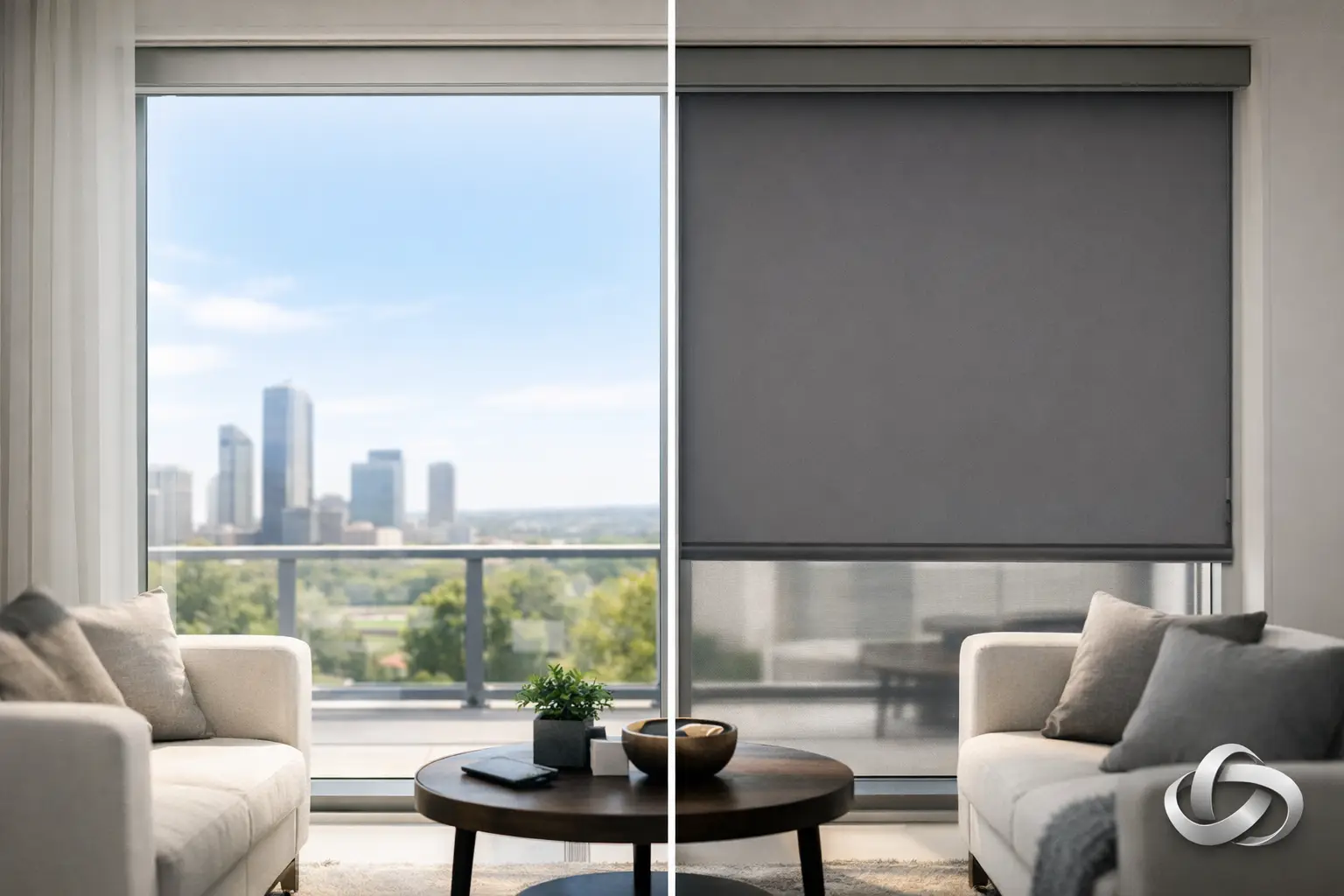
The choice between smart tint verses motorized shades usually gets framed as a style decision. In real homes, it is more often a comfort and usability decision. The right option depends on how you want a room to feel at 7 a.m., in the middle of a sunny afternoon, and after dark when privacy matters most.
Both solutions help manage sunlight and visibility, but they do it in very different ways. One changes the glass itself. The other adds a physical layer over the window. That difference affects everything from appearance and automation to maintenance, budget, and how satisfied you will be living with it every day.
Smart tint verses motorized shades: the core difference
Smart tint is a switchable film or glass that changes from clear to frosted or tinted when power is applied. It is popular in spaces where a clean, modern look matters and where people want privacy without covering the window with fabric or hard treatments.
Motorized shades are window coverings that raise, lower, or adjust on command. Depending on the fabric and style, they can filter light, darken a room, reduce glare, add softness to the design, and create privacy. They can operate from a wall keypad, handheld remote, app, schedule, or voice control as part of a larger smart home setup.
At a glance, smart tint often wins on minimalism. Motorized shades usually win on flexibility. That is the short version, but the better answer depends on what problem you are actually trying to solve.
What each option does best
Smart tint is strongest when the main goal is privacy with a clean architectural look. It works especially well in bathrooms, entry sidelights, home offices, conference rooms, and interior glass walls where curtains or shades can feel bulky or out of place. With the glass still exposed, the space keeps a sleek appearance.
Motorized shades are stronger when you need more than privacy. They can soften harsh sun, protect furnishings from UV exposure, darken media rooms, reduce glare on TVs and laptops, and improve comfort throughout the day. They also give you more choices in how much light enters the room. Sheer fabrics, solar screens, light-filtering materials, and blackout options all behave differently.
That range matters. If a homeowner says, “I want less glare in the afternoon but I still want daylight,” motorized shades offer precise ways to get there. Smart tint may help, depending on the product, but it typically does not offer the same variety of light-control performance as a well-chosen shade fabric.
Privacy is not the same as light control
This is where people often make the wrong call.
Smart tint can create privacy fast, which makes it appealing in areas where you want instant discretion. But privacy does not always equal sun control. Some smart films turn frosted rather than truly blocking incoming light. That means the room can still be bright even when visibility is reduced.
Motorized shades handle privacy and light more independently. You can choose a fabric that preserves some view out during the day, or one that blocks nearly everything when lowered. In bedrooms and media spaces, blackout shades are hard to beat. In living areas, solar shades can preserve a connection to the outdoors while reducing glare.
If your room is uncomfortable because of heat and direct sun, not just visibility, shades usually give you more useful control.
Aesthetics and how the room feels
There is no universal winner here. It depends on the architecture and the interior design goals.
Smart tint looks clean, modern, and quiet. It suits contemporary homes, offices, and spaces with large expanses of glass where you want the windows to remain visually unobstructed. If the design priority is minimal hardware and a crisp finish, smart tint makes sense.
Motorized shades add texture and visual warmth. They can disappear into pockets or clean valances, but they still contribute to the design of the room. In many homes, that is a good thing. Windows often benefit from softness, especially in bedrooms, living spaces, and offices where acoustics and comfort matter as much as the view.
For many homeowners, the deciding factor is not which option looks more advanced. It is which one makes the room feel more complete.
Smart tint verses motorized shades for automation
Both can be automated, but the user experience is different.
Smart tint is simple in operation. You turn it on or off, or in some products switch between a few states. That simplicity can be appealing if you want a straightforward privacy control with little thought required.
Motorized shades offer more scene-based control. They can rise in the morning, lower on the sunny side of the house in the afternoon, and close at sunset for privacy. In a thoughtfully designed system, they work with lighting and other smart home features so comfort feels automatic instead of managed.
This is where professional integration matters. A good system should feel intuitive, not like one more thing to troubleshoot. For homeowners who want technology to stay in the background, motorized shades often fit naturally because they can be programmed around daily routines.
Installation and retrofit considerations
Smart tint can be elegant, but it is not always simple to add. Depending on the product, installation may involve replacing glass or applying a specialty film and hiding power connections cleanly. The quality of the finished result depends heavily on the installer and the window conditions.
Motorized shades are often more practical in retrofit projects. They can usually be added without changing the window itself, and there are hardwired and battery-powered options depending on the situation. In a new build, prewiring creates the cleanest result. In an existing home, careful planning still goes a long way.
If you are upgrading a lived-in home rather than starting from scratch, shades often create fewer surprises.
Maintenance, reliability, and daily ownership
Most buyers are not just choosing a product. They are choosing what it will be like to live with it for years.
Smart tint has fewer moving parts at the window, which sounds appealing. But the system still depends on electrical components and specialized materials. If there is a problem, service can be more specialized. Replacement costs can also be significant depending on the size and type of glass or film.
Motorized shades include moving hardware, but mature systems are dependable when properly specified and installed. Fabric selection, motor quality, power planning, and programming all matter. The benefit is that service paths are usually more familiar, and you have more options to update fabrics or settings later.
For many homes and small businesses, reliability is less about which product sounds more advanced and more about which one has been designed correctly from the start.
Cost and long-term value
Smart tint is often the more premium solution, especially on larger glass surfaces or custom applications. It can absolutely be worth it when the goal is a signature look or privacy in areas where conventional shades would feel awkward.
Motorized shades vary widely in cost based on window size, fabric, motor type, and control method. That flexibility makes them easier to scale. You might choose blackout shades in bedrooms, solar shades in living spaces, and a different treatment in a media room without forcing one approach everywhere.
Value comes from fit, not just price. If smart tint solves a specific architectural problem beautifully, it may be the right investment. If you need broad comfort improvements throughout a home, motorized shades often deliver more impact across more rooms.
When each one makes the most sense
Smart tint makes the most sense when privacy is the main need, the design calls for exposed glass, and the budget supports a specialty solution. It is a strong choice for bathrooms, offices, front entry glass, and selective areas where a clean look matters more than layered light control.
Motorized shades make the most sense when you want comfort, glare reduction, UV protection, energy support, and privacy in one system. They fit bedrooms, great rooms, sun-facing spaces, home theaters, offices, and whole-home projects especially well.
There are also cases where the best answer is both. A home office with interior glass may benefit from smart tint for privacy, while exterior windows use motorized shades for daylight management. A good design starts with the room, not the product category.
For homeowners in Northeast Ohio, that room-by-room thinking matters. Seasonal sun angles, changing daylight, and temperature swings can make window control feel less like a luxury and more like part of everyday comfort.
The smartest choice is usually the one that disappears into your routine. If your windows are easier to live with, your rooms feel better all day, and the controls make sense the first time you use them, you chose well.
Comments are closed