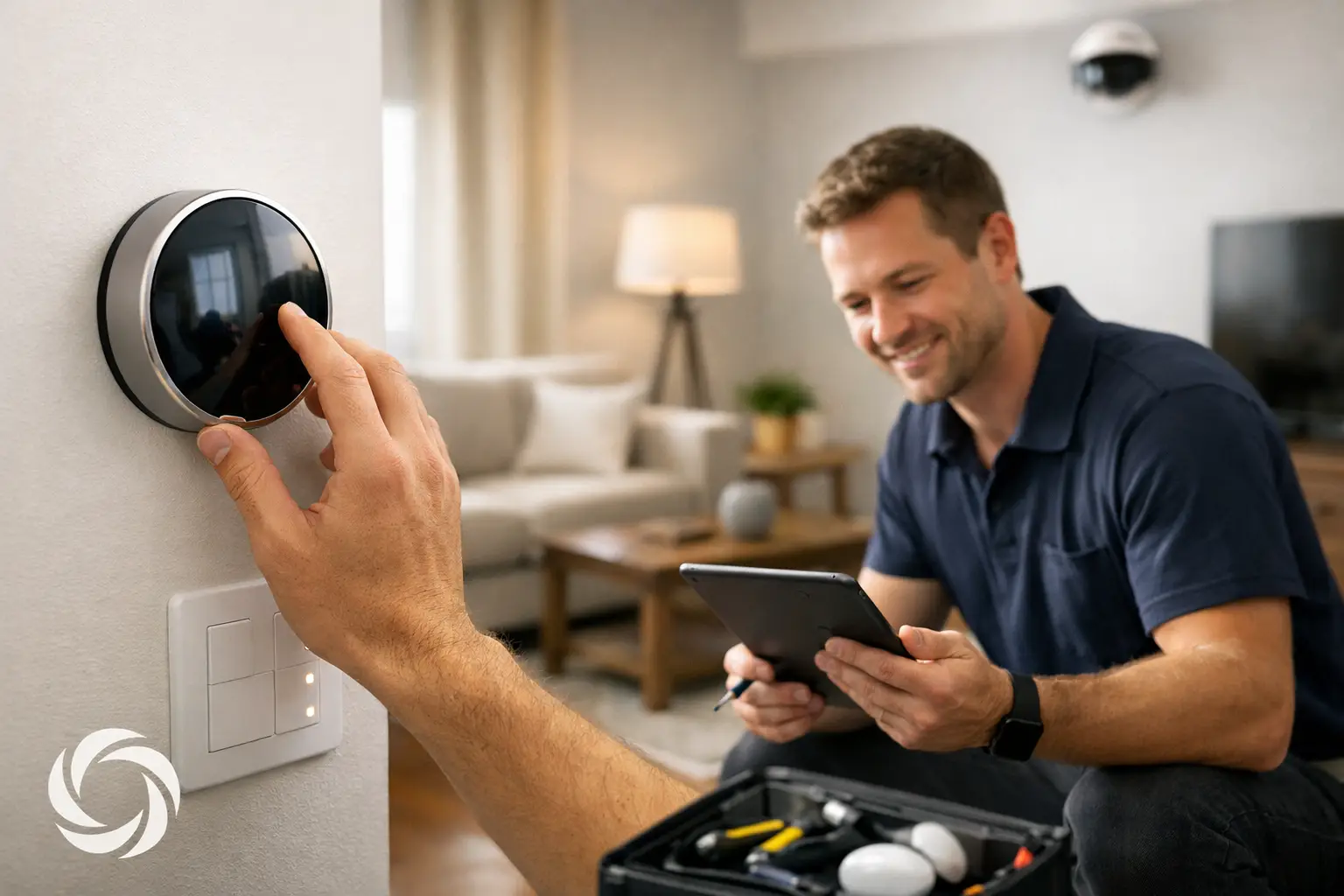
Most homes were not built with smart technology in mind. That does not mean they are stuck in the past. A well-planned retrofit smart home installation can add better lighting control, stronger Wi-Fi, smart security, distributed audio, and cleaner entertainment setups without opening every wall or turning your home into a construction zone.
The difference is in how the system is designed. Good retrofits are not about cramming gadgets into an older home. They are about choosing the right upgrades for the way you live, then installing them in a way that feels natural, dependable, and easy to use every day.
What retrofit smart home installation really means
In simple terms, retrofit smart home installation means adding modern connected technology to an existing home rather than starting from scratch in a new build. That might involve replacing a few switches, improving network coverage, adding cameras, mounting TVs properly, or integrating several systems into one clean control experience.
Retrofit work calls for a different mindset than new construction. In a new build, wiring paths are open and equipment locations are planned before drywall goes up. In an existing home, every decision has to respect finished surfaces, current electrical conditions, furniture layouts, and how the home is actually used. The goal is not just to make the technology work. The goal is to make it fit.
Where retrofits make the biggest difference
The most successful projects usually start with a pain point. Maybe your Wi-Fi drops out in the back bedroom. Maybe your living room TV setup looks cluttered. Maybe exterior lighting is inconsistent, or you want to check cameras while away. Those are practical problems, and smart technology can solve them when the solution is matched to the home.
Lighting control is often one of the easiest places to start. In many homes, replacing key switches and adding thoughtful automation can improve comfort immediately. Entry lights can turn on at sunset, kitchen scenes can simplify busy mornings, and bedtime routines can shut the house down with one command. The improvement feels less like a tech upgrade and more like the house simply working better.
Security and surveillance are another strong fit for retrofit projects. Existing homes can often support well-placed cameras, video doorbells, smart locks, and mobile alerts without major structural work. The real value is not just remote access. It is peace of mind when you are at work, on vacation, or simply upstairs and want to know what is happening outside.
Whole-home audio and media upgrades also benefit from professional retrofit planning. Wireless options have improved, but there are still trade-offs between convenience, sound quality, and long-term reliability. In some homes, a mix of discreet wired components and modern streaming control gives the best result. In others, a simpler setup is the right call. What matters is choosing a system that sounds good and stays easy to use.
Why planning matters more than products
A lot of homeowners start with devices. They buy a smart thermostat, then a few cameras, then a speaker, then a video doorbell, and pretty soon they have five apps and no real system. That is common, especially in retrofit situations where upgrades happen over time.
The problem is not the products themselves. The problem is lack of coordination. A retrofit smart home installation works best when the technology is planned as a connected environment, even if the work happens in phases. That means thinking through how lighting, network performance, security, entertainment, and control will interact before installation starts.
This is also where professional design becomes valuable. An experienced integrator can spot issues early, such as weak Wi-Fi coverage, poor device placement, overloaded power areas, or app combinations that create unnecessary friction. Those details affect daily use far more than most people expect.
The hidden foundation is usually the network
If there is one part of a retrofit that gets overlooked, it is the network. People naturally focus on visible features like cameras, speakers, and lighting, but the network is what allows everything to respond quickly and reliably.
Many existing homes have Wi-Fi dead zones, outdated equipment, or internet hardware placed wherever the provider happened to install it years ago. That setup may be fine for a laptop and a couple of phones. It is usually not ideal for a connected home with streaming devices, mobile control, surveillance footage, and multiple smart products running at once.
Upgrading the network does not always mean a dramatic overhaul. Sometimes it means repositioning equipment, adding properly placed access points, improving structured cabling where possible, and choosing enterprise-grade hardware that handles daily demand more consistently. It is not flashy, but it is often the reason a smart home feels dependable instead of frustrating.
What homeowners should expect during installation
Retrofit projects are more flexible than many people assume. Not every job requires cutting into walls, and not every system needs a full-home redesign. A good installer looks for the least invasive path that still delivers a clean and lasting result.
That said, retrofits do require realistic expectations. Older homes can present obstacles such as limited wiring routes, crowded utility areas, unusual framing, or past DIY work that needs correction. Some ideas are simple to implement. Others may require compromise or a phased approach.
For example, adding smart shades to a few key rooms may be straightforward, while doing every window at once may not make sense from a budget or power standpoint. Mounting a television above a fireplace may look attractive, but viewing height, heat exposure, and cable routing all need to be considered. These are not reasons to avoid the upgrade. They are reasons to approach it carefully.
Choosing upgrades that age well
The best retrofit systems are not necessarily the ones with the most features. They are the ones that will still make sense in a few years. Technology changes quickly, but your home still needs to feel calm and usable.
That is why it helps to prioritize function over novelty. Focus first on upgrades that improve comfort, safety, and reliability every day. Better coverage, better lighting behavior, cleaner entertainment setups, and easier security monitoring usually deliver more long-term value than trend-driven gadgets.
It also helps to think in layers. Start with the backbone, such as network improvements and core control planning. Then add the systems that matter most to your routine. A phased project often produces a better outcome than trying to force every idea into one rushed installation.
Professional retrofit smart home installation vs. DIY
DIY devices have their place. For a single plug, speaker, or thermostat, they can be a reasonable starting point. But once multiple systems need to work together across an existing home, the limits of DIY become more obvious.
Professional retrofit smart home installation brings structure to the process. You get product compatibility planning, cleaner installation, better device placement, stronger network support, and a control setup that is easier for everyone in the home to understand. Just as important, you avoid the common pattern of adding one more app, one more hub, and one more workaround every time a new problem appears.
There is also a practical service angle. When something underperforms, homeowners want a clear path to support. They do not want to spend Saturday afternoon searching forums to figure out why the porch camera went offline or why the family room music drops out during dinner.
For homeowners in Northeast Ohio, that local support can matter even more. Older housing stock, varied construction styles, and changing seasonal conditions all influence how systems perform. A retrofit planned with those realities in mind tends to hold up better over time.
A smarter home should still feel like home
The strongest retrofit projects are the ones you stop noticing after a week. The lights behave the way you want. The music starts when it should. The cameras are easy to check. The Wi-Fi works where it used to struggle. Nothing feels showy, and nothing asks for constant attention.
That is the standard worth aiming for. At Tri-County Technology, the right installation is not about filling a house with more tech. It is about making daily life simpler, cleaner, and more comfortable in a home you already love.
If you are considering upgrades, start by identifying where your current setup creates friction. That is usually where the best retrofit begins.


Comments are closed