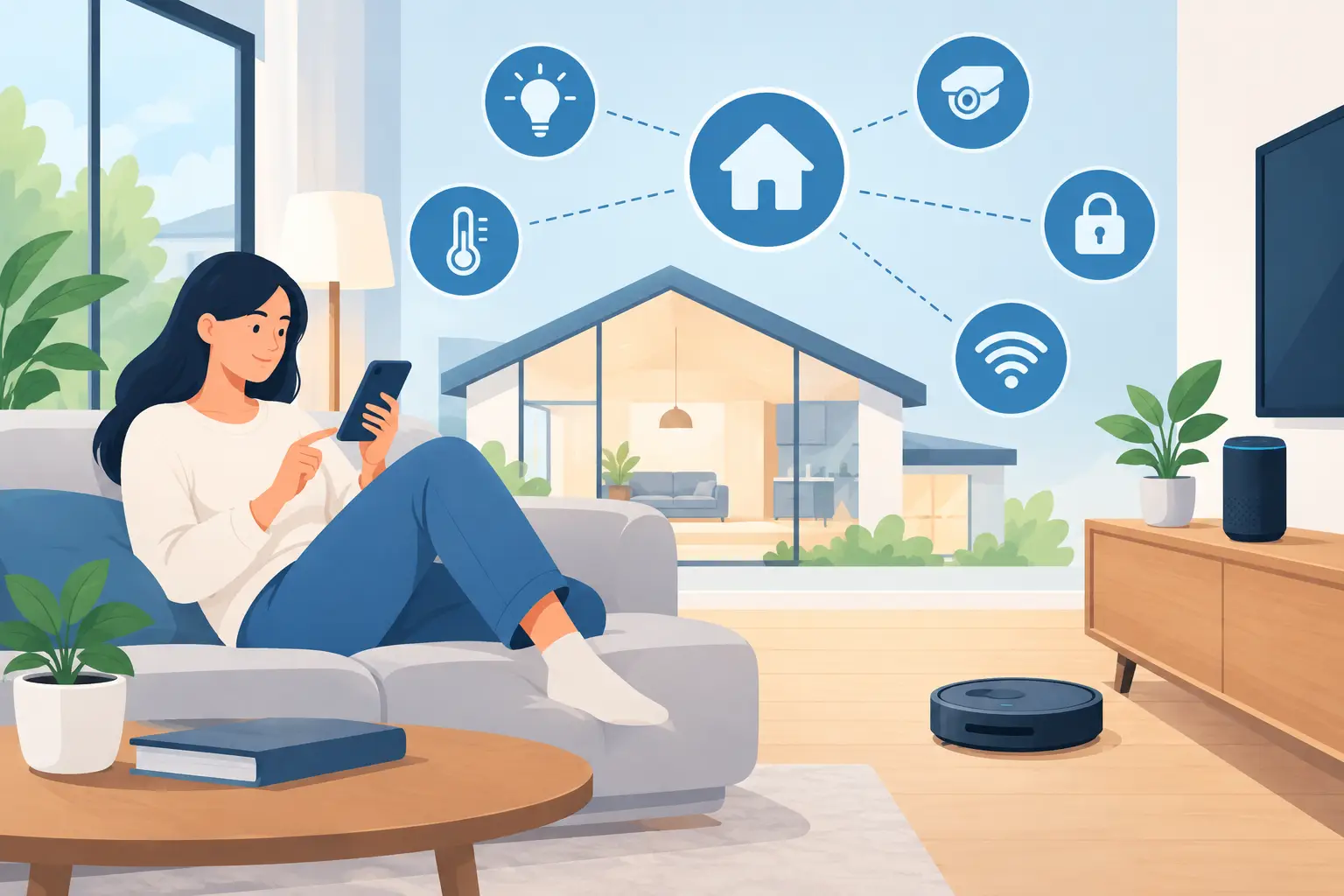
The best smart home features are rarely the ones that demand attention. They are the ones you notice when you walk in with groceries, settle in for a movie, work from a back bedroom, or leave for a weekend away. A well-designed system removes small points of friction from the day while keeping control simple for everyone in the home.
For homeowners planning a new build, renovation, or targeted upgrade, the goal should not be to add technology for its own sake. It should be to choose connected systems that improve comfort, visibility, entertainment, and reliability without creating another complicated app to manage. The right plan starts with how you live, then builds the technology around it.
Smart Home Features Should Solve Real Daily Problems
A house can have plenty of connected devices and still feel frustrating to use. Separate remotes, unreliable wireless signals, cords in the wrong places, and controls no one understands can quickly turn a promising upgrade into a daily annoyance.
Professional design changes that equation. Instead of treating each product as a separate purchase, an integrator considers the home as a connected environment. Where does Wi-Fi need to be strongest? Which rooms need music? What should happen when the family arrives home, starts a movie, or goes to bed? How can controls stay intuitive for guests, children, and anyone who does not want to troubleshoot technology?
That approach also matters for long-term dependability. Equipment can be replaced over time, but clean wiring, thoughtful equipment locations, and a flexible system plan provide a foundation that continues to serve the home as needs change.
Lighting Control That Fits the Rhythm of the Home
Lighting is one of the most useful places to begin because it affects nearly every room, every day. Smart lighting control can bring multiple fixtures together under simple wall controls, schedules, and scenes designed around familiar moments.
A morning setting might bring up kitchen and hallway lights gently before the rest of the house is active. An evening setting can soften the main living areas while leaving task lighting available where it is needed. For entertaining, one tap can create a more comfortable atmosphere without walking from room to room adjusting switches.
The benefit is not simply remote control from a phone. It is consistency. Families can use familiar keypads or voice commands, while automated schedules help exterior and common-area lighting respond predictably. The best setup still works naturally at the wall, even when a phone is not nearby.
Motorized Shades Add Comfort and Control
Motorized window treatments work especially well alongside lighting. Shades can help manage glare in a sunny room, protect furnishings from harsh afternoon light, and create a more comfortable setting for television or projection.
They can also support everyday routines. Raising shades in the morning and lowering them at night can make a home feel more responsive without asking anyone to make the same adjustments each day. In rooms with tall, hard-to-reach, or numerous windows, the practical value is even clearer.
Whole-Home Audio Without the Clutter
Music has a way of changing the feel of a home, but portable speakers often leave people dealing with charging, placement, and uneven sound from room to room. Whole-home audio offers a cleaner alternative by placing speakers where they belong and making them easy to control.
A homeowner might play a favorite station in the kitchen while preparing dinner, continue it on the patio, or keep a different source in the family room. Rooms can be grouped for a party or used independently when everyone has different plans. The system should make these choices clear, not force users through a maze of menus.
Speaker placement and system design matter as much as the equipment itself. Properly chosen in-ceiling, in-wall, or outdoor speakers can provide balanced sound while preserving the look of the room. This is particularly valuable in custom homes where clean sightlines and finished details deserve protection.
Better Wi-Fi Is the Foundation of Connected Living
Many smart home frustrations are really Wi-Fi frustrations. Video calls freeze in an upstairs office, streaming slows down in the evening, and devices work reliably in one room but not another. Adding a single consumer router rarely solves the underlying problem in a larger home or a home built with dense materials.
A professionally planned network is designed around coverage, capacity, and the places people actually use. That may include dedicated wireless access points, hardwired connections for high-demand equipment, and organized network hardware located where it can be maintained easily.
For a new build, structured wiring creates a strong starting point. Running the right low-voltage cabling before walls are closed makes it easier to support televisions, audio, wireless access points, and future upgrades without opening finished surfaces later. In an existing home, a careful site assessment can identify practical ways to improve performance with minimal disruption.
Entertainment That Starts Without a Stack of Remotes
A media room should feel inviting at the end of a long day, not like a technical project. Smart entertainment systems bring television, sound, streaming devices, and projection equipment into a straightforward experience with controls that make sense.
For some homes, that means a clean television installation with concealed wiring and reliable sound. For others, it means a dedicated theater with a projector, screen, immersive audio, and lighting scenes that prepare the room for a movie. The scale depends on the space and the family, but the principle stays the same: the technology should be easy to enjoy.
One well-programmed remote, keypad, or touch interface can replace a collection of remotes and reduce the usual question of which input to select. Equipment can be stored neatly in a rack or cabinet, helping the room look finished while allowing service and updates to be handled more efficiently.
Remote Awareness When You Are Away
Connected cameras and video doorbells can help homeowners keep an eye on important areas from wherever they are. Whether you are traveling, waiting for a delivery, or checking on a second property, clear video and reliable notifications provide useful awareness without requiring constant attention.
The difference between a helpful system and a noisy one often comes down to setup. Camera placement, viewing angles, recording options, and notification settings should be tailored to the property. Alerts should be meaningful, not so frequent that they get ignored. A professional installation also avoids the exposed wiring and improvised mounting that can distract from the exterior of a well-kept home.
How to Prioritize Features for a New Build or Upgrade
Not every project needs every feature on day one. A smart plan identifies what will make the biggest immediate difference while preparing the home for later additions. In a new build, that usually means deciding on wiring paths, equipment locations, speaker positions, television locations, and wireless coverage before drywall. These choices are much easier and more cost-effective to make early.
For renovations and existing homes, start with the source of the most frustration. It may be weak Wi-Fi, a living room entertainment setup that never behaves consistently, glare in a bright room, or the desire to enjoy music in more than one area. Solving that issue well often creates a natural path for future improvements.
It also helps to think about who will use the system. A household that prefers physical controls may value elegant keypads and simple remotes. Someone who travels often may prioritize remote video viewing and dependable network access. A builder may need a flexible infrastructure plan that gives future homeowners options without overcomplicating the build.
Tri-County Technology approaches these decisions through consultation, practical system design, clean installation, and ongoing support. The objective is not to fill a home with gadgets. It is to create technology that feels considered, reliable, and easy to live with.
The most rewarding connected homes do not feel futuristic or intrusive. They simply make the lights, sound, entertainment, shades, and connectivity behave the way a home should: quietly, reliably, and in step with the people living there.


No responses yet