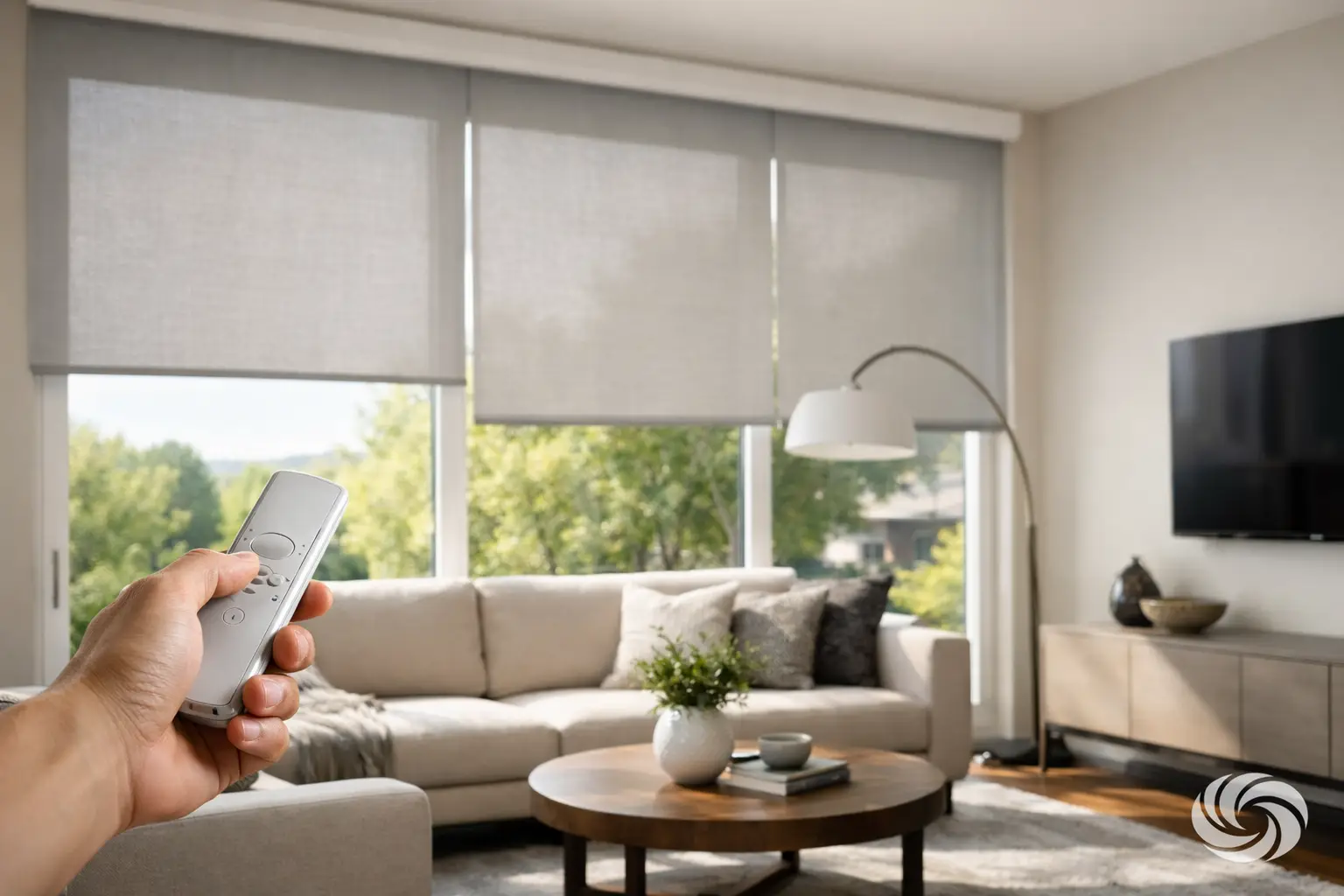
A hard-to-reach window usually settles this question faster than any showroom demo. If you have a wall of glass, tall foyer windows, or shades you rarely adjust because it is inconvenient, the value of automation becomes very real. So, are motorized shades worth it? For many homeowners, yes – but only when the system is chosen well, installed properly, and matched to the way the space is actually used.
Motorized shades are not just a luxury add-on. They solve practical problems around light control, privacy, comfort, and daily convenience. At the same time, they do cost more than manual shades, and not every room needs them. The right answer depends on your windows, your routines, and how much you value quiet, reliable control.
Are Motorized Shades Worth It in Daily Life?
The biggest benefit is not the motor itself. It is the fact that shades become easier to use, which means people actually use them. In many homes, manual shades stay in one position for weeks because adjusting them is a chore. When shades can open on a schedule, close with a button tap, or respond as part of a smart home routine, daylight and privacy start working in your favor instead of being something you manage inconsistently.
That matters in everyday ways. Morning sun can warm a kitchen before anyone gets downstairs. West-facing windows can be managed before afternoon glare turns a living room into a heat trap. Bedrooms can darken on schedule at night and open gently in the morning. In media rooms, one command can lower shades and set the room for better viewing.
The convenience is especially noticeable in homes with multiple windows in one space. Adjusting six or eight shades by hand is possible. Doing it every day is another story. Motorization removes that friction and keeps the room looking cleaner because every shade moves evenly and stops where it should.
Where Motorized Shades Make the Most Sense
Some rooms deliver a faster return than others. Large living spaces with lots of glass are one of the strongest cases because they deal with the most sunlight, glare, and temperature swing. Primary bedrooms are another good fit because comfort, privacy, and sleep quality all improve when light is easier to control.
High or hard-to-reach windows are the most obvious use case. If you need a ladder, a pole, or a second thought every time you want to adjust a shade, motorization is less of a luxury and more of a practical upgrade. Homes with skylights, stairwells, or two-story great rooms often fall into this category.
It also makes sense for homeowners who travel often or spend part of the year away. Scheduled shade movement can support privacy, protect interiors from prolonged sun exposure, and make the home feel occupied. In small business settings, motorized shades can also help conference rooms, storefronts, and offices stay more comfortable and presentable throughout the day.
The Real Benefits Beyond Convenience
Convenience gets attention first, but comfort is often what people appreciate most after living with motorized shades. Direct sun can create hot spots, fade flooring and furniture, and make certain rooms less usable during parts of the day. Automated shading helps regulate that exposure without relying on someone to remember it.
There is also a strong aesthetic benefit. Shades that rise and lower together create a more polished look than uneven manual adjustments. That matters in open-concept homes, front-facing rooms, and any space where clean lines are part of the design goal. Because the controls can be discreet, the room feels less cluttered than it would with multiple cords, chains, or manually operated hardware.
Safety is another factor, particularly for families with young children or pets. Cordless operation removes a known concern while keeping the room functional and easy to manage. For many homeowners, that peace of mind is part of the value equation.
Then there is integration. When motorized shades are part of a well-designed smart home setup, they can work alongside lighting, climate settings, and daily routines. That does not mean the system needs to feel technical. In a good installation, the technology stays in the background. You press one button or set one schedule, and the room responds the way it should.
What About Energy Savings?
Energy savings are real, but they are usually best viewed as a supporting benefit rather than the only reason to invest. Shades can reduce solar heat gain in summer and help insulate windows in colder months, especially when paired with the right fabric and placement. That can reduce strain on heating and cooling systems and improve comfort near windows.
Still, the savings vary. Window size, orientation, glass type, local weather, and how well the shades are programmed all affect the result. In Northeast Ohio, for example, seasonal changes can be significant enough that automated shading supports year-round comfort, but the financial payback will look different from one home to another.
The more immediate win is often consistency. Manual shades only save energy when someone remembers to use them at the right time. Automated shades can respond on schedule, which makes the performance more dependable.
The Main Drawback: Cost
If there is one reason people hesitate, it is price. Motorized shades cost more upfront than manual treatments, and the gap grows as the number of windows increases. The final investment depends on fabric choice, shade style, power method, control options, and whether the shades are being added to a broader smart home system.
Battery-powered shades can be a good fit in some retrofit situations because they avoid new wiring, but they may require occasional battery replacement or recharging depending on usage. Wired shades are often ideal in new construction or major renovation projects because power can be planned cleanly from the start. Both approaches can work well when specified correctly.
The other cost factor is installation quality. This is not a category where piecing together products from different sources always leads to a smooth result. Quiet operation, reliable limits, proper alignment, and intuitive control matter. If shades are noisy, inconsistent, or difficult to operate, the value drops quickly.
Are Motorized Shades Worth It Compared to Manual Shades?
Manual shades still make sense in certain spaces. A guest room with one easy-to-reach window may not need automation. The same goes for low-priority areas where the shade rarely moves or where budget is better allocated to more frequently used rooms.
Motorized shades tend to be worth it when at least one of these is true: the windows are difficult to reach, the room gets strong sunlight, privacy changes throughout the day, multiple shades need to move together, or the home already uses smart control in other areas. When several of those conditions overlap, the case gets stronger.
For homeowners focused on long-term usability, motorization often feels less like a gadget and more like an infrastructure upgrade. It improves how the room functions every day. That is a different standard than a simple décor purchase.
How to Decide If They Are Worth It for You
A good decision starts with the room, not the product. Think about which windows cause the most annoyance or discomfort now. Are there spaces that get too bright, too hot, or too exposed? Are there shades you avoid touching because they are awkward to reach or because there are too many of them?
Then consider how you want control to feel. Some homeowners want a handheld remote. Others want wall controls, scheduled movement, or app-based access while away. The right answer is usually the one that feels natural in daily life, not the one with the most features.
It also helps to think in phases. You do not have to automate every window at once. Many people start with the primary bedroom, main living area, or a wall of glass that creates the biggest comfort issue. From there, it becomes easier to decide whether expanding the system makes sense.
Most importantly, look at reliability and support. A professionally designed system should fit the architecture, the power situation, and the way the room is used. That is where working with an experienced integrator matters. Tri-County Technology approaches motorized window treatments the same way it approaches other home systems – with a focus on simple control, clean installation, and dependable everyday performance.
The best home technology does not demand attention. It quietly removes little frustrations and makes the house feel easier to live in. If your windows create glare, privacy concerns, temperature swings, or daily inconvenience, motorized shades are often worth it not because they feel high-tech, but because they make the room work the way it should.
Comments are closed