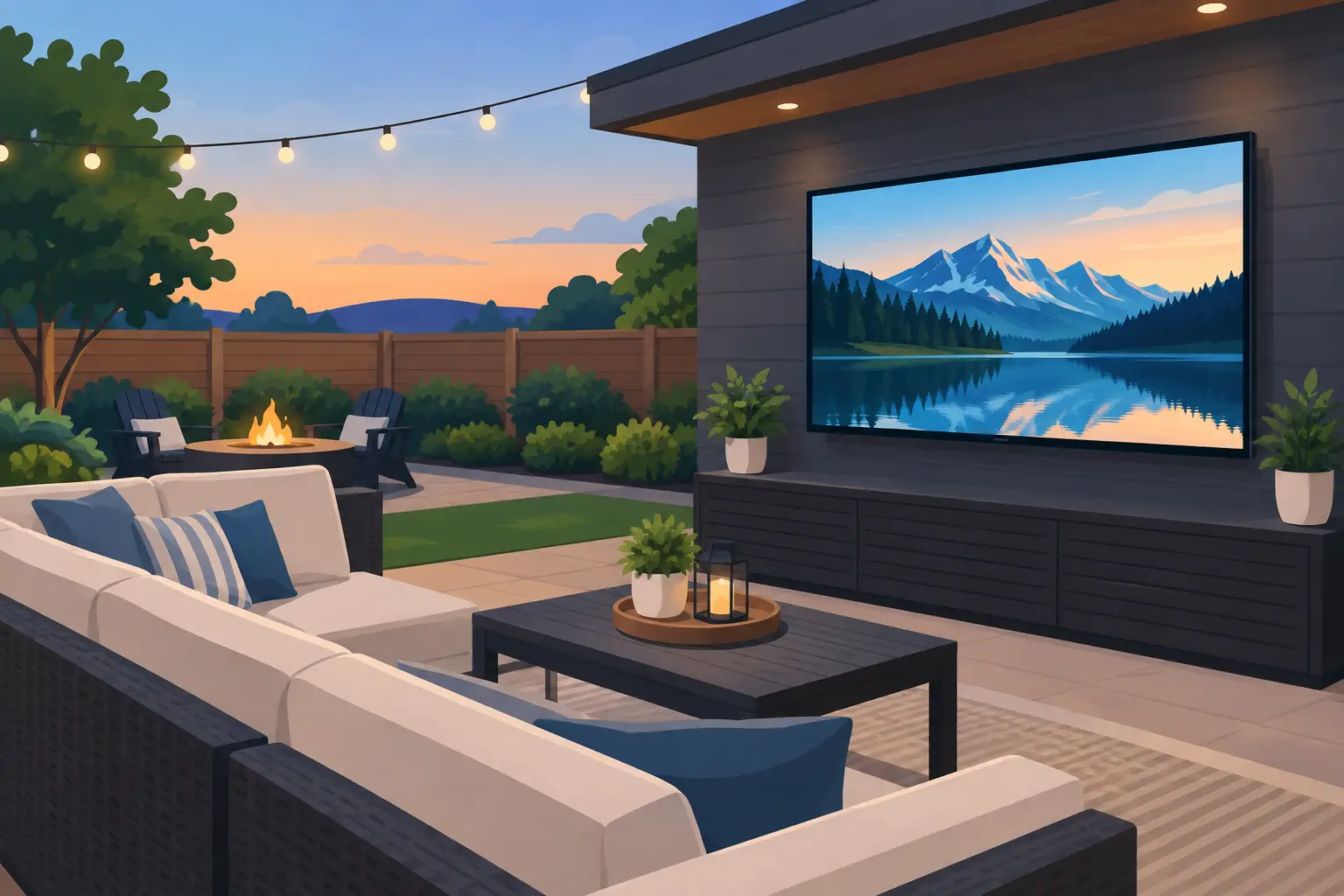
An outdoor television turns a patio, porch, pool area, or covered deck into a place people naturally gather. The right screen makes game days, movie nights, and quiet evenings outside feel effortless. The wrong one can create glare, weak sound, tangled cords, and a setup that becomes frustrating after one season.
A good outdoor TV installation starts with more than choosing a screen size. It considers weather exposure, viewing angles, sunlight, power, sound, Wi-Fi, and how the television will fit into the space when it is not in use. Thoughtful planning keeps the technology in the background, where it belongs.
Why an outdoor television is different
A standard indoor TV is not designed for changing temperatures, moisture, dust, pollen, insects, or direct sunlight. Even if an indoor model is placed under a covered porch, humidity and condensation can reach internal components over time. Its brightness may also be too low to produce a clear picture during the day.
An outdoor television is built for the environment it will live in. These displays are designed with weather-rated enclosures, protected connections, and higher brightness levels for daylight viewing. Depending on the model, they may be intended for full shade, partial sun, or direct sun locations.
That distinction matters in Northeast Ohio, where a TV may experience humid summer afternoons, wind-driven rain, freezing temperatures, and rapid swings between seasons. A weather-rated display is an investment in dependable entertainment, not simply a TV placed outside.
Start with the way you use the space
The best screen is not always the largest one available. Start by considering how the outdoor area works for your household. A covered porch used for weekend sports may call for a different setup than a poolside lounge used for evening movies.
Think about where people sit, stand, cook, and walk through the area. A television should be easy to see without becoming the only visual focus of the backyard. Mounting it too high can make viewing uncomfortable, while placing it in a busy traffic path can make the space feel crowded.
Viewing distance helps guide screen size. For a relaxed patio setting, a 55-inch to 65-inch display often works well when seating is roughly 7 to 10 feet away. Larger spaces may benefit from a 75-inch screen, especially if guests gather for major games or outdoor movie nights. The best choice depends on the layout, not just the square footage.
Match brightness to sunlight
Sunlight is usually the deciding factor for outdoor TV performance. A screen under a deep covered porch needs less brightness than one facing an open yard or receiving afternoon sun. High-brightness models help preserve contrast and color when daylight is unavoidable, but placement is still more effective than trying to overpower the sun.
Whenever possible, position the display away from direct western exposure. Afternoon light is often the harshest and can make even a bright screen difficult to watch. Shade structures, a covered patio, landscaping, and the orientation of the home can all improve the viewing experience.
Reflections matter, too. Glass doors, light-colored siding, pool water, and polished outdoor surfaces can throw glare across the screen. A professional site review can identify these issues before a mount is installed and wires are run.
Choose a location that protects the equipment
An outdoor television should be placed where it has a clear purpose and reasonable protection from the elements. Covered patios and screened porches are often ideal because they reduce direct exposure while keeping the TV convenient for everyday use.
Full-sun locations are possible with the right display and mounting plan, but they require more careful product selection. Heat buildup, direct glare, and exposure to rain all become greater concerns. In many cases, shifting the TV a few feet to a shaded wall can improve comfort and reduce the cost of the equipment needed.
The mounting surface also matters. Brick, stone, siding, wood framing, and masonry each require a different approach. A secure outdoor-rated mount should support the screen properly and allow service access when needed. It should also be positioned to keep the television level and comfortable to view from the main seating area.
For some homes, a full-motion mount is useful because it allows the screen to angle toward different seating zones. For others, a fixed mount provides the cleanest look and fewer moving parts. It depends on whether the space has one primary viewing area or several.
Plan power, wiring, and connectivity before installation
A polished outdoor TV setup does not rely on an extension cord across the patio or a consumer-grade power strip tucked behind the display. Outdoor-rated power should be installed where it is needed, with proper protection from weather and a clean path for the wiring.
Hardwired connections are often the most dependable choice for streaming devices, cable boxes, or other sources. Wi-Fi can work well outdoors, but coverage should be tested where the TV will be mounted. A signal that seems acceptable on a phone may struggle when multiple guests are streaming, browsing, and using connected devices at the same time.
A well-designed Wi-Fi system extends coverage intentionally instead of relying on luck from an indoor router. This helps avoid buffering during a game, delayed app loading, or the familiar frustration of a remote that works while the streaming service does not.
Equipment placement deserves attention as well. Streaming devices, media components, and cable connections need a protected, accessible home. An integrated installation can keep these items out of sight while leaving them easy to service later.
Do not let sound become an afterthought
Outdoor spaces absorb sound. Unlike an indoor room, there are no walls and ceilings to reflect audio back toward the listener. The built-in speakers on a television may be fine for casual viewing at close range, but they often sound thin once people spread out across a patio.
A dedicated outdoor audio system creates a more natural experience without forcing the volume higher. Weather-rated speakers can be placed around the seating area so sound reaches listeners evenly. This is usually more comfortable for guests and more considerate of nearby homes than a single loud TV speaker.
For a covered porch, discreet speakers can blend into the structure while delivering clearer dialogue. For larger yards or pool areas, landscape-style speakers may provide broader coverage with less visual clutter. The goal is not to make every event feel like a stadium. It is to hear the game, movie, or playlist clearly while still being able to talk.
Make control simple for everyone
An outdoor television should not require a stack of remotes or a troubleshooting session before guests arrive. Simple control is what makes the system enjoyable day after day.
A thoughtfully designed setup can bring the TV, streaming source, audio, and lighting into an intuitive control experience. That might mean one remote, a wall-mounted keypad, or an easy-to-use app, depending on the home and how the space is used. The right option is the one that feels familiar to the people using it.
Homeowners should also consider what happens when the weather changes. A proper installation can make startup and shutdown straightforward while protecting equipment from unnecessary exposure. Some families use the system every week; others use it mostly from spring through fall. Both use cases deserve a setup that is easy to manage.
Professional planning keeps the backyard looking finished
The visible TV is only one part of an outdoor entertainment area. The difference between a temporary setup and a finished space often comes down to the details behind it: concealed wiring, appropriate mounts, dependable connectivity, clean equipment placement, and controls that make sense.
For builders and homeowners planning a new patio, porch, or backyard renovation, it is far easier to plan conduit, power, data wiring, and speaker locations before surfaces are finished. Retrofit installations can also look clean when the design accounts for the home’s construction and the outdoor layout.
Tri-County Technology helps homeowners create connected outdoor spaces that are comfortable to use and easy to live with. The focus is not on adding technology for its own sake. It is on making the backyard more inviting, whether that means a Saturday game on the patio or a movie playing quietly after sunset.
Before selecting an outdoor television, spend a few minutes in the space at the time of day you expect to use it most. Notice the sun, the sightlines, the sounds, and where people naturally gather. Those simple observations will shape a setup that feels right long after the first show ends.


No responses yet