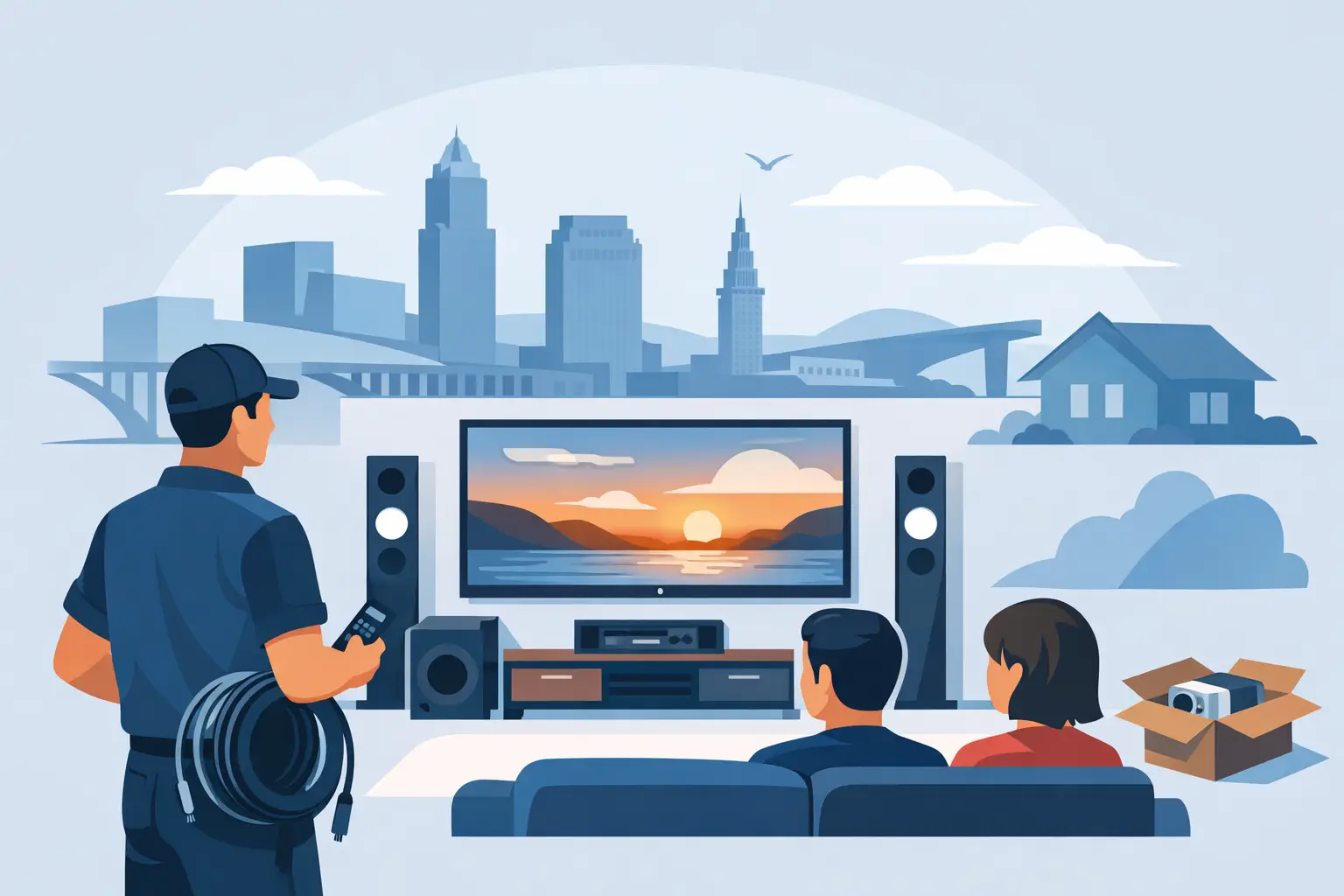
A movie room should not require a stack of remotes, visible cables, or a troubleshooting session before family night. A thoughtful Cleveland home theater installation turns a spare room, basement, or dedicated media space into a place where the picture looks right, dialogue is clear, and starting the system feels natural.
The equipment matters, but the experience matters more. The best theater is not necessarily the one with the most components. It is the one designed around the room, the people using it, and the way the home is already wired. That is where professional planning makes a meaningful difference.
Start With the Room, Not the Screen
It is tempting to choose a large TV or projector first. In practice, the room should guide that decision. Ceiling height, seating distance, window placement, wall construction, lighting, and the location of mechanical equipment all affect what will perform well.
A bright family room often benefits from a large, high-quality television that remains easy to see during the day. A lower-light basement or dedicated theater may be a better candidate for projection, especially when the homeowner wants a cinematic image. Neither option is automatically better. A projector can create impressive scale, while a television generally offers stronger brightness and simpler everyday operation.
Seating also deserves attention early. Screen size should feel immersive without forcing viewers to turn their heads or sit uncomfortably close. The right viewing distance depends on the display resolution and the room layout, but it should be confirmed before mounting hardware is installed or furniture is purchased.
For new construction and renovations, the planning window is especially valuable. Running low-voltage wiring before drywall goes up creates more options for speaker placement, network connections, controls, and future upgrades. In an existing home, a skilled installer can often find clean routing paths that preserve the look of the space without turning the project into a major remodel.
Cleveland Home Theater Installation Is More Than Mounting a TV
A screen on the wall is only one part of a finished entertainment space. The difference between an ordinary setup and a well-integrated theater often comes from the details that are easy to overlook: proper power placement, signal distribution, reliable Wi-Fi or wired connectivity, speaker positioning, ventilation, and a sensible way to control everything.
A professional Cleveland home theater installation begins with questions that are practical, not overly technical. Will the room be used for game days, movies, gaming, or all three? Is the goal a dedicated theater experience or a comfortable living room that performs well when guests come over? Does the homeowner prefer speakers that disappear into the room, or is visible equipment part of the desired aesthetic?
Those answers shape the design. A family room may call for a clean TV installation, a soundbar or discreet speaker system, and simple one-touch control. A dedicated media room may support surround sound, acoustic considerations, projector planning, and equipment stored out of sight in a nearby closet or cabinet.
The goal is not to fill the room with gear. It is to make the technology feel like it belongs there.
Sound Quality Depends on Placement and Calibration
Many homeowners upgrade the display first and are surprised that the audio becomes the weak point. Modern televisions are thin by design, leaving little space for speakers that can deliver clear, full sound. Better audio does not have to mean an oversized speaker system, but it does require thoughtful choices.
Dialogue clarity is one of the most important outcomes. If people are constantly asking, “What did they say?” the system is not serving the room well. A properly placed center channel, carefully selected soundbar, or distributed speaker design can make conversations easier to understand without pushing the overall volume too high.
Surround sound adds depth and impact, but it must fit the space. Speaker locations, furniture placement, and ceiling construction all matter. In-ceiling speakers can provide a clean appearance, though they are not the ideal choice for every channel in every theater. Traditional speakers may deliver more precise directionality in a dedicated room, while architectural speakers can be an excellent fit where visual simplicity is the priority.
Calibration brings the system together. Levels, delays, crossover settings, and room response should be adjusted after installation, not left at factory defaults. This is the step that helps sound feel balanced across the seating area rather than overly loud in one chair and thin in another.
Clean Wiring Protects the Look and Reliability of the Space
Visible cords can make even premium equipment feel temporary. More importantly, poorly managed wiring can create service headaches later, especially when power, video, networking, and audio connections are crowded behind a display or packed into a cabinet.
A clean installation accounts for cable paths, service loops, labeled connections, and appropriate ventilation from the beginning. Equipment should remain reachable for updates or replacement without dismantling the room. Wall-mounted displays need correctly placed power and signal connections, not extension cords hidden behind the screen.
Reliable connectivity is just as important. Streaming services, live sports, game consoles, and software updates all depend on a stable network. Wi-Fi optimization may be enough in some rooms, but a wired network connection is often the stronger choice for fixed theater equipment. It reduces the chance that a big game or movie night is interrupted by buffering at the worst possible moment.
For homes with multiple TVs or audio zones, structured wiring can also make expansion much easier. Planning for a future display, additional speakers, or a different source device costs far less during the initial project than reopening finished walls later.
Simple Control Is What Makes the System Enjoyable
A theater can have excellent video and sound yet still feel frustrating if it takes five steps to use. The best control approach matches the household. Some families want a familiar handheld remote with clearly labeled buttons. Others prefer a wall keypad, touch panel, or app that can start a favorite activity with one command.
The important part is consistency. “Watch TV,” “Movie Night,” or “Game Console” should set the correct input, audio settings, and display behavior without requiring anyone to remember the order of operations. Controls should also be easy for guests, children, and future homeowners to understand.
This is where custom integration earns its value. Instead of asking the homeowner to manage several separate devices, the system can be designed as one connected experience. Lighting control and motorized window treatments can also support a theater setting when appropriate, helping reduce glare and create a more comfortable viewing environment without adding daily complexity.
Plan for Service, Upgrades, and Real Life
Entertainment technology changes quickly, but a well-designed foundation can stay useful for years. Displays, streaming devices, and receivers may eventually be replaced. The wiring, network design, equipment location, and control strategy should make those changes manageable.
It is also wise to think about how the room will be used on an ordinary Tuesday, not only during a major event. A dedicated theater with a projector may be perfect for evening movies but less practical for bright afternoon viewing. A large television may be the better all-purpose choice for a busy household. The right answer depends on habits, light conditions, budget, and the level of immersion the homeowner wants.
For builders, clear coordination between the technology team, electrician, HVAC contractor, and finish trades helps avoid late-stage conflicts. For homeowners updating an existing space, an on-site consultation can reveal constraints early and identify opportunities that are not obvious from a floor plan or online product listing.
Tri-County Technology approaches theater projects with the same focus used across connected home systems: make the technology dependable, cleanly installed, and easy to live with. The result should feel polished without feeling complicated.
A home theater is most successful when it disappears into the rhythm of the home. Choose a design that fits the room, use controls that everyone understands, and leave room for the way your entertainment needs may change over time.


Comments are closed