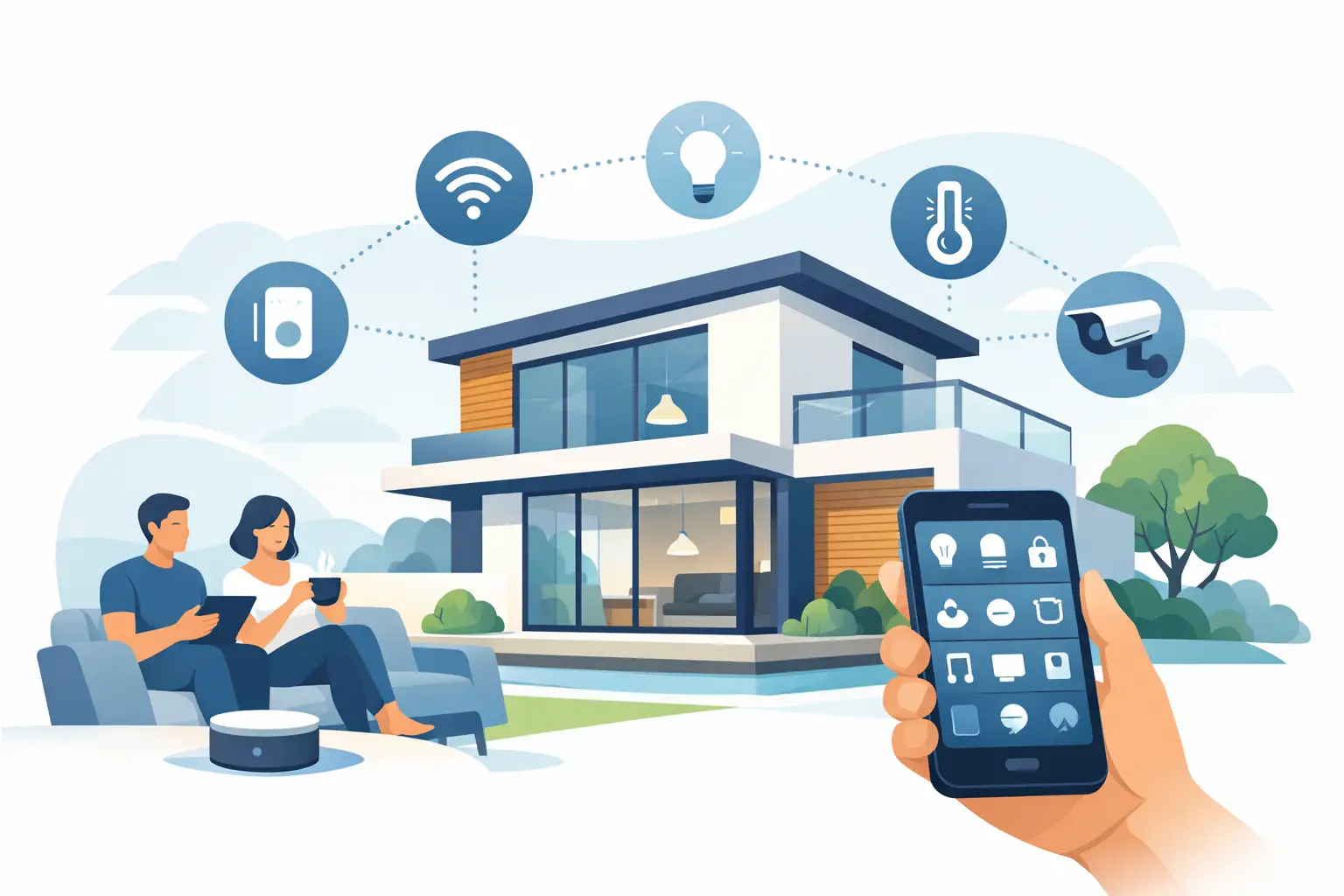
A home should not require an instruction manual to enjoy it. Yet many people ask, “can smart homes be simple?” after seeing a wall of switches, several phone apps, or devices that work well alone but not well together. The answer is yes, but simplicity does not happen by adding more products. It comes from making a few thoughtful decisions about how the home should feel and function.
The best connected homes are rarely the ones that announce themselves. Lighting adjusts when it is useful. Music is available where people gather. Shades respond to the time of day. The Wi-Fi works in the rooms where life actually happens. Most of the time, the technology stays quietly in the background.
Can Smart Homes Be Simple? It Starts Before Installation
Simple smart home living starts with a conversation, not a shopping cart. Before selecting a control system, speakers, motorized shades, or smart lighting, it helps to understand the household’s routines. When do people arrive home? Which rooms are used most? Is the goal better entertainment, easier mornings, more comfortable evenings, or dependable connectivity for work and school?
A system built around real routines asks less of the homeowner. For example, an evening setting might lower selected shades, turn on warm lighting in the family room, and start background music with one tap. A morning setting could raise shades and bring up gentle lighting in the kitchen. These are not complicated automations for their own sake. They are small conveniences that remove repetitive steps.
The difference matters. A collection of connected gadgets can create more decisions. A professionally designed system reduces them.
Design Around Everyday Moments
The most useful smart home features tend to serve familiar moments rather than technical categories. Homeowners do not usually wake up thinking about protocols, wiring standards, or device compatibility. They want the kitchen ready for breakfast, a comfortable room for movie night, and a strong connection in the home office.
This approach also keeps the project focused. A family that enjoys entertaining may benefit most from whole-home audio, lighting scenes, and a reliable outdoor Wi-Fi connection. A homeowner planning a renovation may prioritize structured wiring, television placement, and clean equipment locations before walls are closed. A custom builder may want a flexible infrastructure that gives buyers an easy path to add features later.
Not every home needs every option. A well-designed system should match the space, the household, and the budget. Starting with the rooms and routines that matter most often produces a better result than trying to automate the entire house at once.
One Familiar Way to Control the Home
Too many control choices are a common source of frustration. If lighting uses one app, music uses another, shades use a remote, and the television has three different remotes, the home can feel less convenient than it did before the upgrade.
A simple system gives people a small number of familiar ways to interact with it. That may mean a well-labeled wall keypad in a main living area, a single app for broader control, or voice control for a few hands-free tasks. The right mix depends on the household, but the goal is consistent: controls should be easy to find, easy to understand, and easy for guests to use.
Physical controls remain valuable. A phone may be in another room, charging, or in someone else’s hands. A clearly labeled button for “Movie,” “Goodnight,” or “All Off” can be faster and more reassuring than opening an app. The best design gives homeowners convenient options without requiring them to remember a complicated process.
Reliable Wi-Fi Makes Everything Easier
A smart home is only as pleasant as its network. When Wi-Fi drops in a bedroom, buffers near the patio, or slows down when several people are online, connected devices can appear unreliable even when the devices themselves are working correctly.
That is why Wi-Fi optimization belongs near the beginning of the planning process. Good coverage is not just about placing a stronger router in a central room. It involves understanding the home’s layout, building materials, internet use, equipment locations, and areas where coverage is needed. Larger homes, homes with finished basements, and properties with outdoor living spaces often need a more deliberate approach.
A professionally planned network can also keep technology out of sight. Instead of equipment piled next to a television or cables stretched across a room, components can be organized in a dedicated location with clean wiring and room for future service. The visible result is calmer. The practical result is a system that is easier to maintain.
Keep the Technology Quiet and the Rooms Comfortable
Good smart home design respects the room. A beautiful living space should not be dominated by blinking boxes, tangled cords, oversized speakers, or a crowded row of remotes. Technology should support the architecture and furnishings, not compete with them.
This is especially important during new construction and major renovations. Planning low-voltage wiring early makes it possible to place displays, speakers, network equipment, and controls where they make sense. It also avoids the compromises that often come from trying to hide cables after the drywall and finishes are complete.
Retrofitting an existing home can be just as effective, although the process may look different. Some homes benefit from targeted improvements, such as better Wi-Fi in problem areas, a clean television installation, upgraded audio in a main gathering space, or motorized shades in rooms with difficult-to-reach windows. A careful site visit helps identify what is practical without turning a focused upgrade into an unnecessary construction project.
Choose Dependability Over Novelty
Not every new feature earns a place in a home. A product may look impressive in a demonstration but add little value after the first week. Before adding any connected feature, ask a practical question: will this save time, improve comfort, or make the room easier to enjoy?
Dependability should carry as much weight as convenience. Systems need to work for every member of the household, including people who do not want to troubleshoot an app update or restart a device. This is where planning, quality equipment, clean installation, and ongoing support make a real difference.
There are trade-offs to consider. More automation can create more convenience, but it may also require more careful programming and adjustment. Voice control is useful for certain tasks, but it is not always the best answer in a busy room. Wireless devices can be excellent for a focused retrofit, while wired infrastructure may be the stronger long-term choice in a new build. The right answer depends on the home and the expectations of the people living in it.
A Simple System Should Be Easy to Live With Years Later
Technology changes, but a home’s core needs do not change as quickly. People still want comfortable lighting, clear audio, dependable entertainment, and a connection that works wherever they need it. A smart home plan should leave room for changes without forcing homeowners to begin again from scratch.
That may mean installing structured wiring while walls are open, choosing equipment locations with service access, or creating a control layout that can grow gradually. It also means documenting the system clearly and providing support when something needs attention. Simple does not mean limited. It means the system has been organized well enough that changes feel manageable.
For homeowners and builders in Northeast Ohio, the value of professional integration is not just the finished equipment. It is having someone translate a long list of technology options into a home that feels comfortable from the first day. Tri-County Technology approaches each project with that practical goal in mind.
The right smart home does not ask people to become technology experts. It lets them press one button, enjoy the room, and get on with the part of life that matters.


Comments are closed