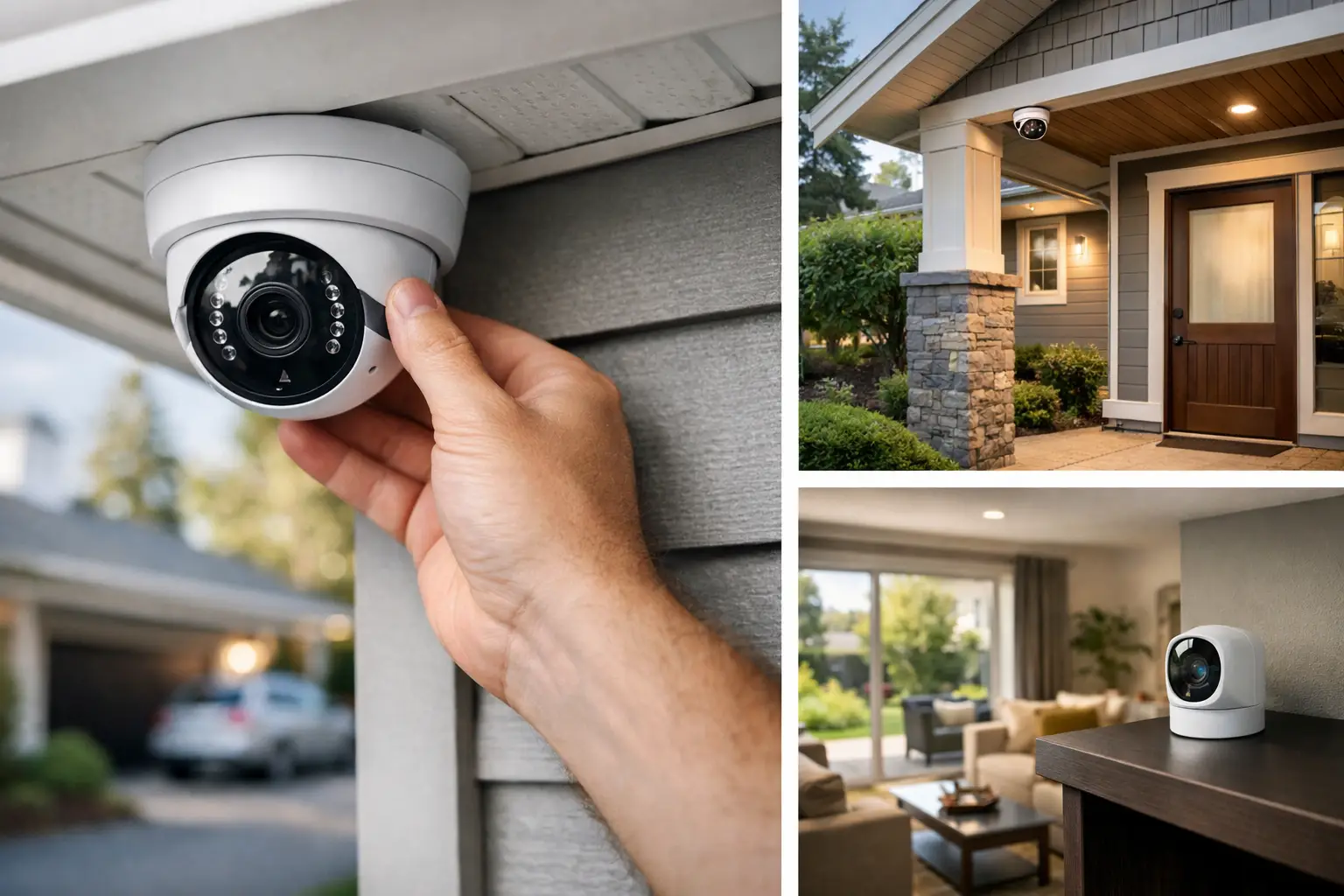
A camera mounted a few feet too high can miss faces. One placed too low can catch glare, rain, and the top of a delivery box instead of the person carrying it. The best home surveillance camera placement is not about putting cameras everywhere. It is about putting the right cameras in the right places so your system gives you useful video when something actually happens.
That matters more than most homeowners expect. A good surveillance system should feel quiet and dependable in daily life, then become immediately valuable when you need to check a package drop-off, verify who came to the door, or review activity around the property. Placement is what makes the difference between a system that looks impressive on paper and one that works well in real conditions.
Why best home surveillance camera placement matters
Most camera problems are really placement problems. People often blame the device when the issue is poor angle, harsh backlighting, limited field of view, or an installation point that creates constant motion alerts. Even a high-quality camera can underperform if it is aimed at the wrong area or forced to work through difficult lighting.
Good placement improves three things at once. You get better coverage, better image usability, and fewer frustrations with alerts. It also helps the system blend more naturally into the home. A clean, intentional layout usually means fewer cameras, less visual clutter, and stronger day-to-day confidence.
The goal is not to watch every inch of the property at all times. The goal is to cover the places where people approach, enter, pause, or move between spaces.
Start with the approach, not the whole property
When planning camera locations, think like a visitor first. How does someone arrive at the home? Where would they walk, stop, or look before coming inside? That path tells you more than a full-property sketch loaded with camera icons.
In most homes, the highest-value views are the front entry, the driveway, the main walkway, the back door, and any side gate or less visible access point. Those areas tend to show both routine activity and unusual movement. They also create a useful sequence, so if someone moves around the property, you are not relying on a single camera to tell the whole story.
This is where professional planning helps. Homes rarely have perfect sightlines. Rooflines, landscaping, porch ceilings, garage projections, and exterior lighting all affect how a camera performs. A placement that looks obvious from the ground can create blind spots once the camera is mounted and aimed.
Front door placement: the camera everyone needs
If there is one location that deserves careful attention, it is the front entry. This is where deliveries happen, guests arrive, and many first interactions with the property occur. A video doorbell can cover part of this need, but it does not always replace a properly positioned exterior camera.
A doorbell camera is excellent for face-level views near the porch. It is not always ideal for broader context, such as someone approaching from the driveway or walking away after leaving a package. In many homes, the strongest setup combines a doorbell camera with an additional front-facing camera mounted to capture the wider approach.
Height matters here. Too high, and you lose detail. Too low, and you increase the risk of tampering or obstructions. The right mounting point depends on the shape of the porch, the amount of overhead cover, and the direction of the light at different times of day.
Driveway and garage coverage should answer practical questions
A driveway camera should do more than show that a vehicle was present. It should help you tell what vehicle it was, when it arrived, which direction it came from, and whether anyone got out and approached the house.
That usually means avoiding an overly wide shot from a distant corner of the house. A broad overview can be useful, but if the camera is too far away, details become less helpful. A better approach is often a view that captures the garage area and driveway approach with enough angle to show movement patterns clearly.
Garages also deserve attention because they are active transition points. People enter through them daily, and they often contain valuable equipment, vehicles, and tools. If your garage is detached or partially hidden from the street, that raises the value of dedicated coverage even more.
Best home surveillance camera placement for back and side entries
Backyards feel private, which is exactly why they should not be overlooked. Rear doors, patio entries, walkout basements, and side gates can be less visible from the street and less likely to be noticed by neighbors. For many properties, these are the areas where strategic camera placement matters most.
The best home surveillance camera placement for the rear of the home depends on how the yard is used. If you have a patio, pool, detached structure, or fence line with multiple entry points, your coverage should reflect those real movement patterns. A single back-of-house camera may not be enough if the property is wide or segmented.
Side yards can be tricky because they often create narrow passages with uneven lighting. Cameras here should be placed to capture direction of travel rather than just a static corridor view. It is also smart to think about how bushes, fencing, and seasonal growth will affect sightlines over time.
Indoor cameras should support the exterior plan
Not every home needs indoor cameras, but in the right places they add context and peace of mind. The most useful indoor views are usually main entry points, central hallways, mudrooms, and common areas that connect circulation paths through the home.
What matters is restraint. Bedrooms and bathrooms are off limits for obvious privacy reasons, and many homeowners prefer to limit indoor coverage to spaces that help verify entry and movement rather than monitor everyday life. That approach keeps the system comfortable to live with while still providing meaningful security value.
If you travel often, have a second home, or want to check on pets or older children coming home from school, indoor placement can be especially useful. The key is to keep the purpose clear and the placement intentional.
Common placement mistakes to avoid
One of the biggest mistakes is trying to cover too much with one camera. Wide-angle views can look impressive, but they often reduce detail where it matters. Another common issue is ignoring light. A camera aimed toward bright sun, reflective siding, or headlights may struggle right when you need a clean image.
Mounting cameras too high is also common. Homeowners often assume higher means safer, but excessive height can flatten faces, miss identifying details, and create views that are less useful for real events. There is a balance between protection from tampering and practical image capture.
The last big mistake is treating placement as a hardware problem instead of a property-specific design decision. Two homes on the same street can need completely different layouts based on elevation, entry configuration, trees, porch depth, and how people actually move around the lot.
Placement should work with lighting, Wi-Fi, and power
Camera placement is never just about the viewing angle. It also has to work with the home’s infrastructure. Wireless cameras may still need dependable signal strength, and battery-powered models can introduce maintenance trade-offs depending on traffic volume and weather exposure. Wired solutions often provide stronger long-term reliability, but they require thoughtful cable routing and clean installation.
Lighting matters just as much. A camera that performs well during the day can become much less effective at night if the area is too dark or if the image is overwhelmed by a porch light or motion flood. Good design considers both natural and artificial light so the camera remains usable around the clock.
This is especially true in Northeast Ohio, where snow cover, low winter sun, and seasonal weather shifts can change how exterior cameras perform. A setup that looks fine in mild conditions may reveal glare, reflections, or visibility issues once the seasons turn.
When a professional layout is worth it
If you are covering a larger home, a corner lot, multiple exterior doors, or a mix of indoor and outdoor spaces, camera placement becomes less about buying devices and more about system design. That is where expert guidance saves time and avoids rework.
A professionally planned layout helps you decide what each camera is supposed to accomplish before anything is installed. One camera may be meant for identification at the entry. Another may be for broader situational awareness around the driveway. A third may confirm movement through the backyard. Each view has a job.
That kind of planning leads to a cleaner result. Fewer blind spots. Fewer nuisance alerts. Better daily usability. And just as important, a system that feels like part of the home instead of a collection of gadgets added over time.
The best camera system is rarely the one with the highest camera count. It is the one that gives you calm, clear visibility where it counts, without making technology feel like one more thing to manage.


Comments are closed