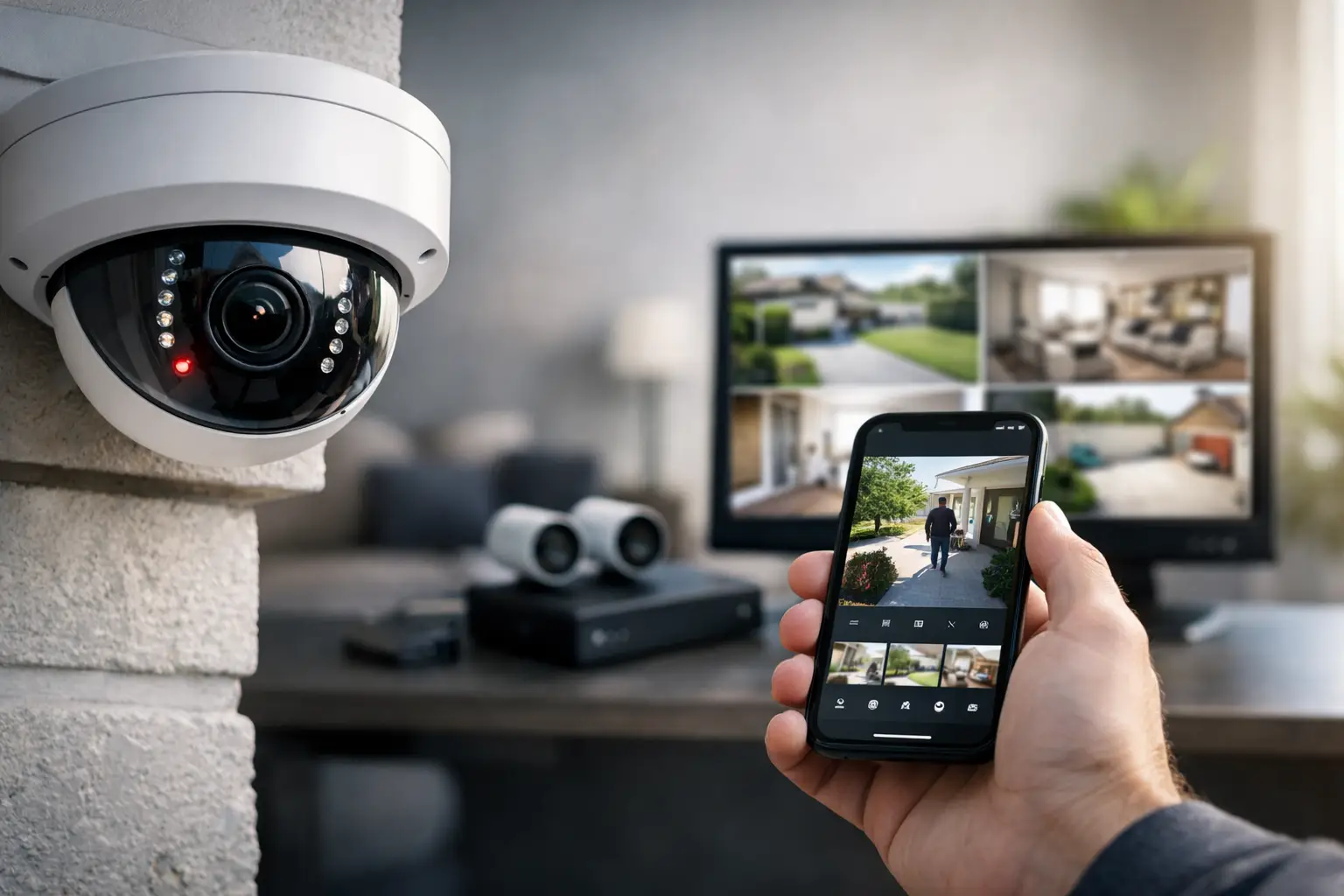
A camera mounted over the garage used to be enough for many properties. Not anymore. Today, smart security camera systems are expected to do more than record video – they need to help you see what matters, respond quickly, and fit into daily life without becoming another system you have to manage.
That shift is why camera choices feel more complicated than they used to. Resolution numbers are higher, app features are everywhere, and many products promise easy setup. But the real difference between a camera that helps and a camera that frustrates often comes down to planning, placement, connectivity, and how well the whole system works together.
What smart security camera systems actually do
At their best, smart security camera systems combine cameras, recording, mobile access, alerts, and network connectivity into one dependable setup. Instead of simply capturing footage and storing it somewhere, they give you useful visibility into your property in real time and over time.
For a homeowner, that might mean seeing when a package arrives, checking on the backyard, or receiving an alert when someone approaches a side door after dark. For a business owner, it may mean verifying an opening time, reviewing activity near an entrance, or keeping an eye on a parking area from a phone.
The word smart matters here because the value is not just the camera itself. It is the ability to view live video remotely, search recorded events, receive motion notifications, and in some cases integrate the cameras with other systems such as smart locks, lighting, gates, or alarm monitoring. A well-designed system gives you awareness without demanding constant attention.
Not all camera systems are built the same
Many people start by comparing cameras one by one. That makes sense, but it can lead to the wrong decision. A camera is only one part of the experience. The network, power method, recording platform, mobile app, and installation quality all shape whether the system feels dependable six months later.
A basic plug-in camera may work well in a small apartment or as a temporary solution. But larger homes, detached garages, offices, and retail spaces often need a more deliberate design. You may need coverage at multiple entry points, stronger night visibility, stable outdoor performance, and recording that does not depend entirely on a subscription or the strength of your Wi-Fi at the far end of the property.
This is where trade-offs matter. Wireless cameras can be faster to deploy, but they rely heavily on signal strength, battery management in some models, and cloud settings. Hardwired systems usually require more planning up front, yet they tend to offer stronger reliability, cleaner performance, and a better long-term fit for larger or more important coverage areas.
The features that make a real difference
Resolution gets a lot of attention, and for good reason. Clear video helps when you need to identify faces, vehicles, or activity details. But image quality is not only about 2K or 4K labels. Lens quality, lighting conditions, frame rate, and camera placement often matter just as much.
Night performance is another area where marketing can be misleading. A camera may advertise night vision, but the real question is how usable that image is when you need it. Some properties benefit from infrared night vision, while others are better served by low-light color video and strategic exterior lighting.
Smart alerts can also be helpful, but only when they are tuned correctly. Too many notifications and people stop paying attention. Too few and the system misses the point. Person detection, vehicle detection, activity zones, and scheduling can improve the experience, especially when the system is configured around how the property is actually used.
Two-way audio, sirens, and spotlight features can be useful in some settings. They are not essential everywhere. A front door camera may benefit from audio. A parking lot overview camera may not. Good design starts with the purpose of each camera, not a checklist of features.
Placement matters more than most people expect
One well-placed camera can outperform two poorly placed ones. That is why coverage planning is one of the most important parts of any smart camera project.
The goal is not simply to see a lot of space. It is to see the right space from the right angle. Entrances, driveways, walkways, side yards, common areas, and points of approach all deserve different viewing strategies. A camera aimed too high may capture a wide shot but miss faces. A camera aimed directly into bright light may create glare at the exact moment you need detail.
There is also a balance between overview and identification. Wide-angle cameras are useful for general awareness, while tighter views are often better for recognizing people or reading details. In many properties, the best result comes from using different camera views together rather than expecting one device to do everything.
Professional placement also helps the system look better. Cleanly installed cameras, concealed wiring, and thoughtful positioning keep security visible without making the property feel cluttered or overly commercial.
Why connectivity is part of security
A smart camera system is only as strong as the network supporting it. This is one of the most overlooked parts of the conversation.
If cameras are dropping offline, loading slowly, or failing to send alerts, the issue may not be the cameras at all. Weak Wi-Fi, poor router placement, limited bandwidth, and inconsistent network design can all affect performance. That is especially true in larger homes, additions, detached buildings, and businesses with multiple connected devices competing for bandwidth.
A dependable system often requires more than installing cameras. It may also require improving Wi-Fi coverage, adding wired network connections, segmenting traffic, or choosing a recorder-based setup that reduces dependence on cloud-only access. For many properties, the most reliable answer is a system designed as part of the larger technology environment rather than as a standalone gadget.
Homes and businesses need different strategies
Residential and light commercial properties can both benefit from smart security camera systems, but the priorities are not always the same.
In a home, comfort and convenience matter alongside security. Homeowners typically want simple remote viewing, useful alerts, and coverage that protects the property without adding stress. They also care about aesthetics, privacy, and ease of use for the whole household.
In a business, accountability and continuity often rise to the top. Owners may need longer retention, wider area coverage, better visibility around entrances and service areas, and easier access to footage during incidents. They may also need the system to support staff routines without becoming disruptive.
That is why a thoughtful design process matters. The right setup for a family home in a quiet neighborhood may not be the right one for a small office, retail storefront, or mixed-use property.
Privacy, storage, and long-term use
Every camera decision should include a discussion about privacy and storage. Where is footage kept? How long is it stored? Who can access it? What happens if internet service drops?
Cloud storage can be convenient and easy to access, but recurring fees and internet dependence should be considered. Local recording can offer more control and predictable retention, though it needs proper hardware and setup. In many cases, a hybrid approach makes sense.
It is also worth thinking beyond installation day. A system should be easy to use a year from now, not just exciting on day one. That means intuitive mobile access, stable performance, and enough flexibility to grow with the property if needs change.
For homeowners and business owners who want technology to feel simple, this is usually the deciding factor. The best camera system is not the one with the longest feature list. It is the one that quietly does its job, gives you confidence when you check it, and does not create more maintenance than peace of mind.
When professional design makes the difference
There is nothing wrong with simple off-the-shelf equipment when expectations are modest. But when coverage gaps, network issues, poor placement, or unreliable alerts start showing up, a more tailored approach usually pays off.
Professional design helps align the cameras with the property layout, the way people move through the space, and the level of visibility you actually want. It also helps avoid common problems such as blind spots, weak nighttime images, cluttered wiring, overloaded Wi-Fi, and storage limits that are discovered too late.
For many clients, the real benefit is clarity. Instead of sorting through dozens of products and trying to predict how they will work together, they get a system designed around practical daily use. That is where an integrator like Tri-County Technology adds value – not by making the system feel more complex, but by making it feel easier to trust.
If you are considering smart security camera systems, start with how you want the property to function, not just which camera looks best in an app. A calm, dependable system should give you better awareness in the background and one less thing to worry about when life gets busy.
Comments are closed