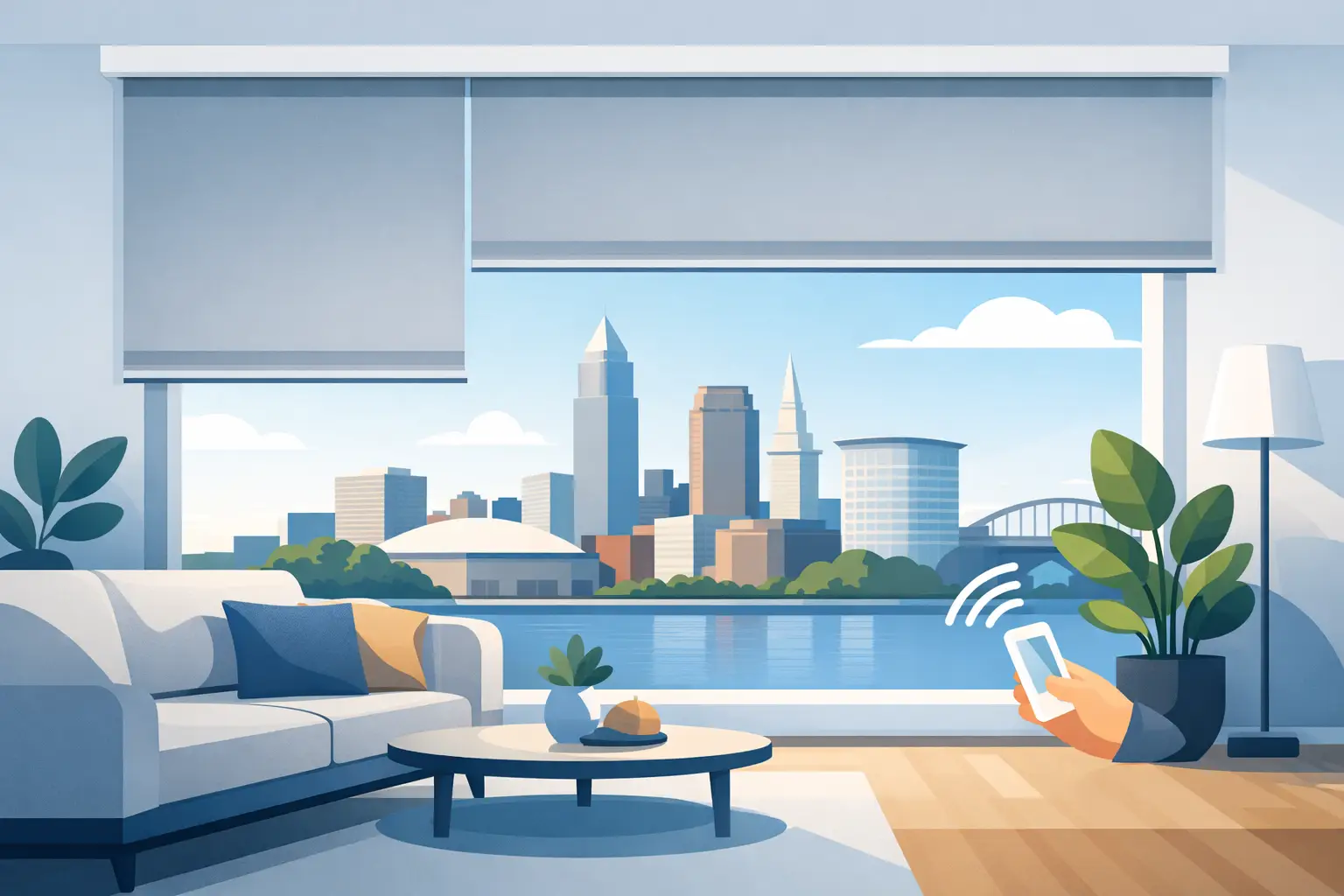
The afternoon sun that makes a Cleveland living room feel bright and welcoming can also turn a favorite seat into the one no one uses. It can wash out a television, fade hardwood floors, and make a home office difficult to work in. Lutron shades Cleveland homeowners choose are designed to manage those daily frustrations quietly, with precise control that fits naturally into the rhythm of the home.
Motorized window treatments are not simply a convenience upgrade. When they are selected and installed well, they help a room feel more comfortable at every hour, protect interior finishes, and remove the small, repeated task of adjusting shades throughout the day. The result is a home that responds to the way its owners actually live.
Why Lutron Shades Work So Well in Cleveland Homes
Northeast Ohio homes experience a wide range of conditions. Summer afternoons can bring direct heat and glare, while winter mornings can make homeowners want every bit of natural light available. A fixed window treatment approach often forces a compromise: leave shades down for privacy and lose the view, or leave them open and accept glare and exposure.
Lutron shade systems give homeowners more control over that balance. A shade can lower partway to soften direct sunlight while preserving daylight in the room. It can close at dusk for privacy, then raise in the morning to welcome natural light. Those adjustments can happen from a wall control, a phone, a handheld remote, or as part of a scheduled scene, depending on the system design.
That flexibility matters most in rooms with large windows, tall glass, or challenging exposures. Great rooms, kitchens, home offices, bedrooms, and media spaces each have different needs. A thoughtful design treats the windows in those rooms accordingly rather than applying the same fabric and control strategy everywhere.
Start With the Room, Not the Product
The best motorized shade project begins with a simple question: what should this room feel like at different times of day? That conversation leads to better choices than starting with a color swatch or a motor alone.
In a kitchen, homeowners may want softened sunlight without losing the view of the backyard. In a bedroom, privacy and room-darkening performance may take priority. A home office may need glare reduction during work hours but still benefit from daylight. In a media room, controlling reflections on the screen can be the central goal.
Fabric openness plays a major role. Solar fabrics filter sunlight and maintain an outward view to varying degrees, but they do not create full darkness at night. Room-darkening materials provide greater privacy and light reduction, though small edge gaps may still allow light into the room. For the strongest darkening effect, a design may call for a carefully fitted shade system, drapery, or both. The right answer depends on the room, the window construction, and the homeowner’s expectations.
Color also involves a practical trade-off. Darker solar fabrics can often preserve a clearer view outward, while lighter fabrics can make a room feel brighter and may coordinate more easily with a light interior palette. Samples should be considered at the actual window, in real daylight, rather than under showroom lighting alone.
Privacy Is Different From Light Control
A common misunderstanding is that a fabric that handles daytime glare will automatically provide nighttime privacy. During the day, a brighter exterior can limit visibility into a home. At night, when interior lights are on, the relationship reverses. A solar shade may still allow silhouettes or visibility from outside.
This does not make solar shades the wrong choice. It simply means the room may need a second treatment, a room-darkening fabric, or a schedule that prioritizes privacy after sunset. Clear expectations early in the design process prevent disappointment later.
Control That Feels Natural, Not Complicated
A well-planned shade system should not ask homeowners to manage another app for every daily task. The best controls are the ones people reach for without thinking about them.
For some homes, a simple wall keypad near the room entrance is ideal. Others benefit from a shared control that adjusts several shades at once, such as opening the main living area in the morning or lowering shades before a movie. In a connected home, shades can also be coordinated with compatible lighting and entertainment settings so the room is ready with one familiar command.
Schedules are especially useful for repeatable moments. Bedroom shades can rise gradually in the morning. West-facing shades can lower before late-day glare reaches the room. Vacation schedules can create the appearance of normal activity while a home is empty. Automation should remain easy to override, though. A homeowner should always be able to adjust a shade immediately when the weather, view, or plans change.
The goal is not to automate every movement. It is to automate the predictable ones and keep manual control simple for everything else.
New Construction and Retrofit Require Different Planning
Lutron shades can work beautifully in both new homes and existing homes, but the planning process is different. New construction offers the cleanest opportunity to prepare power, conceal wiring where appropriate, and coordinate shade pockets or trim details with the builder and interior designer. Those details can make the finished treatment feel integrated rather than added after the fact.
Retrofit projects require a closer look at the window, trim, available power, and mounting surfaces. Many projects can use battery-powered options, which can avoid opening walls and provide a clean installation. Wired power may be preferable for larger shade groups, hard-to-reach windows, or homeowners who prefer not to manage battery replacement over time.
Neither approach is automatically better. Battery-powered shades are often an excellent fit for finished spaces and targeted upgrades. Wired systems can be a strong choice when the home is being built, renovated, or when long-term centralized power is a priority. The right recommendation comes from evaluating the window layout and the homeowner’s goals, not from forcing one solution into every project.
Details That Affect the Finished Look
Measurements are only one part of a professional shade installation. Mounting depth, trim profile, window handles, mullions, and the placement of the shade roll all affect coverage and appearance. Tall windows and wide openings may require particular attention to alignment and fabric selection.
A clean result also depends on thoughtful control placement and reliable system setup. Shades should move consistently, respond when expected, and be grouped in a way that makes sense for the family. This is where experienced integration makes a visible difference. The technology should recede into the background while the room feels more polished and comfortable.
Tri-County Technology designs motorized shade systems around those everyday details, coordinating the window treatment plan with the larger home technology experience when it makes sense.
What to Expect From a Lutron Shade Consultation
A productive consultation is practical. It considers the room’s sun exposure, desired privacy, window dimensions, interior finishes, preferred control methods, and whether the project is part of a new build, renovation, or single-room update. It should also include a conversation about the moments that matter most: early mornings, work calls, movie nights, entertaining, and time away from home.
From there, the design can narrow into appropriate fabrics, shade styles, power options, and control groups. Homeowners should expect honest guidance about what a fabric can and cannot do, where light gaps may occur, and where a different treatment might better serve the room. That clarity is more valuable than a quick product recommendation.
For builders, early coordination helps keep the project moving. Discussing windows, trim, electrical planning, and finish details before walls are closed can reduce later changes and produce a more refined result. For homeowners updating an existing space, a site review can identify practical paths to a clean installation without unnecessary disruption.
A Better Way to Live With Natural Light
The value of motorized shades is often felt in small moments: a comfortable chair by the window, a clearer screen during a game, a bedroom that feels private at night, or a bright room that does not become too hot in late afternoon. Those moments add up because they happen every day.
When Lutron shades are designed around the home rather than treated as an afterthought, they provide more than movement at the touch of a button. They give homeowners a calmer, more comfortable relationship with the light coming through their windows.

Comments are closed