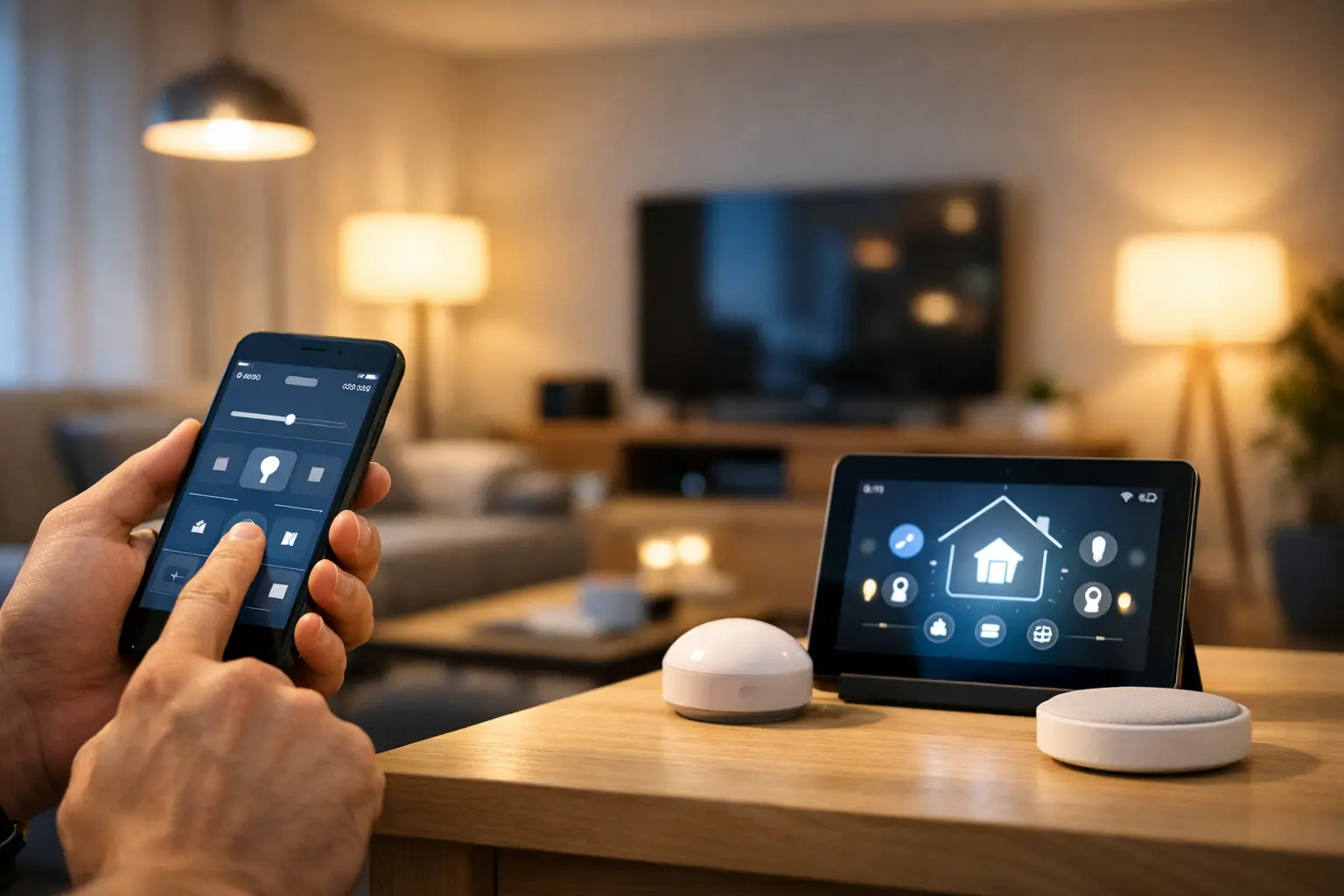
You notice lighting most when it gets in the way. The kitchen is too bright late at night, the hallway is dark when your hands are full, or one room always seems to need three switches to feel usable. A smart lighting control system fixes those small daily frustrations by making light behave the way your home or business actually works.
For some people, that means tapping one button to set the whole house for evening. For others, it means lights that turn off automatically in empty spaces, better security when they’re away, or cleaner walls with fewer switches doing more. The technology matters, but the real value is simpler routines, more comfort, and fewer things to think about.
How a smart lighting control system works
At its core, a smart lighting control system connects lighting to a central layer of control. Instead of treating each switch as a separate command point, the system allows lights to work together in a coordinated way. You can control individual fixtures, groups of lights, or preset scenes from keypads, mobile devices, voice control, or scheduled automation.
That sounds technical, but the experience is straightforward. Press “Morning” and the kitchen, hallway, and living area come on at the levels you prefer. Tap “Away” and selected lights turn off while a few others follow a schedule that makes the home look occupied. In a small business, the same idea can help staff open and close spaces faster and more consistently.
The best systems also account for how people actually move through a space. A mudroom can respond differently than a dining room. A primary bedroom usually needs softer scenes and easier bedside control. An office or conference room needs predictable, glare-conscious lighting that supports work instead of distracting from it.
Why homeowners and businesses choose smarter lighting
Convenience is usually the first reason people ask about lighting control, but it is rarely the only one. When the system is designed well, it improves how a space feels and functions throughout the day.
Comfort comes first. Light affects mood, visibility, and the pace of everyday routines. Soft pathways at night are easier on the eyes than a full overhead blast. Layered scenes in the living room make it easier to read, relax, or entertain without constantly adjusting dimmers. In a business setting, balanced lighting can help a space feel more polished and welcoming.
Energy use is another practical benefit. A system can dim lights, turn them off based on schedules, or respond to occupancy in the right rooms. That does not mean every home needs aggressive automation. In fact, too much automation can feel annoying. The right approach is selective. Focus on the spaces where it saves time and reduces waste without making the house feel unpredictable.
Security also plays a role. When lights follow realistic schedules while you’re away, the property feels lived in. Exterior and pathway lighting can support safer arrivals after dark. Inside the home, automatic lighting in key transition areas can reduce the chance of missed steps and midnight fumbling.
Smart lighting control system features that matter most
Not every feature is worth paying for. The best results usually come from a few core capabilities that are easy to use every day.
Scenes are one of the biggest upgrades. Instead of controlling lights one by one, a scene sets several fixtures to the right levels at once. That may mean a cooking scene in the kitchen, an entertaining scene for the main living area, or a bedtime scene that gently shuts the house down.
Scheduling is helpful when it reflects your routine. Exterior lights can follow sunset and sunrise changes automatically. Common-area lighting in a business can turn on before opening hours and power down after close. The goal is not to automate everything. It is to remove repetitive tasks that do not need your attention.
App control gets a lot of attention, but wall control still matters more than people think. Most users want reliable physical control in the places they use every day. A phone is useful when you’re away or when you want more detailed adjustments, but it should not be the only way to run the room.
Dimming is another feature that deserves more attention than it usually gets. Good dimming improves comfort, extends lamp life in many applications, and makes rooms feel more finished. Not all fixtures dim equally well, though. Compatibility between controls and lighting hardware matters, especially in retrofit projects where existing fixtures stay in place.
New construction and retrofit projects are different
A smart lighting project in a new build has different opportunities than one in an existing home or business. In new construction, the system can be planned early with switch locations, fixture choices, and overall room use in mind. That usually creates the cleanest result because the infrastructure is working with the design from the start.
Retrofit work can still deliver an excellent experience, but it requires more careful evaluation. Existing wiring, fixture compatibility, wall box space, and wireless performance all affect what makes sense. Sometimes the best solution is a full lighting control upgrade. Other times, it is smarter to improve a few high-use areas first and build from there.
That is one reason professional design matters. A system should fit the property instead of forcing the property to fit the system. If a family uses the back entry ten times a day, that area deserves more attention than a formal room used twice a year. If a business needs dependable opening and closing routines, control priorities should reflect that.
What good design looks like in everyday life
The most successful lighting systems do not feel flashy. They feel natural.
In a well-designed home, the kitchen brightens for breakfast without lighting up the entire first floor. Hallway and bathroom lighting stays gentle overnight. Outdoor lights respond automatically to the season, so no one has to remember to change timers every few months. In the evening, one button can shift the common spaces into a quieter, more relaxed setting.
In a small office, showroom, or conference space, good lighting control keeps the environment consistent. Staff should not be guessing which switches affect which fixtures. Clients should not walk into a room that feels harsh or partially lit. Predictability is part of professionalism, and lighting plays a larger role in that than many people expect.
This is also where thoughtful installation makes a difference. Clean device placement, intuitive button labeling, and reliable programming matter just as much as the equipment itself. A system that looks polished but confuses the user will not feel like an upgrade for long.
Common mistakes to avoid
One common mistake is overcomplicating the system. More features do not always mean a better result. If everyday use requires too many decisions, people stop using the system as intended. The best setups are simple on the surface, even if the programming behind them is more advanced.
Another issue is choosing products before deciding how the space should function. Lighting control works best when it starts with lifestyle and room use. How do you arrive home? Which rooms are used early in the morning? Where do you want light for safety, and where do you want it for comfort? Those answers should shape the solution.
It is also easy to underestimate integration. Lighting often works alongside shading, security, audio, and other connected systems. That can create a smoother experience, but only if everything is planned properly. If pieces are added without a clear design, the result can feel disjointed.
Is a smart lighting control system worth it?
For many homeowners and business owners, yes, but the value depends on expectations. If you are looking for a dramatic gadget, lighting control may seem quieter than other upgrades. If you want your space to feel easier to live in, easier to manage, and more consistent day after day, it tends to deliver very well.
The return is often measured in comfort and convenience as much as cost savings. You notice it in the way evenings wind down more easily, in the confidence of leaving town without second-guessing the house, and in the fact that guests or employees can use the space without a tutorial.
A company like Tri-County Technology can help sort through what makes sense, especially when the goal is not just smart features but a system that feels dependable from day one. In Northeast Ohio homes and businesses, that often means balancing modern control with practical installation realities, seasonal daylight changes, and the need for technology that simply works.
If you are considering lighting upgrades, start with the moments that feel inconvenient now. The right system does not ask you to change your routine. It quietly improves it.


Comments are closed