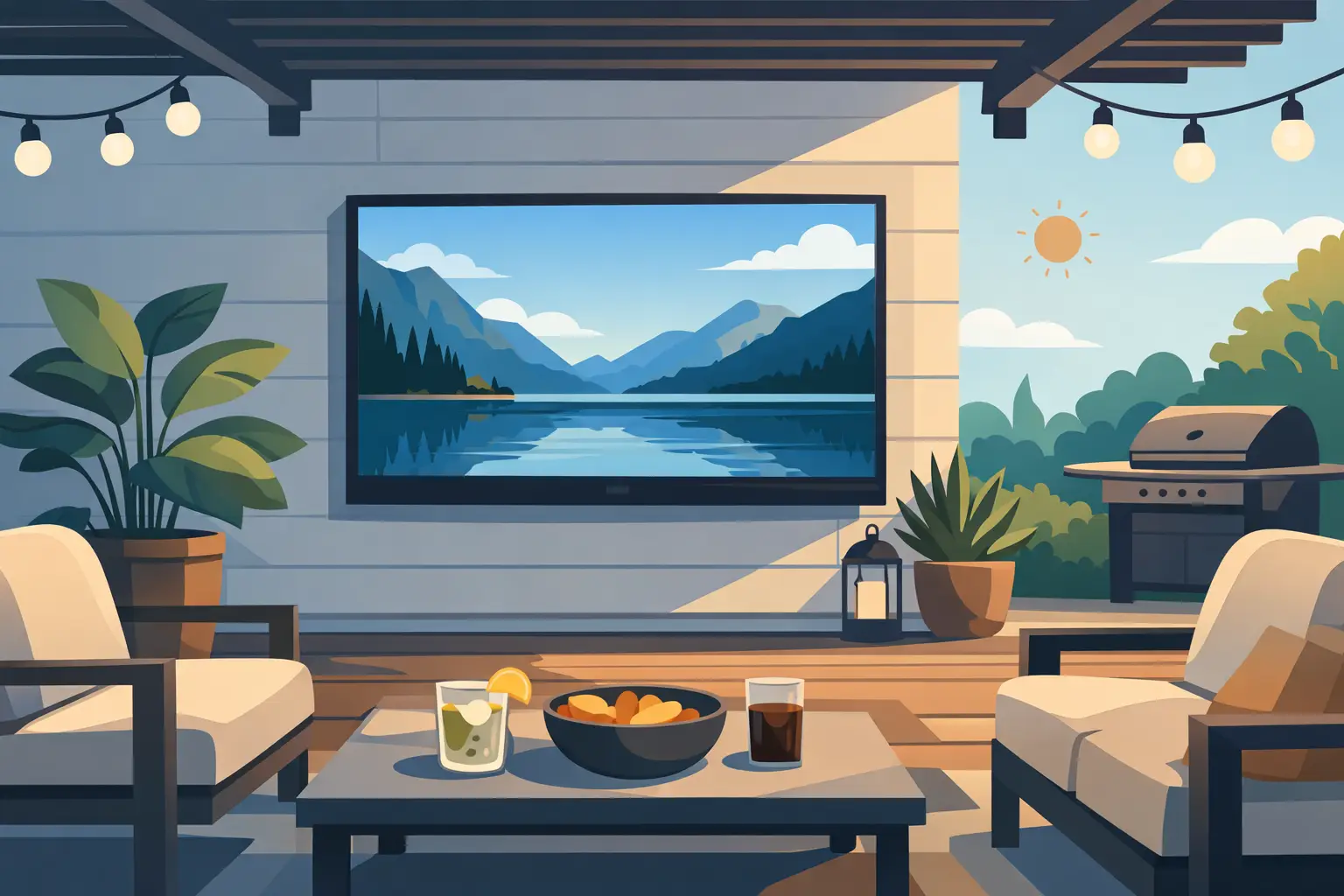
A television mounted beside a patio door may look fine for the first warm weekend. Then comes a bright afternoon, a humid Ohio evening, wind-blown rain, or the first time everyone tries to hear the game over conversation and outdoor noise. A useful outdoor TV review has to look beyond screen size and picture quality. The right display must be chosen and installed for the conditions around it.
For homeowners planning a porch, pool area, outdoor kitchen, or covered entertaining space, an outdoor TV can make the area feel like a true extension of the home. The best result is not simply a television attached to an exterior wall. It is a comfortable, dependable viewing area with the right placement, power, connectivity, sound, and control.
Outdoor TV Review: What Makes One Worth Buying?
The main distinction between an outdoor TV and a standard indoor model is not marketing. Outdoor-rated displays are built to manage changing temperatures, moisture, dust, and more demanding light conditions. Their housings, internal components, connections, and brightness are designed for exposure that would shorten the life of a typical living-room television.
That does not mean every outdoor space requires the most expensive full-sun display. The right choice depends on where the screen will live. A deeply covered porch facing away from direct sunlight has very different needs than a poolside wall that receives afternoon sun. Matching the TV to the environment protects the investment and avoids paying for performance the space does not need.
A standard indoor TV in a weatherproof enclosure can seem like a lower-cost alternative. In limited situations, it may be reasonable, especially in a fully enclosed three-season room. But an enclosure adds bulk, can make access difficult, and may create heat-management concerns. It also does not automatically solve glare, sound, mounting, or the need for protected wiring. For an exposed or regularly used outdoor living area, a purpose-built outdoor TV is usually the more dependable long-term choice.
Start With Sunlight, Not Screen Size
Brightness is often the deciding factor. Indoor televisions are designed for controlled rooms where curtains, lighting, and wall color can be managed. Outside, the sun changes position throughout the day, and reflected light from concrete, water, windows, or light-colored decking can wash out the picture.
Outdoor TVs are commonly grouped by the conditions they serve. Shade models work best under a covered porch or pavilion with little direct sunlight. Partial-sun models handle brighter spaces that receive indirect light or limited sun exposure. Full-sun models are intended for locations with direct sunlight for extended periods.
It is tempting to buy the brightest model available, but that is not always the best decision. A full-sun display can be more expensive and may not be necessary beneath a properly designed covered patio. On the other hand, choosing a shade model for a bright west-facing wall often leads to a disappointing picture, even if the TV has a large screen. Before selecting a display, observe the space in the morning, afternoon, and early evening. The harshest viewing condition should guide the decision.
Placement Determines Comfort and Longevity
Good placement makes the outdoor area easier to enjoy and reduces strain on the equipment. The screen should be visible from the primary seating area without forcing viewers to sit at an awkward angle or crane their necks. It should also be protected from direct weather whenever possible, even when the television is outdoor rated.
A covered wall is generally better than a location at the edge of a roofline where wind-driven rain can reach the display. Avoid mounting directly above a grill, fireplace, or other heat source. Heat, grease, smoke, and frequent temperature swings work against both picture quality and service life.
Viewing height deserves more attention than it usually receives. Outdoor TVs are frequently mounted too high because the wall is tall or because the installer is trying to keep the display out of the way. The result can be uncomfortable for long games or movie nights. Ideally, the center of the screen should align naturally with seated viewing, adjusted for the layout of the furniture and the size of the display.
A tilt or articulating mount can be useful when the screen must serve more than one seating zone. However, a fixed mount is often cleaner and more stable when the viewing position is predictable. The best mount is the one that supports comfortable viewing without leaving the TV exposed to avoidable sun or rain.
Wiring Should Stay Out of Sight and Out of Trouble
The polished outdoor setup is the one that does not show its complexity. Extension cords, loose streaming sticks, and exposed cables can make a finished patio feel temporary. They can also create maintenance issues when weather changes.
A professionally planned installation provides protected power at the TV location, routes low-voltage wiring cleanly, and accounts for how the wall or structure is built. In new construction and major renovations, it is especially helpful to plan conduit and cable paths before finishes are complete. This creates flexibility for future upgrades without opening walls or disturbing stone, siding, or finished woodwork.
Reliable network access matters just as much as power. Streaming sports, live events, and high-resolution movies can expose weak Wi-Fi coverage quickly. A router located inside the house may perform well indoors but struggle through exterior materials, masonry, insulation, and distance. In some locations, a hardwired network connection is the most dependable choice. In others, carefully designed Wi-Fi coverage delivers the convenience homeowners expect.
Consider the devices you actually plan to use. A streaming service may be enough for casual viewing, while a dedicated source, cable connection, or gaming system may call for additional connections and equipment storage. Planning for those needs upfront keeps the finished installation clean instead of adding visible components later.
Do Not Let Audio Become an Afterthought
Outdoor spaces absorb sound. Open air does not behave like a living room, and small built-in TV speakers often have to compete with wind, conversation, traffic, and the sounds of a busy backyard. Turning the TV up louder is rarely the best answer. It can still leave dialogue unclear while disturbing neighbors or people inside the home.
A properly placed outdoor soundbar or weather-rated speakers can make a meaningful difference. The goal is not necessarily high volume. It is clear dialogue and balanced sound at a comfortable level. When speakers are positioned closer to the seating area, viewers can hear better without pushing the system excessively.
For patios used for both television and music, a shared outdoor audio plan keeps the experience simple. One intuitive control approach can reduce the usual collection of remotes, phone apps, and disconnected components. Technology should support a relaxed evening outside, not become another thing to manage.
Size Matters, But Distance Matters More
Bigger is not automatically better outdoors. A large screen can look impressive on the wall yet feel overwhelming in a compact porch. Conversely, a screen that seems adequate in a showroom may be difficult to see from across a wide patio.
Start with the primary viewing distance, then consider the type of content. Sports, movies, and shared viewing generally benefit from a larger display. A TV used mostly for background entertainment while cooking may not need the same scale. The wall itself also matters. Leave enough visual breathing room around the display so the installation looks intentional rather than crowded.
A practical approach is to mark the proposed TV dimensions on the wall with painter’s tape and view it from the seating area. This simple step reveals whether the size and mounting height feel right before equipment is purchased.
Plan for Ohio Weather and Seasonal Use
Northeast Ohio weather asks a lot of exterior equipment. Summer humidity, sudden storms, freezing temperatures, and seasonal debris all influence where a television should go and how it should be maintained. An outdoor-rated TV is designed for these conditions, but careful placement still matters.
Keep the screen clean with products approved by the manufacturer, and inspect connections and mounting hardware periodically. If the space is exposed to heavy pollen, leaves, or construction dust, a gentle cleaning routine helps preserve picture quality and airflow. A fitted cover can offer additional protection when the TV is not in use, as long as the display is cool and dry before it is covered.
For homeowners who use their patio year-round, consider the whole environment. Comfortable seating, lighting that does not reflect in the screen, strong Wi-Fi, and clear audio are often more valuable than moving up one screen size. The television is only one part of the experience.
Tri-County Technology helps homeowners and builders design outdoor entertainment that looks finished, works reliably, and feels easy from the first use. A site visit can identify the sun exposure, structure, wiring options, and network needs that product specifications alone cannot answer.
The most satisfying outdoor TV setup is one you do not have to think about. Choose a display that fits the light, place it for real comfort, and build the infrastructure behind the wall so evenings outside stay focused on the people and the moment.


Comments are closed