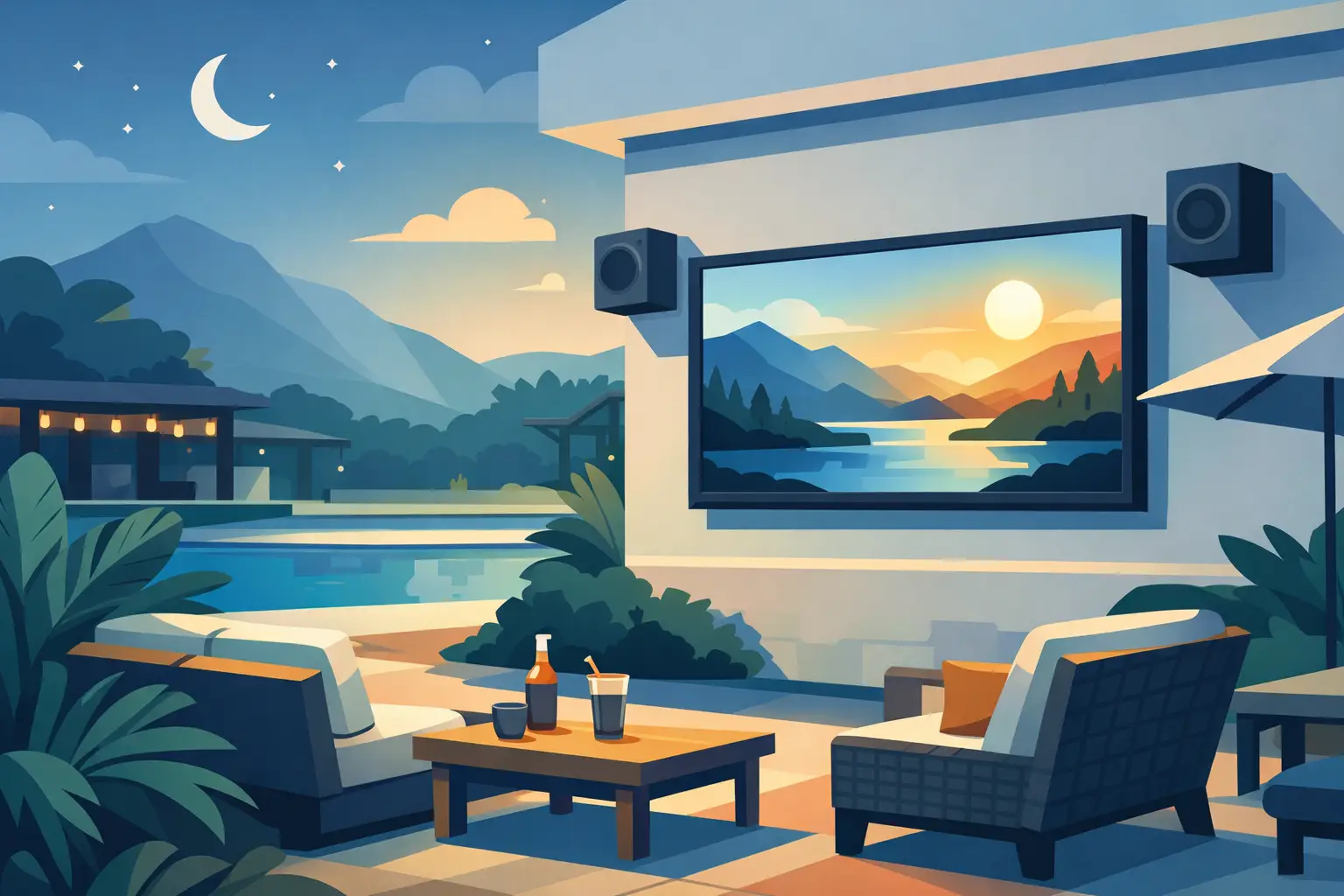
A backyard TV can turn an ordinary patio into the place everyone wants to gather – until glare makes the picture disappear, a sudden shower ends movie night, or cold weather takes a toll on equipment that was never meant to live outside. When homeowners ask which TV works outdoors, the answer is not simply a brand or screen size. It starts with the conditions around the TV and how you want the space to feel.
For a dependable outdoor entertainment area, choose a television designed for outdoor use, then match it to the amount of sun, weather exposure, and seasonal temperature change at its mounting location. That approach creates a cleaner installation and a system that is easier to enjoy.
Which TV Works Outdoors in Your Space?
A true outdoor TV is built differently from the television in a living room. Its enclosure, internal components, connections, and cooling are designed to handle moisture, airborne debris, humidity, and wider temperature swings. It is also engineered for brighter viewing conditions.
The right category depends on placement. Most outdoor TVs fall into three practical groups: full-shade, partial-sun, and full-sun models. The names describe the light conditions the screen can handle, not just the weather.
Full-shade outdoor TVs
A full-shade TV works well under a covered porch, deep overhang, screened patio, or enclosed pavilion where direct sun never reaches the screen. It still provides the weather resistance and temperature tolerance an indoor TV lacks, but it does not need the extreme brightness of a full-sun model.
For many Ohio homes, this is the best balance of performance and budget. A covered patio can be comfortable from spring through fall, and the right full-shade display delivers a clear image without paying for brightness that the space will never use.
Partial-sun outdoor TVs
Partial-sun models are made for patios where sunlight reaches the screen for part of the day. This could be a west-facing deck, an outdoor kitchen wall, or a covered seating area that gets low-angle morning or evening sun.
These televisions produce more light than full-shade models, helping the picture remain visible when daylight is strong. Placement still matters. Even a bright screen performs better when it faces away from direct sunlight and is protected from reflections off windows, light-colored decking, or water.
Full-sun outdoor TVs
A full-sun TV is intended for locations with regular direct sunlight. Think poolside walls, open pergolas, uncovered patios, and outdoor gathering spaces with few options for shade. These displays have exceptionally high brightness and are designed to operate in demanding heat.
They are also the most expensive option. If the screen can be moved into shade with a better mounting location, motorized shade, or a revised furniture layout, a partial-sun model may provide a more comfortable viewing experience for less investment.
Brightness Matters More Than Screen Size
Indoors, most people choose a TV based on size, picture quality, and price. Outdoors, brightness often decides whether the display is usable at all.
TV brightness is measured in nits. A typical indoor television may look excellent in a dark family room but appear dull outside, even under a covered roof. Outdoor models use much higher brightness levels to compete with daylight. The brighter the area, the more output the screen needs.
This does not mean the brightest TV is always the correct choice. A very bright display in a fully shaded porch can feel harsh after sunset. The goal is a picture that remains clear during the times you actually use the space. A professional site review can identify sun paths, reflection points, and the best wall or structure for the display before equipment is selected.
Why an Indoor TV Is a Short-Term Outdoor Solution
It is tempting to move an older indoor TV outside for a season. If it stays in a protected area and is brought inside after use, that may work for an occasional event. Leaving it outdoors, even under a roof, is a different decision.
Indoor televisions are not designed for humidity, wind-driven rain, condensation, insects, dust, or rapid temperature changes. A covered patio reduces exposure but does not create an indoor environment. Moisture can still collect in connectors and inside cabinets, while heat buildup can shorten the life of the display.
A weatherproof TV enclosure can offer added protection in certain installations, but it has trade-offs. Enclosures can add bulk, affect viewing angles, complicate access to connections, and trap heat if they are not correctly specified. In many finished outdoor spaces, a purpose-built outdoor TV offers a cleaner appearance and fewer compromises.
Plan the Mount, Power, and Connectivity Together
The television is only one part of the experience. A polished outdoor setup considers the mounting surface, electrical power, Wi-Fi coverage, audio, and cable routing as one plan.
A proper outdoor-rated mount should support the TV’s weight, fit the mounting surface, and allow the angle adjustments needed to reduce glare. On brick, stone, siding, or masonry, mounting methods vary. The wrong attachment can damage finished materials or make later service difficult.
Power should be available at the TV location through an appropriately installed outdoor-rated outlet. Extension cords are not a permanent answer for a patio television. They create visual clutter and are more exposed to damage, moisture, and everyday traffic.
Reliable Wi-Fi is equally important for streaming. A phone may show a signal near the back door while a TV on the far side of the patio struggles with buffering. Exterior walls, masonry, metal structures, and distance can weaken coverage. Often, improving the home network or adding a properly placed access point makes the outdoor system feel far more dependable.
Do Not Let Audio Be an Afterthought
Outdoor spaces absorb sound. Conversation, wind, traffic, water features, and open air all make TV speakers work harder. Built-in TV audio may be acceptable for quiet viewing close to the screen, but it usually falls short when friends and family are gathered around a patio.
Weather-rated outdoor speakers can provide clearer sound at a comfortable volume across the seating area. The benefit is not simply louder audio. It is better coverage, so people can hear dialogue without turning the system up enough to disturb the rest of the property.
The best speaker locations depend on the layout. Speakers mounted too close to one seating position can make one area loud and another difficult to hear. A thoughtfully designed system distributes sound more evenly and keeps the hardware visually unobtrusive.
Consider Ohio Weather Before You Buy
Northeast Ohio brings humid summers, freezing winter nights, rain, pollen, and fast weather changes. An outdoor TV should be rated for the temperature range it will experience, including periods when the space is not in use.
Some homeowners prefer to leave the display installed year-round. Others use a seasonal approach, covering or storing equipment during winter. Both can be practical, but the decision should match the TV’s manufacturer guidance and the exposure of the location. A screen mounted on a protected three-season porch faces a different environment than one installed on an open deck.
A fitted cover can help protect the display from dust and debris when it is not being used, but it is not a substitute for an outdoor-rated TV. Covers should also be removed before operating the television so heat can dissipate normally.
A Better Starting Point for an Outdoor TV Project
Before choosing a model, stand in the intended seating area at the time of day you expect to watch. Notice where the sun falls, where reflections appear, how far viewers sit from the screen, and whether the Wi-Fi signal holds steady. Those details tell you more than a product specification alone.
For homeowners building a new patio, renovating a porch, or creating an outdoor kitchen, planning low-voltage wiring early keeps cables out of sight and leaves room for future upgrades. Tri-County Technology helps homeowners create outdoor entertainment systems that look intentional, work reliably, and stay simple to use.
The best outdoor TV is the one that fits the light, weather, and rhythm of your home – so when the evening arrives, the technology stays in the background and the time outside takes center stage.


Comments are closed