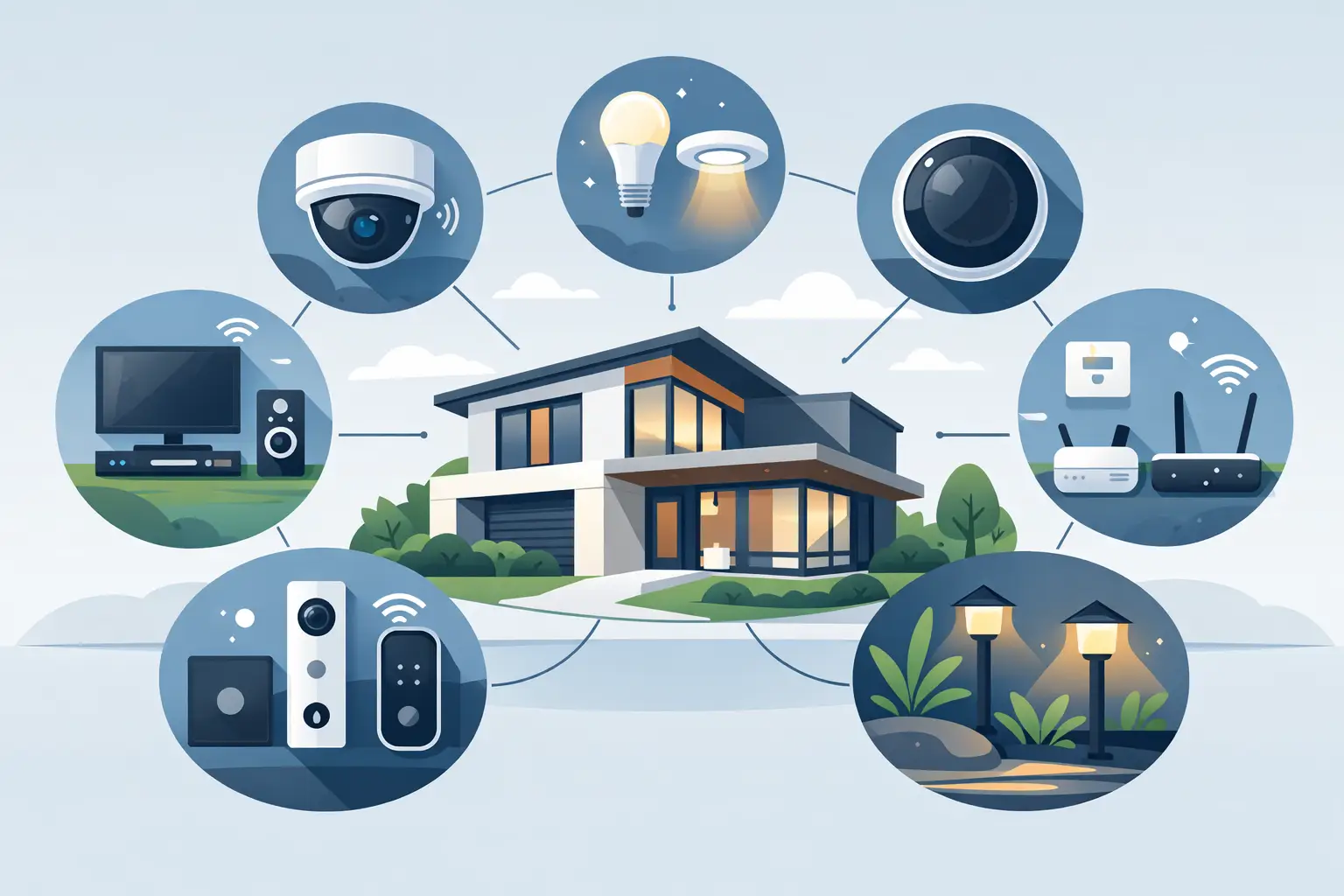
A home can have beautiful finishes, quality furnishings, and plenty of square footage, yet still feel frustrating when the Wi-Fi drops, television equipment crowds the room, or lights require a trip across the house. The best low voltage upgrades solve those daily irritations quietly. They put the technology that supports comfort, entertainment, and connection where it belongs: working reliably in the background.
For a new build, the right infrastructure is far easier and less expensive to install before walls are closed. For a renovation or existing home, thoughtful retrofit options can still make a meaningful difference without turning the project into a major disruption. The strongest choices depend on how you use your home, but a few upgrades consistently deliver value long after installation day.
Best Low Voltage Upgrades That Earn Their Keep
1. Whole-Home Wi-Fi Designed for the Building
A fast internet plan is only one part of a dependable home network. The equipment, placement, wiring, and configuration behind it determine whether that speed actually reaches the bedroom, patio, basement office, and media room.
A professionally designed Wi-Fi system uses wired network connections where they matter most, with properly placed wireless access points providing consistent coverage throughout the home. This approach is especially worthwhile in larger homes, homes with dense materials, or properties where a single router has never reached every room well.
The practical benefit is simple: video calls stay clear, streaming holds its quality, and smart devices respond without the usual pauses. For builders, planning network locations early also avoids the unattractive compromise of adding equipment wherever an outlet happens to be available later.
2. Structured Wiring That Leaves Room to Grow
Structured wiring is the organized backbone behind a connected home. Instead of relying entirely on wireless signals or loose cables added over time, key locations are wired back to a central, labeled equipment area.
That may include network cabling for offices, televisions, wireless access points, and entertainment spaces, along with appropriate pathways for future needs. The goal is not to fill every wall with cable. It is to create useful options in the places where technology is most likely to live.
This upgrade is easy to overlook because much of it is hidden. It is also one of the most lasting investments in a new home. Technology changes, but a well-planned cable pathway and organized distribution area make future changes cleaner, faster, and less intrusive. In a retrofit, wiring can often be added strategically to solve the rooms that create the most frustration first.
3. Lighting Control for Better Everyday Rhythm
Lighting control is about more than turning lights on from a phone. A well-designed system makes common actions easier: arriving home to a welcoming entry, dimming the main living space for a movie, or turning off selected lights at the end of the evening without walking room to room.
The best designs begin with routines, not gadgets. A family may want simple wall controls with a few useful scenes. Another homeowner may prefer automated schedules that reflect how the house is used throughout the week. Both can be intuitive when the system is designed around real habits.
There is a trade-off here. More options are not always better. A room with too many scenes or confusing labels can make basic lighting feel harder than a standard switch. Keep the controls purposeful, easy to understand, and appropriate for the people who will use them every day.
4. Whole-Home Audio Without the Clutter
Music changes the feel of a home, particularly in kitchens, great rooms, patios, and primary suites. Whole-home audio lets you enjoy it without carrying a speaker from room to room, dealing with charging cables, or leaving equipment on counters.
In-ceiling or carefully placed architectural speakers can blend into the room while providing clear, even sound. Separate zones let different spaces play different audio, so one person can listen to a podcast in the kitchen while another enjoys music outside.
Speaker selection and placement matter more than brand names alone. Ceiling height, room size, hard surfaces, and intended listening level all influence the result. For a casual entertaining area, discreet speakers may be the right fit. For a dedicated listening space, the design may call for more focused equipment and calibration.
5. A TV or Projection System Built Around the Room
A large television mounted at the proper height can make a living room feel finished. A projection system can turn a basement or dedicated space into a memorable place for movies, sports, and game nights. Either option works best when it is planned as part of the room rather than installed as an afterthought.
That means concealing cables, locating equipment thoughtfully, selecting a screen size appropriate for viewing distance, and making controls straightforward. The goal should be one easy experience, not a collection of remotes and visible wires.
Projection is not automatically better than a large television. It depends on ambient light, seating distance, ceiling conditions, and how often the space is used during the day. A bright multipurpose room may benefit more from a high-quality TV, while a darker lower-level room can be an excellent candidate for projection. Professional planning helps homeowners make that decision before buying equipment that does not suit the space.
6. Motorized Window Treatments That Feel Natural
Motorized shades and drapery can add comfort in a way people notice immediately. They help manage glare on screens, reduce harsh afternoon sun, add privacy, and make hard-to-reach windows easier to enjoy.
The most successful installations are subtle. Treatments can operate on a schedule, respond to a single button press, or coordinate with room lighting for a more comfortable setting. In a great room with tall windows, that may mean lowering shades before the strongest sun arrives. In a bedroom, it may mean opening them gradually in the morning.
Fabric choice, window shape, and power planning all deserve attention. Battery-powered options can work well for certain retrofit projects, while wired power is often cleaner for new construction or rooms with many treatments. A professional measurement and installation process also matters because shades should look as polished when open as they do when closed.
7. Centralized Equipment for a Cleaner Home
When network gear, audio components, streaming devices, and related equipment are scattered behind televisions and inside cabinets, maintenance becomes difficult. Heat builds up, cables become tangled, and a simple service need can turn into an inconvenient search.
Centralizing appropriate equipment in a ventilated, organized location creates a cleaner result and simplifies support. It does not mean every device must be hidden far from the room. It means the system should be designed intentionally, with reliable connections, labeled cabling, and enough space for service and future additions.
For homeowners, this often means fewer visible components and less guesswork. For builders and property managers, it creates a more professional handoff and makes the home easier to support over time.
How to Choose the Right Upgrade Order
If the budget does not support every improvement at once, begin with the infrastructure that enables the rest. Reliable Wi-Fi and strategic structured wiring generally come first because they support entertainment, lighting, shades, and other connected features. After that, prioritize the rooms that have the greatest daily impact, such as the main living area, home office, kitchen, and primary bedroom.
New construction is the ideal time to plan pathways, power, speaker locations, network outlets, and equipment space. During a renovation, coordinate low-voltage work before drywall, millwork, and paint whenever possible. The more decisions are made early, the more discreet and dependable the finished installation can be.
For existing homes, start with a consultation that identifies current pain points instead of trying to replace everything at once. A weak network, an awkward television setup, or a room with persistent glare can often be improved in focused phases. Tri-County Technology helps Northeast Ohio homeowners and builders make those choices with a design that fits the home, the budget, and the way the space will actually be used.
The right upgrade should make a home feel easier to live in, not more technical. Start with the moment that causes the most friction in your day, then build a system that quietly makes that moment better.


Comments are closed