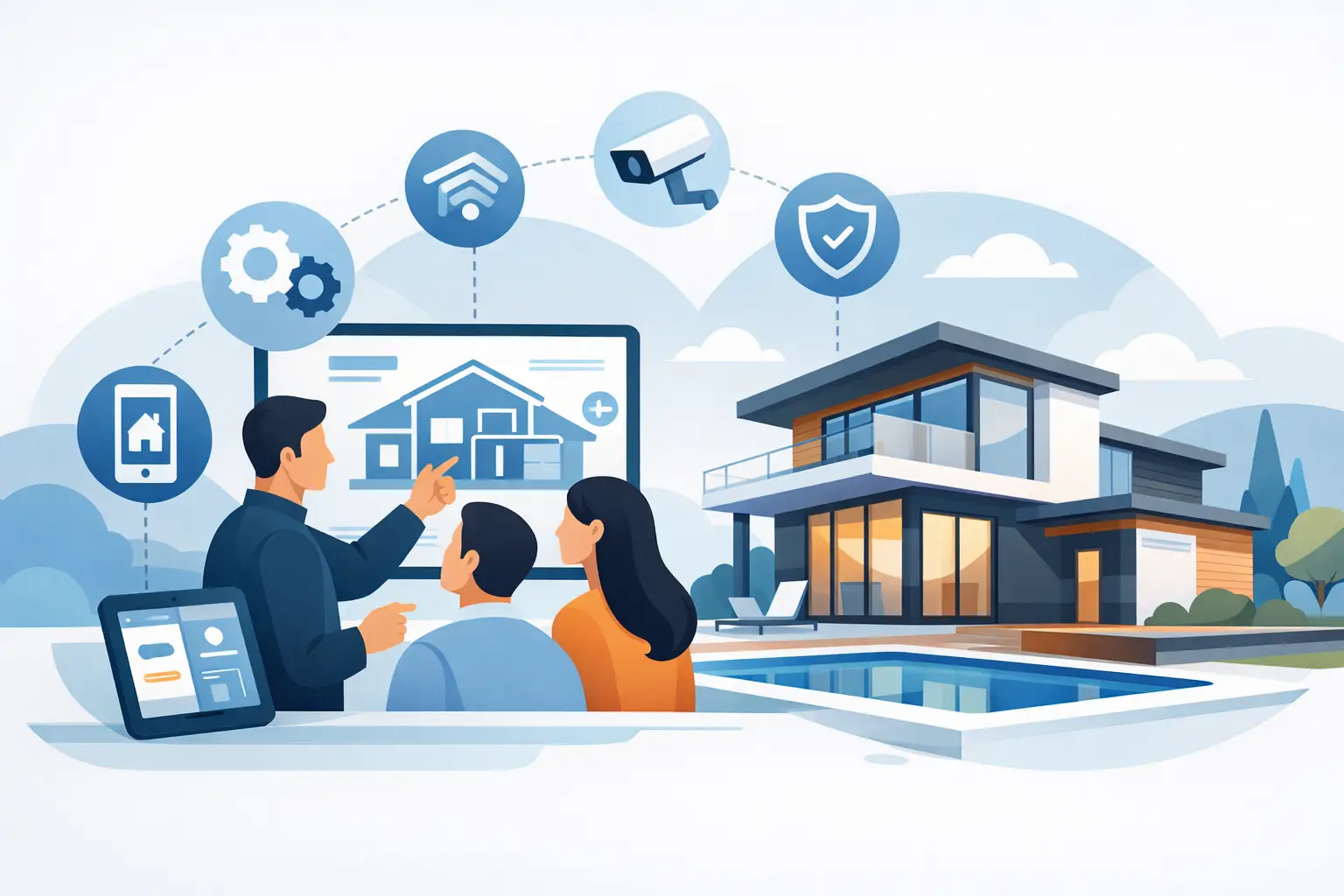
A custom home can have beautiful finishes and thoughtful architecture yet still feel frustrating if the Wi-Fi drops in the primary suite, televisions compete for visible equipment, or the right wiring was never placed before drywall. Technology consultation for custom homes prevents those expensive afterthoughts. It brings the builder, homeowner, and technology professional together early enough to make connected living feel natural from move-in day.
The goal is not to fill a home with gadgets. It is to create a dependable foundation for the ways people actually live: working from a home office, listening to music while cooking, enjoying a movie with family, adjusting shades as daylight changes, and staying connected in every room. When the planning is done well, the technology stays in the background while comfort takes the lead.
Why Technology Consultation for Custom Homes Starts Early
The best time to make technology decisions is before framing is complete, not after the paint is dry. Early consultation allows wiring routes, equipment locations, ceiling speaker placement, television mounting, and wireless coverage to be considered alongside electrical, HVAC, cabinetry, and interior design plans.
That coordination protects the finished look of the home. A display can sit at the right viewing height without an exposed cord. Speakers can be placed for balanced sound without conflicting with lighting or structural elements. Wireless equipment can be located where it supports consistent coverage rather than being tucked into a mechanical corner as an afterthought.
For builders, this process also reduces jobsite surprises. Clear plans help the trades understand where conduits, backing, power, and low-voltage wiring are needed. Instead of revisiting completed walls or negotiating last-minute changes, the team can move through construction with fewer interruptions.
Early planning does not mean every product must be selected immediately. A well-designed infrastructure can leave room for future additions while keeping the initial scope aligned with the homeowner’s priorities and budget.
Start With Daily Routines, Not a Product List
A useful consultation begins with questions that have little to do with model numbers. How does the family gather? Which spaces need strong connectivity for work or school? Is the patio used for entertaining? Will there be a dedicated media room, or does the living room need to serve several purposes? Are homeowners looking for a few simple controls or a more coordinated experience throughout the house?
Those answers shape the design. A household that streams in multiple rooms, works remotely, and hosts guests has different needs than a couple building a quiet retirement home. Neither approach is better. The right solution is the one that fits the home and the people who will use it.
This lifestyle-first approach also keeps the system intuitive. A homeowner should not need a technical manual to listen to music, start a movie, lower a shade, or improve the lighting mood in a room. Thoughtful programming and clean control options make everyday actions easy for everyone in the household.
Connectivity is the foundation
Reliable Wi-Fi is no longer a single router placed near the internet service entrance. Custom homes often include dense building materials, larger footprints, finished lower levels, outdoor spaces, and areas where wireless signals can weaken. A consultation considers coverage room by room and identifies appropriate locations for wired wireless access points.
Structured wiring is equally valuable. Running quality cable during construction supports stable connections for televisions, workspaces, network equipment, and future devices. Wireless service remains essential, but wired infrastructure provides the dependable backbone that makes the overall experience better.
Equipment placement matters here as much as cable selection. A dedicated, organized location for network and audio-video equipment makes service simpler, improves airflow, and keeps living areas free of clutter. It also gives homeowners a clear place to turn when their internet provider changes equipment or a system needs attention years later.
Entertainment should fit the room
Whole-home audio, television installations, and projection systems are most enjoyable when they are designed around the space rather than forced into it. Ceiling height, furniture layout, windows, acoustics, viewing distance, and natural light all influence the final result.
A bright family room may benefit from a properly placed television and discreet audio. A basement media room might support a larger projection experience. Outdoors, weather-rated equipment and careful speaker placement can create music coverage without overwhelming the patio conversation. These choices are not simply about getting more equipment. They are about creating a room people want to spend time in.
Planning before drywall also makes it possible to conceal wiring and locate speakers with purpose. The result is cleaner than surface-mounted additions later, and it avoids compromises that can affect both appearance and performance.
Lighting and shades support the rhythm of the home
Lighting control and motorized window treatments can bring a noticeable sense of ease to a custom home. A single action can set the lighting for dinner, movie time, or the end of the evening. Shades can help manage glare in rooms with large windows and support privacy when it is wanted.
There are trade-offs to consider. Battery-powered shades may be practical in select retrofit situations, while hardwired shades are often the better choice during new construction. Hardwired options reduce routine battery maintenance and can be easier to coordinate across larger groups of windows, but they require early planning for power and wire paths.
Likewise, lighting control should reflect how homeowners use each room. Some want simple dimming in a few key spaces. Others prefer coordinated scenes across common areas. A consultation helps avoid overbuilding while ensuring the system can grow if needs change.
A Clear Consultation Process Keeps Decisions Manageable
Custom home technology can feel like a long list of choices, especially while owners are also selecting flooring, fixtures, appliances, and finishes. The consultation process should reduce that pressure, not add to it.
It typically begins with a review of floor plans and construction timing, followed by a conversation about lifestyle, priorities, and investment range. From there, the technology team can identify infrastructure needs and build a design that is easy for the builder to coordinate. Equipment is selected based on the desired outcome, room conditions, and long-term serviceability.
The final plan should be clear enough that everyone understands what is being installed, where it belongs, and what it will do. During installation, professional workmanship matters. Clean cable management, properly labeled wiring, well-placed equipment, and careful finish work are details homeowners may not see every day, but they make a real difference when support or updates are needed.
Before handoff, the system should be tested as a complete experience, not as a collection of separate parts. Homeowners should receive practical guidance in plain language, with controls organized around familiar routines. The best technology feels comfortable quickly because it was designed to be lived with.
Avoiding the Most Common New-Build Regrets
Most technology regrets in custom homes trace back to timing. Waiting until trim-out to think about Wi-Fi, television locations, audio, or shades limits the available options. Another common issue is planning only for the present. A home may not need every feature on day one, but thoughtful prewiring can preserve options without committing to a larger initial installation.
It is also wise to avoid treating every room identically. A guest room, a home office, a great room, and a covered porch each have different requirements. Prioritizing the rooms that matter most creates a better result than spreading the budget too thinly across the entire house.
For Northeast Ohio builders and homeowners, seasonal changes can add another consideration. Outdoor living areas, basement spaces, and rooms with large expanses of glass deserve particular attention for connectivity, viewing conditions, audio coverage, and shade planning. Local construction experience helps turn those conditions into practical design decisions.
A custom home is built around the people who will live there. Its technology should follow the same principle: planned carefully, installed professionally, and simple enough to support the day without demanding attention. When the walls are still open, a good conversation can make every day in the finished home feel more comfortable.


Comments are closed