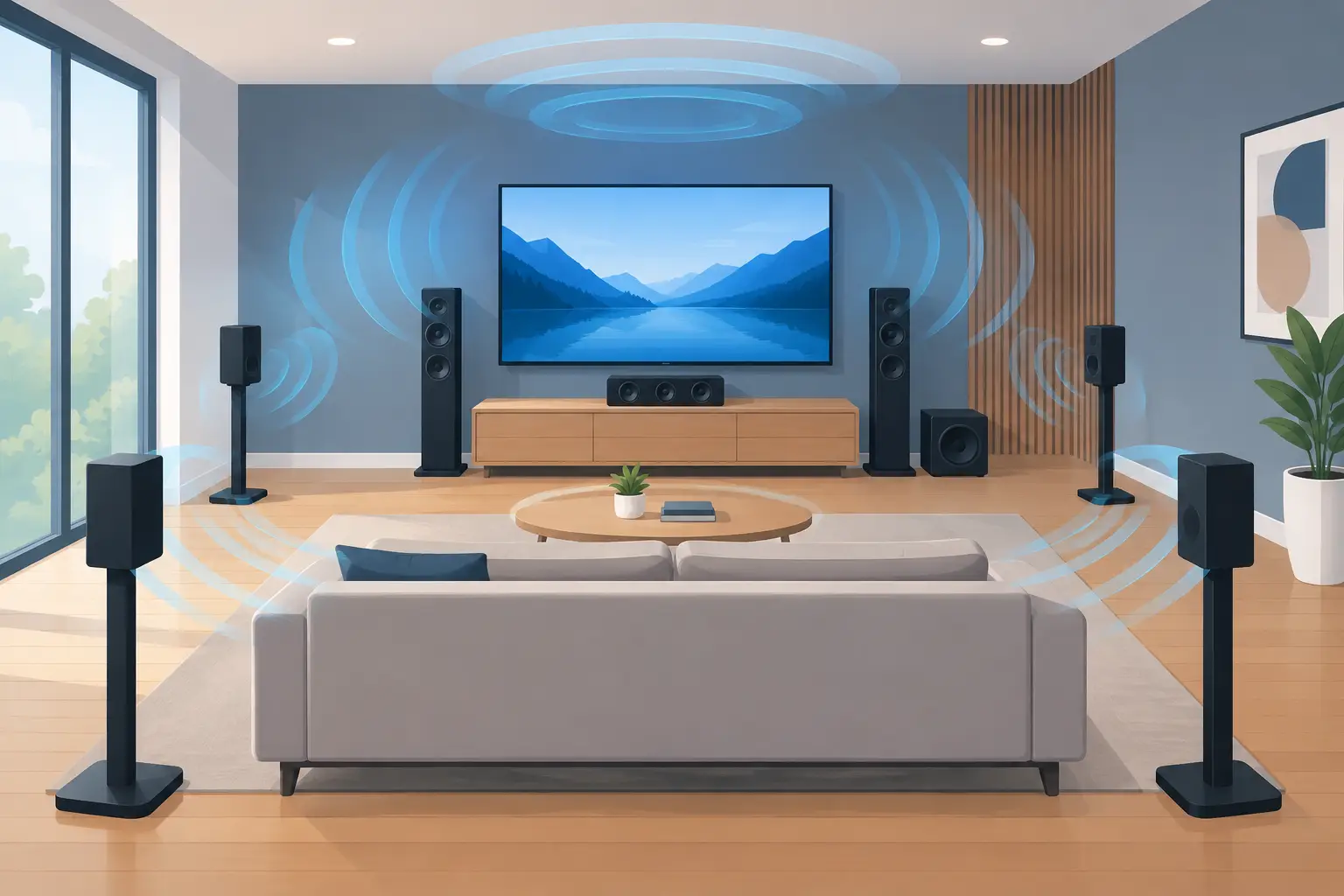
A movie can have a brilliant soundtrack, but it will still feel flat when dialogue is hard to hear, effects pile up at the front of the room, and the bass overwhelms everything else. Professional surround sound installation is about more than adding speakers. It shapes sound around the room so each seat feels connected to what is happening on screen.
The best systems are easy to enjoy because the planning happened before the equipment was installed. Speakers are placed with purpose, wiring stays out of sight, and control is simple enough that anyone in the home can start a movie without sorting through remotes or settings.
Why Room Design Matters More Than Speaker Count
A larger speaker package does not automatically create a better experience. Room dimensions, ceiling height, furniture placement, wall materials, and the location of the TV or projector all affect how sound travels. An open-concept great room needs a different approach than a dedicated theater with four enclosed walls.
Dialogue is usually the first place poor design becomes obvious. The center channel carries much of the spoken content in movies and television. If it is too low, blocked by cabinetry, or placed far from the display, voices can sound disconnected from the people on screen. Proper placement brings speech forward without requiring the volume to be turned up.
Surround speakers should support the action, not call attention to themselves. When rear or side speakers are placed too close to seating, they can feel distracting. When they are too far away or poorly aimed, the room loses the sense of movement that makes a concert, game, or film feel more involving.
A thoughtful design also accounts for how the room is used. A family room may need discreet in-wall or in-ceiling speakers that preserve a clean appearance. A dedicated theater may benefit from more visible performance speakers, acoustic treatments, and additional subwoofers. Neither approach is automatically better. The right choice depends on the room and the experience you want from it.
Choose the Right Surround Sound Format
Most homeowners do not need to memorize audio formats before starting a project. It is helpful, though, to understand what each option is designed to do.
A 5.1 system uses three front speakers, two surround speakers, and one subwoofer. It remains a strong choice for many living rooms because it delivers clear dialogue, convincing effects, and meaningful bass without requiring extensive construction.
A 5.1.2 or 7.1.2 system adds overhead sound channels for formats such as Dolby Atmos. Those ceiling speakers can make rain sound like it is falling above the audience or let aircraft and music move more naturally through the space. In rooms with the right ceiling height and seating layout, this added dimension can make a substantial difference.
Larger systems, such as 7.1.4, are often well suited to dedicated theaters and larger media rooms. They can be exceptional, but they require enough distance between speakers and listeners to work as intended. Installing more channels than the room can support may add cost without adding clarity.
Subwoofers deserve special attention. One properly located subwoofer can transform a system, while two can provide more balanced bass across several seats. Placement and calibration matter because low frequencies interact strongly with room boundaries. A subwoofer tucked into the nearest open corner may be convenient, but it is not always the best sounding location.
Surround Sound Installation Starts With a Plan
The cleanest surround sound installation begins before walls are closed in. For new homes, low-voltage wiring can be routed to planned speaker locations, the display wall, equipment rack, and future expansion points. This keeps options open while protecting the finished look of the home.
Retrofit projects require a more tailored plan. Experienced installers can often use attics, basements, closets, and existing wall cavities to conceal wire runs. The goal is to avoid unnecessary wall damage while still placing speakers where they will perform properly. Surface-mounted raceways may be appropriate in a few situations, but they should be a considered choice rather than a default shortcut.
Equipment location is another early decision. Some homeowners prefer the receiver and streaming devices near the TV for quick access. Others choose a ventilated closet or dedicated equipment area to keep the room visually quiet. A remote equipment location can reduce clutter and fan noise, but it must be designed with reliable control, ventilation, and service access in mind.
Before installation begins, a professional should confirm several practical details:
- Where the primary seating will be, including recliners and sectional seating
- Whether the room needs a TV, projector, or both
- Which speakers can be hidden and which should remain accessible
- How the system will be controlled by family members and guests
- Whether future upgrades should be prepared for while walls are open
These decisions prevent the common frustration of having a beautiful room with speakers in the wrong place or wires that should have been installed earlier.
Calibration Is Where the System Comes Together
Even carefully selected equipment needs to be calibrated. Speaker distances, crossover settings, output levels, and bass response should be adjusted for the room rather than left at factory defaults. This is what helps effects move naturally, keeps dialogue intelligible, and prevents bass from sounding muddy or thin.
Calibration is especially valuable in multipurpose rooms. Hardwood floors, large windows, vaulted ceilings, and open walkways can all change the listening experience. The solution is not always more equipment. Sometimes it is a better speaker angle, a revised crossover setting, or a different subwoofer location.
Clean Installation Protects the Experience
The visual details matter. A surround sound system should enhance a room, not turn it into a tangle of exposed cables, mismatched components, and competing remotes. In-wall wiring, correctly sized mounting hardware, paintable grilles, and thoughtful equipment placement help the technology fit naturally into the home.
There is also a long-term reliability benefit. Properly terminated cable, labeled connections, surge protection, ventilation, and accessible service points make future maintenance far easier. When a streaming device changes, a receiver needs attention, or a homeowner wants to add speakers later, an organized installation saves time and avoids unnecessary disruption.
For builders, early coordination is particularly valuable. Planning speaker locations alongside framing, electrical work, cabinetry, HVAC, and finish selections reduces conflicts later in the project. It also gives homeowners a finished space that feels intentional from move-in day.
Make Control Easy for Everyone
A great entertainment system should not require a lesson before every use. One well-programmed remote, a simple wall keypad, or an intuitive app can bring the display, audio system, and source devices together in a practical way.
The best control experience reflects real routines. A homeowner may want one button to start a movie, another to watch a game, and a simple volume control that behaves predictably. When the system is integrated with lighting and motorized shades, those settings can also support the viewing experience without adding extra steps.
This is where professional design has real value. The focus is not on adding controls for their own sake. It is on reducing friction, so the system feels comfortable to use every day.
When a Professional Installation Is Worth It
Do-it-yourself setups can work well for a basic soundbar or a compact room with simple needs. A custom surround system becomes more complex when walls need to be opened, speakers need precise placement, a projector is involved, or equipment must be concealed and easy to operate.
Professional installation is particularly helpful when you are building, renovating, correcting an underperforming system, or designing a media room around the way your family actually watches and listens. Tri-County Technology can help turn those decisions into a system that looks clean, sounds natural, and remains dependable long after installation day.
The right surround sound system should disappear into the experience. You should notice the whispered line of dialogue, the crowd rising behind you, and the soundtrack filling the room – not the technology working to make it happen.


Comments are closed