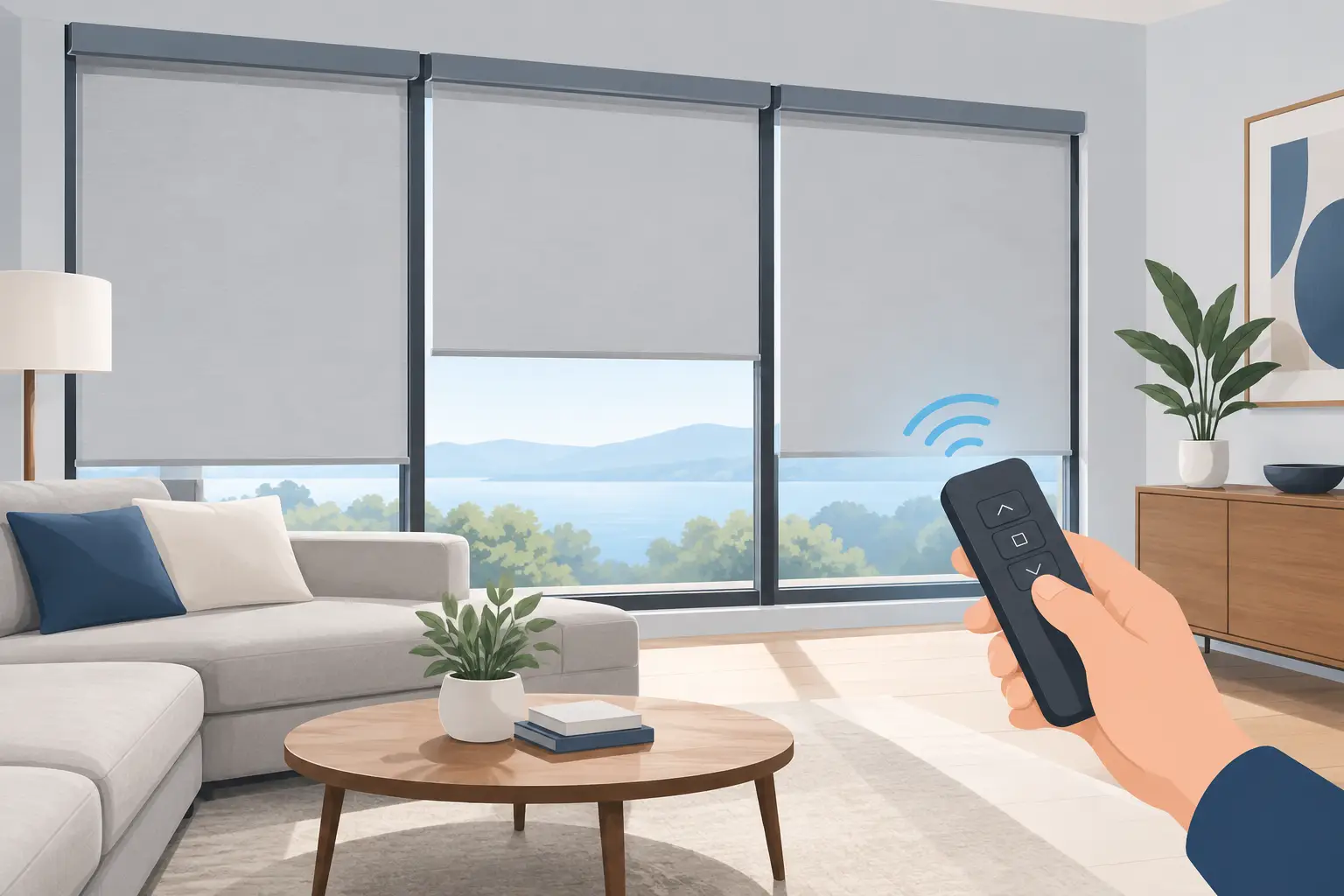
The best motorized shade review is not really about whether a shade moves when you press a button. Most quality systems can do that. The meaningful question is whether the shades make a room more comfortable without adding another device, another app, or another daily task to manage. When they are designed well, motorized shades simply become part of how the home responds to morning sun, afternoon glare, privacy needs, and evening routines.
For homeowners planning a renovation or new build, the difference between an average installation and a satisfying long-term system usually comes down to fabric selection, power planning, control design, and professional fit. Price matters, but the lowest initial price is rarely the best measure of value.
What a Motorized Shade Review Should Compare
A motorized shade system earns its place in a home when it solves a real comfort problem. Maybe the west-facing family room becomes too bright to enjoy after 4 p.m. Maybe tall windows are difficult to reach. Maybe a bedroom needs dependable room darkening without manually adjusting several shades every night. Or perhaps you want a clean, consistent window treatment across an open floor plan.
Start by considering what each room needs rather than choosing one shade type for the entire house. A kitchen may benefit from light-filtering roller shades that reduce glare while preserving daylight. A media room may call for darker fabrics and side-channel options that limit light around the edges. Bedrooms often need a dual-shade approach, pairing a sheer or light-filtering shade for daytime with a blackout shade for sleep.
That room-by-room approach also helps avoid a common disappointment: selecting a beautiful fabric that does not perform the way the room requires. A light-filtering shade softens sunlight, but it does not make a room dark. A blackout fabric blocks light through the material, yet light can still enter around the sides if the installation does not account for gaps. The right answer depends on the window, trim, and expectations.
Comfort is the real daily benefit
Convenience is the obvious appeal, but comfort is why many homeowners keep using motorized shades long after the novelty has worn off. Scheduled shades can open in the morning to bring in natural light and lower during the hottest, brightest part of the day. In rooms with strong sun exposure, that can reduce glare on televisions and screens while helping protect flooring, artwork, and furnishings from prolonged direct sun.
Control can be as simple as a wall keypad or handheld remote. It can also be part of a broader home control system, where a single command adjusts shades, lighting, and entertainment settings for a movie or evening routine. The right level of automation should feel natural. If everyone in the home has to remember a complicated sequence of commands, the system is doing too much.
A good design also keeps manual control available. Automation should support personal preference, not override it. If you want the shades open on a cloudy morning or closed early for privacy, that adjustment should take one tap or one voice command, not a trip through several menus.
Power Options: Battery, Wired, and Solar
Power is one of the most important decisions in any motorized shade review because it affects installation, appearance, maintenance, and future flexibility.
Battery-powered shades are often a practical choice for finished homes. They avoid opening walls and can work well in many retrofit projects, especially where shades are not used heavily. Battery systems have improved substantially, and rechargeable options can limit routine replacement. Still, batteries need attention. The schedule depends on shade size, fabric weight, daily use, and the number of movements, but homeowners should be comfortable with periodic charging or service.
Hardwired shades are usually the preferred option for new construction and major renovations. Low-voltage wiring can be planned before drywall, giving each shade consistent power without visible charging cords or future battery maintenance. This approach is particularly valuable for high windows, large openings, and rooms with multiple shades that operate every day.
Solar-powered options can be useful in windows with reliable sunlight, though they are not the answer for every orientation or fabric type. They can reduce charging needs, but the solar panel must receive enough light to be effective. A professional evaluation is worthwhile before choosing solar simply to avoid wiring.
The practical rule is straightforward: use hardwired power when construction makes it easy, and consider battery or solar options when a clean retrofit matters most. Neither choice is automatically better. The right one fits the home and how the shades will be used.
The Details That Separate a Good Shade From a Great One
A motor may be quiet, but the shade can still look unfinished if the hardware, roll direction, hem bar, and mounting location are not carefully planned. These details are easy to overlook in a showroom and impossible to ignore once the shades are installed.
Mounting inside the window frame creates a tailored look and keeps the treatment close to the glass. It requires enough depth and a reasonably square opening. Outside mounting can cover more of the window and help improve light control, especially with blackout fabrics, but it needs to be proportioned to the trim and wall space. Large windows may also need multiple shades, which introduces questions about alignment and light gaps between panels.
Fabric should be chosen under real lighting conditions whenever possible. A sample that looks warm and neutral under showroom lights may appear cooler or darker in a sun-filled Ohio home. Openness factor matters for solar fabrics as well. A more open weave preserves more of the view outward but allows more daylight and heat through. A tighter weave offers greater glare reduction and privacy while reducing visibility to the outside.
Motor noise deserves an honest assessment. Quality shades are generally quiet enough for normal living areas, but no moving treatment is completely silent. In bedrooms, nurseries, and quiet offices, placement and product selection deserve extra attention. The goal is a smooth, predictable movement that does not call attention to itself.
Automation That Feels Useful, Not Fussy
The strongest automation plans are built around routines people already have. Morning and evening schedules are popular because they are easy to understand and useful across the year. A dining room might lower shades before sunset to reduce glare, while a bedroom can close at a set time and open gradually in the morning.
Sun-based automation can be valuable in rooms with changing seasonal light, but it needs thoughtful setup. If shades respond too aggressively to every bright moment, the home can feel disconnected from the outdoors. Many homeowners prefer a simple schedule with seasonal adjustments, using sun-based triggers only where glare is consistently disruptive.
Grouped control is another feature worth paying for. Instead of operating six shades individually, you can control the entire room, one wall of windows, or the whole first floor. The best grouping follows the way the space is used. In an open-concept home, that might mean separate groups for the kitchen, living area, and patio doors rather than one large command that changes everything at once.
Reliable control also depends on thoughtful system design. Wireless shades need dependable communication paths, especially in larger homes, rooms with dense construction materials, or installations spread across multiple floors. This is where experienced low-voltage planning makes a difference. A shade that works perfectly during a quick demonstration but occasionally misses commands is not delivering the calm, dependable experience homeowners expect.
When Motorized Shades Are Worth the Investment
Motorized shades are especially worthwhile when windows are hard to reach, when a room has multiple treatments to adjust, or when daily sun exposure creates ongoing discomfort. They are also a strong fit for new homes where wiring can be planned early and integrated cleanly. In these settings, the system often adds value not because it feels flashy, but because it removes small frustrations from everyday life.
They may be less compelling for a single, easily reached window that is rarely adjusted. A high-quality manual shade can be the sensible choice in a low-use guest room or a small space with straightforward light conditions. There is no need to automate every window just because automation is available.
Budget should account for more than the shade itself. Fabric, motor type, power method, custom sizing, installation complexity, and control integration all influence the final cost. Professional measurement is particularly important. Window openings are rarely as uniform as they appear, and small sizing errors can affect operation, light control, and the finished appearance.
For builders, planning window treatments alongside low-voltage wiring prevents costly compromises later. For homeowners updating an existing space, a consultation can identify which windows would benefit most from motorization and where a battery-powered solution makes the most sense.
A well-chosen motorized shade system should not make a home feel more technical. It should make bright afternoons easier, evenings more private, and daily routines a little calmer – all with controls simple enough that everyone in the household will actually use them.


Comments are closed