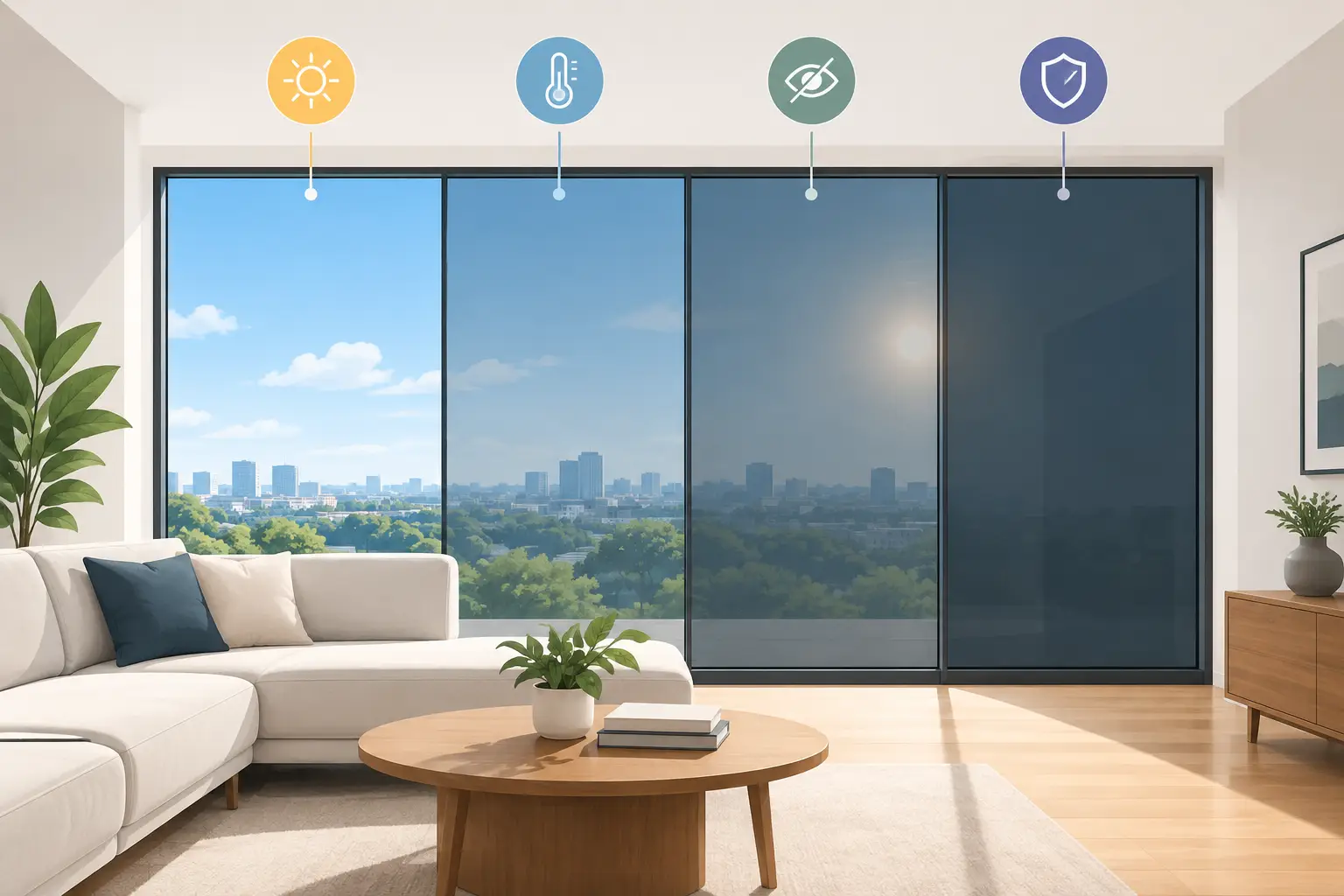
A bright bathroom, front entry, or glass-walled office can look exceptional until privacy becomes an everyday compromise. Smart tint gives homeowners a way to change that glass on demand, shifting from clear to private with a wall control, scheduled setting, or simple tap. The result is a room that stays open and light-filled when you want it to, then becomes comfortably private when life calls for it.
For a new build or a thoughtful renovation, smart glass technology can be a cleaner alternative to shades in the right locations. It reduces visual clutter, protects the look of a carefully designed space, and gives occupants control without adding another cord, pull chain, or fabric treatment to maintain.
What Smart Tint Actually Does
The phrase smart tint is used for several types of switchable glass and window film, so choosing the right technology starts with being clear about the goal. In many residential applications, the product is a polymer-dispersed liquid crystal film, often called PDLC. When power is off, the film appears frosted or opaque. When power is on, it becomes clear enough to see through.
That makes it especially useful when privacy is the priority. Think of a primary bathroom window, a glass shower enclosure, sidelights near an entry, a home office with interior glass, or a small conference room in a business setting. It allows the glass to remain part of the architecture instead of being covered full-time.
Other smart glazing products are designed to darken gradually for glare and solar heat management. These can be valuable on broad, sun-facing glass, but they work differently from privacy film. A darkened window may still allow visibility, while a privacy-focused film turns the view into a diffused surface. The distinction matters: a product that solves glare may not create privacy, and one that provides privacy may not significantly reduce afternoon heat.
Where Smart Tint Makes the Most Sense
Smart tint earns its place when a room benefits from both openness and discretion. It is not automatically the best answer for every window, especially where a conventional shade provides better insulation, room-darkening, or decorative softness. But in the right spaces, it is remarkably practical.
Bathrooms and shower glass
Bathrooms are the most natural fit because the need changes throughout the day. Clear glass can make a compact bath feel larger and preserve natural light. With smart tint activated, that same glass becomes private without blocking the window permanently or crowding the room with additional treatments.
For a shower enclosure, confirm that the selected film or glass assembly is intended for wet-area conditions. The edges, electrical connections, and installation details matter just as much as the film itself.
Interior glass and flexible rooms
A home office can feel brighter and more connected with a glass partition, but video calls, focused work, and overnight guests occasionally require separation. Smart tint lets one room serve multiple purposes without relying on a permanent wall or a bulky divider.
It can also work well in a finished basement, a dressing area, or a small business meeting space. In each case, the value is not novelty. It is the ability to adjust the room to the task at hand.
Entry sidelights and street-facing areas
Glass beside a front door brings in welcome daylight, yet it can leave a foyer feeling exposed after dark. Switchable privacy film lets homeowners preserve the architectural look of the entry while choosing privacy in the evening. This can be more polished than keeping a shade closed over an area meant to feel inviting.
Smart Tint vs. Motorized Shades
Smart tint and motorized shades can both improve comfort, but they solve different problems. Smart tint changes the glass itself. Motorized shades sit in front of the glass and can provide stronger light blocking, more fabric and color choices, and, depending on the shade type, meaningful insulation benefits.
If the goal is privacy on an interior glass wall or shower enclosure, smart tint is often the more elegant solution. If the goal is to manage sunrise glare in a bedroom or protect a media room from harsh afternoon sun, shades may be the better choice. On large exterior windows, a combination can be sensible: smart tint for occasional privacy and shades for light control, energy performance, and room-darkening.
The best decision comes from looking at how the room is used, which direction the glass faces, and what the homeowners want the space to feel like when the system is off. Technology should support the design, not force the design to work around it.
Planning a Smart Tint Installation
Smart tint looks simple once installed, but a clean result depends on early coordination. For new construction, the best time to discuss it is before drywall and finish selections are finalized. That gives the project team room to plan concealed power, control locations, trim details, and the route from the glass to the power supply.
Retrofits are possible, particularly with applied film, but they need a careful site evaluation. Existing glass condition, window size, frame style, moisture exposure, and access to nearby power all affect what is practical. Wiring should be planned to stay out of sight whenever possible, because visible cords quickly undermine the tailored appearance that makes smart tint appealing.
A professional installation also accounts for transformers, switching equipment, and service access. The equipment should be located where it can be maintained without disrupting a finished space. In larger projects, grouping multiple panes thoughtfully can keep operation intuitive while limiting unnecessary complexity.
Control should feel natural
A wall keypad, a simple switch, or scheduled automation can all work well. The right option depends on the room. A bathroom may benefit from a straightforward local control. An office or multipurpose room may be more convenient when the glass can respond as part of a scene, such as a workday setting or an evening privacy setting.
The goal is not to add another app that everyone forgets to use. Good system design makes the choice obvious and easy, whether that means one labeled button or automatic behavior that aligns with the household routine.
Performance Expectations and Trade-Offs
Smart tint is a premium architectural feature, and it is worth setting realistic expectations before selecting it. Most privacy films look frosted rather than dark when switched off. They diffuse the view but still allow light to pass through. At night, interior lighting may create silhouettes near the glass, so placement and lighting design should be considered in areas where complete visual blocking is required.
When switched on, the clear state may have a slight haze compared with standard untreated glass. Quality products can look very good, but they are not always invisible. This is generally less noticeable on interior partitions and privacy-focused windows than on a large picture window with a panoramic view.
There is also an electrical consideration. Many PDLC systems consume power to remain clear and return to their private state when power is removed. That can be a benefit for privacy during an outage, but it should be understood during design. Product specifications vary, so the exact operating behavior, warranty, and expected lifespan should be reviewed for the selected system.
Smart tint does not replace thoughtful glass selection, exterior shading, or window treatments where thermal performance is the main concern. For Northeast Ohio homes, seasonal sun angles and cold-weather comfort deserve attention alongside privacy. A well-planned solution considers the complete window assembly, not just the film.
A Better Way to Use Glass
The appeal of smart tint is simple: it gives glass more than one job. A window, partition, or shower enclosure can bring in light and support an open floor plan without asking homeowners to give up privacy when they need it.
Tri-County Technology approaches these decisions as part of the larger living experience, coordinating controls, low-voltage infrastructure, and finish details so the result feels intentional. The most successful smart tint projects are not the ones with the most automation. They are the ones where a room quietly becomes more comfortable, useful, and easy to enjoy every day.
Comments are closed