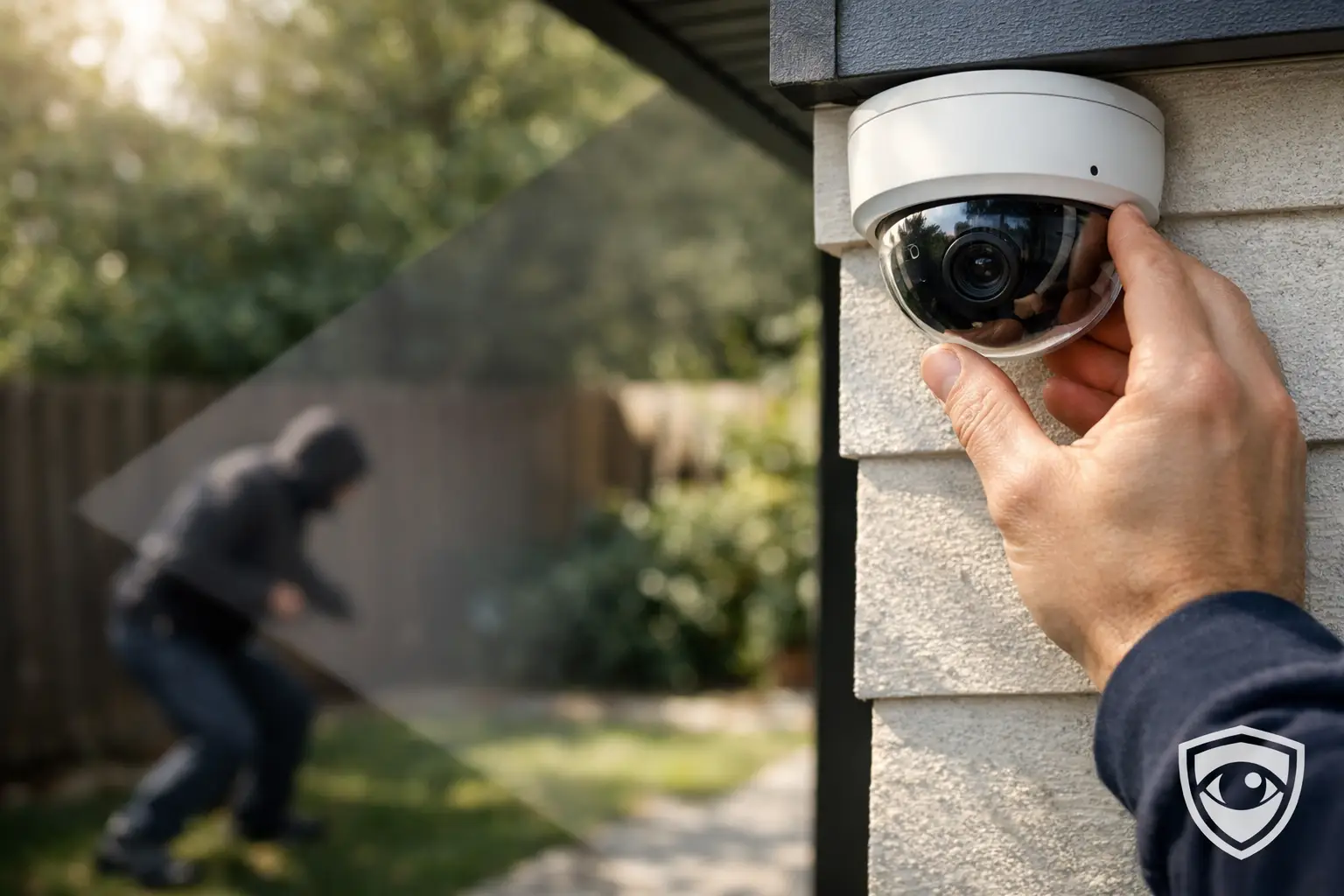
A camera can be recording around the clock and still miss the one angle that matters. That is the problem with security camera blind spots. They are not always obvious until a package disappears, a car gets scratched, or you try to review footage and realize the camera never had a clear view in the first place.
Most blind spots are not caused by bad equipment. They usually come from placement, lens choice, lighting conditions, or the layout of the property itself. The good news is that most of them can be corrected with thoughtful planning and professional adjustment rather than simply adding more devices everywhere.
What security camera blind spots really mean
A blind spot is any area your camera system does not capture clearly enough to be useful. Sometimes that means an area is completely out of frame. Other times it is technically visible, but the angle is too steep, the subject is too far away, or the lighting makes faces and details hard to identify.
This is where many property owners get tripped up. Wide coverage and effective coverage are not always the same thing. A single camera mounted high on a garage may show the driveway, walkway, and part of the street, but if visitors approach under the eaves or from the side yard, that same camera may miss the best identifying view.
A dependable system should do more than create the impression of coverage. It should capture the moments and details you are actually likely to need.
Where blind spots usually happen
Blind spots tend to show up in predictable places. Front doors are a common example. A camera mounted too high can show the top of a persons head instead of their face. Doorbell cameras help with approach views, but they may not cover the full porch, nearby windows, or the edge of the driveway.
Backyards often have their own challenges. Fences, trees, play equipment, sheds, and detached garages can block sightlines. At night, landscape lighting may look attractive without doing much to support camera visibility. In some cases, a patio overhang or screened enclosure creates a shadowed area that looks fine in person but records poorly.
For small businesses, the same pattern applies. Entry points, side alleys, loading areas, parking lots, and interior corners can all become weak points if the system is designed around general visibility instead of actual movement through the space.
Why camera placement matters more than most people expect
Placement is the biggest factor in security camera blind spots because cameras only see what their position allows. Height, direction, and mounting surface all affect results.
Mount a camera too low, and it may be easier to tamper with. Mount it too high, and you may lose important facial detail. Point it directly toward bright sunlight or reflective surfaces, and image quality can drop at key times of day. Aim it too wide, and useful detail gets smaller. Aim it too tight, and you may miss activity just outside the frame.
There is always a balance between broad awareness and detail capture. A smart design usually combines both. One camera may be used to monitor overall movement, while another is positioned to capture identifying details at the point of entry.
That is why a one-camera solution rarely works as well as people hope. The question is not just how much area a camera can see. It is whether it can see the right area from the right angle.
Lens choice, field of view, and image quality
A wider lens can reduce some blind spots, but it can also create new compromises. As the field of view expands, subjects often appear smaller in the frame. That can be fine for general monitoring, but less helpful if you need to read a plate number or identify a face.
A narrower lens captures more detail at a distance, but it covers less area. If the property has multiple approach paths, one tightly focused camera can leave obvious gaps on either side.
Resolution matters too, but it is not a cure-all. A high-resolution camera still needs good placement and proper lighting. If the view is blocked or the subject is backlit, extra pixels may not solve the problem. The system has to be designed as a whole, not built around one spec.
The blind spots you notice only at night
Some of the most frustrating coverage gaps appear after dark. During the day, the image looks clean and complete. At night, headlights, porch lights, window glare, or deep shadows can wipe out detail.
Infrared night vision helps, but it has limits. Surfaces like siding, gutters, or nearby posts can reflect infrared light back into the lens and create hot spots. A camera placed under an overhang may also attract insects, which trigger alerts and obstruct the view. Even seasonal changes can affect performance. Leaves grow in, snow reflects light differently, and a camera that worked well in October may have a weaker view in July.
This is one reason a professional walkthrough matters. Real-world conditions change throughout the day and across the year. Good coverage is not just about where a camera looks at noon on a clear afternoon.
How to identify security camera blind spots on your property
The simplest way to find gaps is to test the system like someone approaching the property. Walk the main paths to your doors, garage, driveway, side yard, and backyard while reviewing recorded footage afterward. If possible, do this in daylight and again at night.
Look for places where a person disappears behind landscaping, moves outside the edge of the frame, or becomes too shadowed to identify. Check whether packages left at the front door are fully visible. Review whether vehicles entering the driveway can be seen early enough and clearly enough. Inside a small business, look at transitions between rooms, hallways, counters, and exits.
It also helps to think beyond obvious entry points. Blind spots often exist where someone can linger without being clearly seen, such as beside a garage door, below a front window, near HVAC equipment, or along a fence line.
How to reduce blind spots without overloading the system
More cameras are not always the answer. Better placement usually comes first. A small adjustment in height or angle can dramatically improve what a camera captures.
Layered coverage is often the better solution. Instead of depending on one wide shot, use one camera for general area awareness and another for close-up verification at the most important points. This approach creates overlap, which is exactly what reduces blind spots.
It also helps to consider the full environment. Trimming back shrubs, adjusting outdoor lighting, and rethinking where a camera is mounted can improve performance without making the system feel intrusive. Clean installation matters here. Well-placed devices should support the look and function of the property, not call attention to themselves.
For homes and light commercial spaces, the best systems feel simple to use because the planning was done correctly upfront. You should not have to manage a patchwork of views and guess which camera caught what.
When DIY coverage falls short
DIY camera kits can be useful, but they often encourage a plug-it-in mindset. The camera powers up, the app works, and it feels finished. The problem is that convenience at setup does not guarantee effective coverage.
Properties with multiple elevations, detached structures, long driveways, mature landscaping, or mixed indoor and outdoor spaces usually need more careful planning. The same is true for renovations and new builds, where wiring paths and mounting locations can be chosen with the end result in mind instead of added as an afterthought.
This is where working with an experienced integrator can save time and frustration. A well-designed system should match the property, the routines of the people using it, and the level of detail you actually want from your recordings. For homeowners and businesses in areas like Westlake, Strongsville, and greater Northeast Ohio, weather, seasonal light shifts, and varied property layouts also affect what good placement looks like.
What good coverage should feel like
A well-planned camera system should give you confidence without making daily life feel complicated. You should be able to check a view quickly, review footage without hunting through useless angles, and trust that your most important areas are covered clearly.
That does not mean every inch of a property needs a camera. It means the places that matter most are seen well, from the right angles, under the conditions that matter most. When security camera blind spots are addressed properly, the result is not just more footage. It is better peace of mind.
If you are not sure whether your system has gaps, that uncertainty is usually the first sign that it is worth a closer look.


Comments are closed