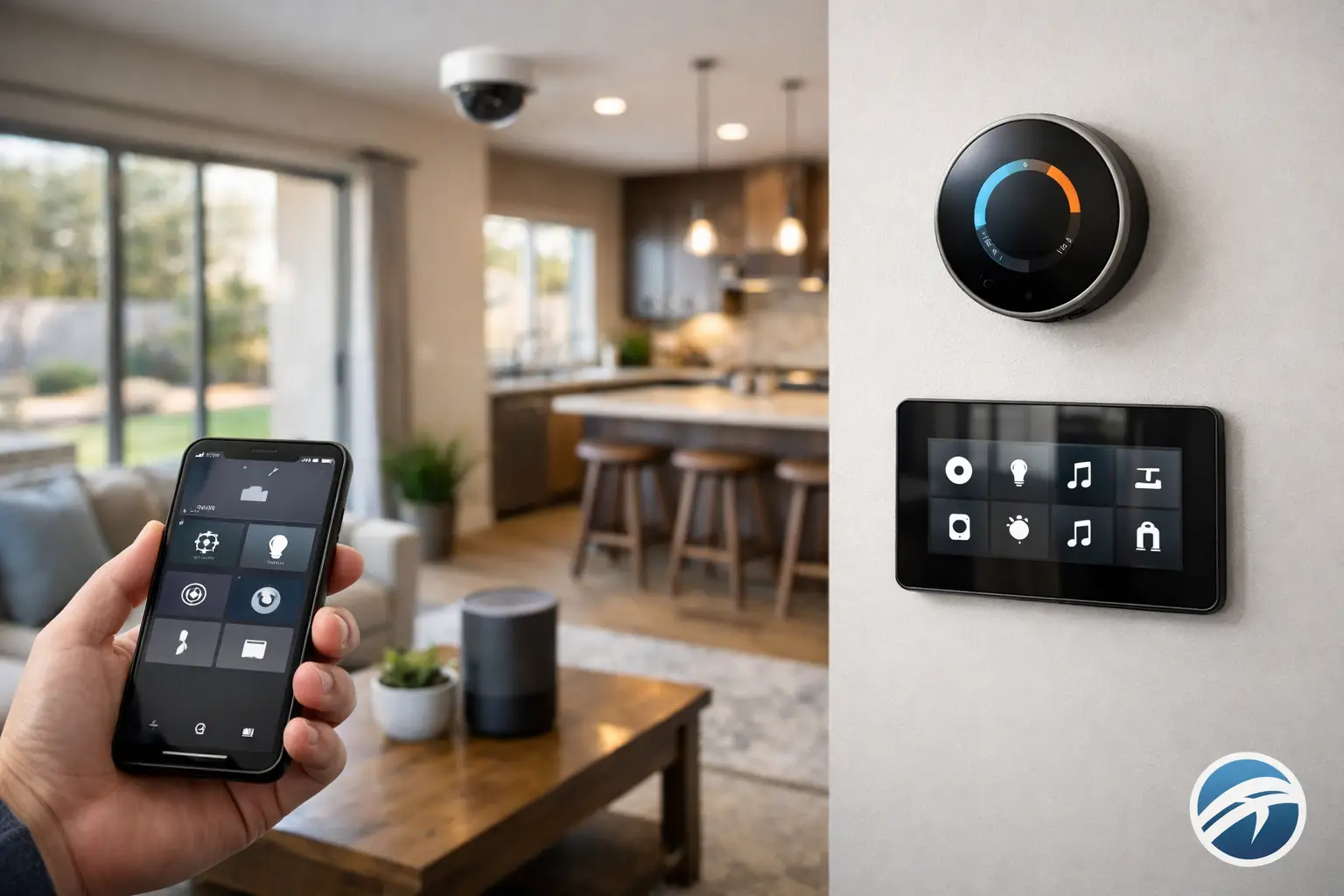
Building a house gives you one rare advantage – you get to make smart decisions before the drywall goes up. That is exactly why a smart home for new builds is different from adding devices later. You are not trying to force technology into finished spaces, work around weak Wi-Fi, or hide wiring after the fact. You have the chance to build a home that feels cleaner, works better, and stays easier to live with over time.
The biggest mistake in new construction is treating smart technology like a shopping list of gadgets. A better approach is to think about how the home should feel on an average day. You want lights that respond the way you expect, music where you actually use it, strong Wi-Fi in every room, and security that gives you confidence without becoming one more thing to manage. When the planning is right, the technology fades into the background and daily life gets easier.
Why a smart home for new builds starts with planning
In a finished home, every upgrade competes with existing walls, electrical placement, and furniture layouts. In new construction, those limits are not fixed yet. That makes early planning one of the most valuable parts of the project.
This does not mean you need to choose every device on day one. It means deciding where the home needs infrastructure, where control should happen, and which systems deserve professional coordination before other trades finish their work. A little planning early can prevent expensive change orders later.
For example, it is much easier to prewire for cameras, ceiling speakers, motorized shades, and strong wireless coverage before insulation and drywall. It is also easier to place TVs cleanly, plan equipment locations, and make sure networking gear is not stuffed into the least practical corner of the house. Those decisions affect performance just as much as the products themselves.
Start with the foundation, not the gadgets
The most impressive smart features in the world will not feel impressive if the network is unreliable. In most new homes, the first priority should be structured wiring and Wi-Fi design. That is the backbone for security, streaming, control, and remote access.
A professionally planned network usually includes hardwired data runs to key rooms, smart TV locations, office spaces, wireless access points, and any spot where stable performance matters. Even if some devices will connect wirelessly, wired infrastructure gives you better speed, better consistency, and more flexibility as the home evolves.
This is also the right time to decide where equipment should live. A dedicated low-voltage location or organized media area keeps components protected and serviceable. It also avoids the all-too-common result of scattered gear, visible cables, and mystery boxes no one wants to touch later.
In larger homes, or homes with outdoor living areas, detached garages, or finished basements, this matters even more. Good coverage is not accidental. It comes from placement, planning, and the right equipment working together.
Which smart systems are worth including?
Not every home needs every feature. The best smart home for new builds is the one that matches the way the homeowner will actually live. That said, a few categories consistently deliver value because they improve comfort, convenience, and peace of mind every day.
Lighting control
Lighting is one of the first things people notice because it affects the home from morning to night. Smart lighting can simplify daily routines, make evening transitions smoother, and let you control groups of lights without walking room to room. It can also support better energy habits by turning lights off automatically or adjusting scenes based on time of day.
The trade-off is that lighting should feel intuitive. Too many complicated options can make a simple task feel harder. The goal is not to create more buttons. It is to make control easier for everyone in the house.
Smart security and surveillance
Security is often a top priority in new construction because homeowners want visibility from the start. That might include doorbell video, exterior cameras, smart locks, motion awareness, and remote alerts. The benefit is straightforward – you can check in, respond quickly, and feel more confident whether you are home or away.
Placement matters here. Cameras need the right viewing angles, proper wiring, and thoughtful coverage around entries, driveways, and outdoor spaces. A rushed install often leads to blind spots or messy results. A planned system looks cleaner and works better.
Whole-home audio and entertainment
If entertainment matters to your household, new construction is the best time to prepare for it. In-ceiling speakers, outdoor audio, media rooms, and properly mounted TVs all benefit from prewire and clean design. The experience feels polished when speakers are placed correctly, equipment is organized, and control is simple.
This is also where restraint helps. Some families want audio throughout the house. Others really only use the kitchen, patio, and primary bath. The right solution is the one that fits real habits rather than an idealized version of how the house might be used.
Motorized window treatments
Motorized shades are one of those features people tend to appreciate more over time. They help with privacy, glare control, energy efficiency, and convenience, especially in homes with large windows or hard-to-reach areas. In new builds, it is easier to plan power and conceal the details so the finished look stays clean.
They are not necessary in every room. But in primary suites, living areas, and window-heavy spaces, they can make the home feel more comfortable without requiring constant adjustment.
Smart home decisions that are harder to fix later
Some choices are easy to change after move-in. Others are much more expensive once walls are finished. That is why early coordination matters.
Speaker wire, camera wire, data cabling, shade power, TV backing, and access point locations all fall into the category of get it right now. Even if you do not install every feature immediately, prewiring for future use gives you options. It is usually far more affordable to run the wire during construction than to open walls later.
There is also the issue of control. Homeowners often assume smart means app-based, but a house should not depend entirely on phones. Good systems still work in practical, familiar ways. Wall controls should make sense. Shared spaces should be easy for guests and family members to use. The app is helpful, but it should not be the only path to basic functions.
Work with your builder, but involve a smart home expert early
Builders manage a lot of moving parts, and they are essential to the schedule. But smart technology planning often needs a more specialized lens. Low-voltage systems overlap with electrical, HVAC, framing, finish work, and cabinetry. If no one is coordinating those details, the result can be awkward placements, missed opportunities, or added labor later.
An experienced integrator can help map out the system before rough-in, coordinate with the builder and other trades, and make sure the final setup feels consistent rather than pieced together. That includes practical details such as where keypads belong, where TVs should sit for comfortable viewing, how to avoid Wi-Fi dead spots, and how to keep equipment accessible without making it visible.
For homeowners building in Northeast Ohio, this can be especially useful when projects involve finished lower levels, outdoor entertainment spaces, or larger footprints where signal strength and system design need more attention than a standard device setup can provide.
Keep the experience simple from day one
One of the best outcomes in a new smart home is also the least flashy. Everything just works. The lights respond predictably. The Wi-Fi is strong. The cameras are easy to check. The shades move when expected. The audio starts without confusion.
That kind of simplicity usually comes from making fewer, better choices. It means choosing systems that work well together, avoiding unnecessary overlap, and focusing on how the house will be used every day. It also means planning for support. Even a well-built system benefits from having a professional who knows how it is configured and can help with updates, adjustments, or future additions.
A house should not feel like a test lab after move-in. It should feel settled, comfortable, and easy to control from the start.
The best smart home for new builds is the one you will still enjoy in five years
Trends change quickly, but infrastructure and usability hold their value. If you are building a home now, the smartest move is not chasing every new feature. It is creating a dependable foundation, choosing systems that fit your routines, and installing them in a way that looks clean and feels natural.
That is where thoughtful design makes the difference. A well-planned smart home does not ask for attention all day. It supports comfort, security, and connection quietly, which is exactly how good technology should live in a home.


Comments are closed