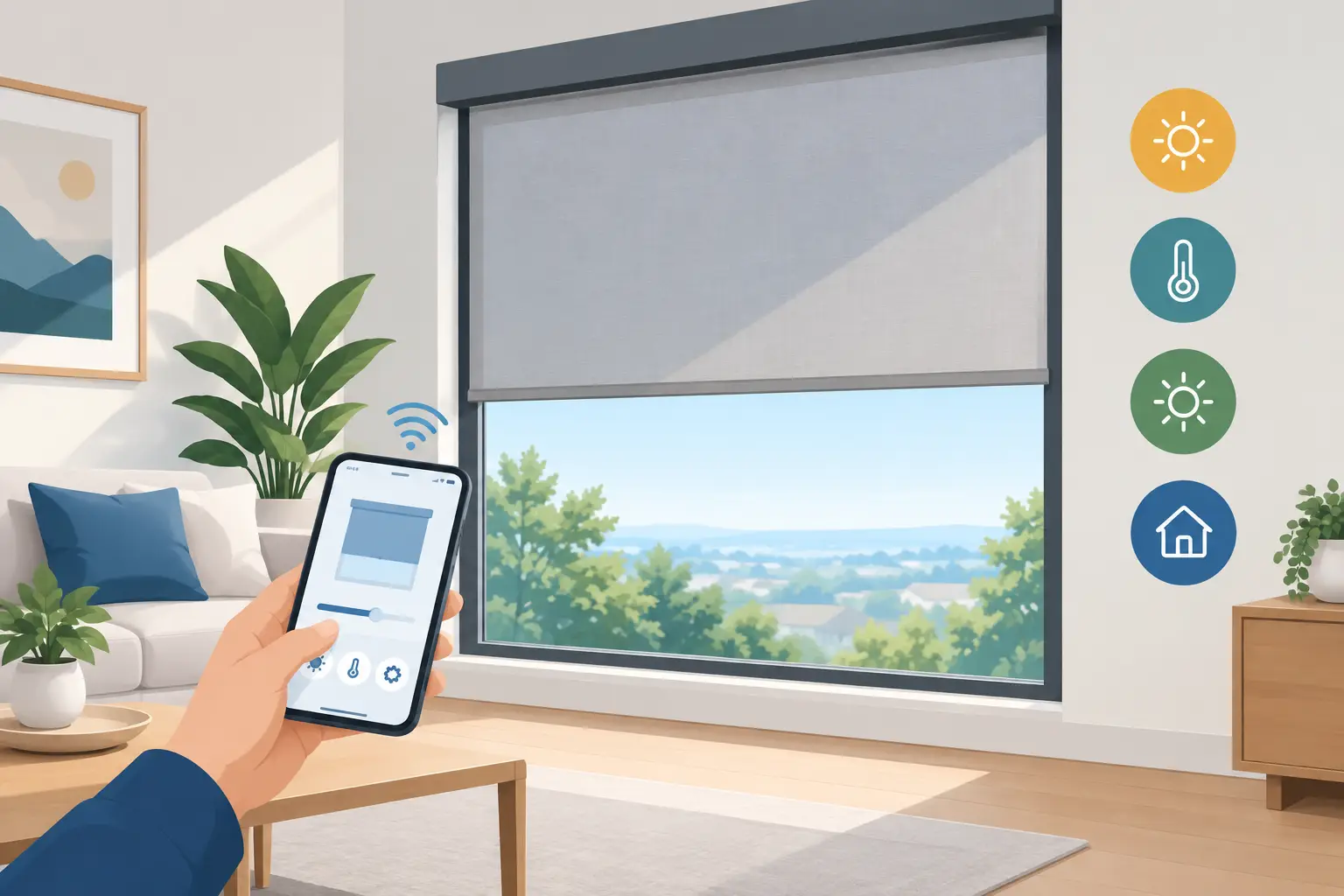
A favorite room can become less comfortable at the same time every afternoon. Sun pours across the television, heats the hardwood, and fades the rug – yet the shades stay open because adjusting every window is a chore. A smart shade retrofit solves that everyday friction by bringing automated, quiet control to window treatments without requiring a full remodel.
For many homeowners, this is a practical upgrade rather than a luxury add-on. The right system can make a room more comfortable, protect furnishings from harsh sunlight, and give the home a more finished feel. The key is understanding what can be upgraded, what should be replaced, and how the controls will fit the way your household actually lives.
What a smart shade retrofit really means
A smart shade retrofit updates existing windows with motorized operation and simple control. In some cases, that means adding a motor to a compatible roller shade or cellular shade already in place. In others, it means replacing manual treatments with new motorized shades while using the existing window openings, trim, and power options.
That distinction matters. Not every blind, shade, or drapery panel is a good candidate for a motor add-on. Older hardware may be worn, the fabric may be too heavy, or the shade tube may not have room for the motor. A professional review starts with the window itself, the treatment currently installed, and the result you want from the room.
A retrofit does not need to mean visible wires or a complicated collection of remotes. Well-planned systems can be battery powered, hardwired, or powered by a low-voltage solution designed around the window. They can operate from a wall control, a handheld remote, a phone or tablet, and selected smart-home scenes.
Why homeowners choose motorized shades after the fact
The strongest reason to retrofit is usually comfort. Windows are one of the biggest variables in a room. Morning glare, afternoon heat, privacy after sunset, and difficult-to-reach glass can change how a space feels from hour to hour.
Motorized shades remove the small inconveniences that keep manual treatments from being used consistently. A shade can lower for a movie, rise with a morning routine, or adjust on a schedule that follows the sun. That is especially useful in great rooms with tall windows, bedrooms with several openings, home offices, and rooms where furniture makes cords or pull chains inconvenient to reach.
There is also a design benefit. Cords, wand controls, and mismatched remotes can distract from a clean window treatment plan. Motorized shades keep the operation out of sight while leaving the room easy to use. When the shades move, they should do so smoothly and quietly enough that the moment feels natural rather than technical.
For homes in Northeast Ohio, automated shades can also help manage changing seasonal light. A south- or west-facing room that is pleasant in winter may become bright and uncomfortable during summer afternoons. Scheduled shade positions give homeowners a more consistent environment without needing to think about every window each day.
Start with the windows, not the app
It is tempting to begin with a favorite smart-home platform or a specific control method. A better first step is identifying what each window needs to do. Some windows need light filtering to soften glare while preserving daylight. Others need room-darkening fabric for sleep, television viewing, or a nursery. Privacy may be the priority in a bathroom or a street-facing room.
The window’s size, location, and trim are just as important. Wide openings may need two or more shades so the fabric remains stable and attractive. Very tall windows require hardware sized for the load. Windows near a doorway, a vaulted ceiling, or built-in cabinetry can affect mounting choices and service access.
Existing treatments may or may not be worth keeping
If your current shades are relatively new, in good condition, and made with compatible components, a motor retrofit may be sensible. This approach can preserve a fabric you like and limit the scope of the project.
Replacement is often the better value when shades are aging, do not block light effectively, or were never sized correctly for the window. New motorized treatments offer more fabric choices, cleaner hardware, and better alignment with the motor and control system. Trying to automate a treatment that is already near the end of its useful life can create a frustrating result and postpone the upgrade you really wanted.
Draperies and shutters deserve their own evaluation. Motorized drapery tracks can be an excellent fit, particularly for large glass doors and formal rooms, but they require adequate space for the track and fabric stack. Plantation shutters, meanwhile, generally need a different approach than roller or cellular shades. The right answer depends on the product, the window, and whether light control or privacy is the primary goal.
Choosing power for a smart shade retrofit
Power planning is where a retrofit becomes either elegantly simple or unnecessarily complicated. Battery-powered shades are popular because they avoid opening finished walls. They are often a strong choice for a few windows, existing homes, and locations where wiring would be disruptive.
The trade-off is maintenance. Battery life varies based on shade size, frequency of operation, fabric weight, and temperature. Rechargeable battery options reduce replacement costs, but someone still needs to charge them. For a small group of shades, that may be perfectly reasonable. For a home with many windows or hard-to-reach shades, it can become an ongoing task.
Hardwired or low-voltage power is usually the better long-term choice when walls are open during a renovation, when new construction is underway, or when a large number of shades are planned. It eliminates routine battery attention and supports a cleaner ownership experience. Installation requires more coordination, which is why it pays to plan window treatments alongside electrical work, trim, and drywall rather than treating them as the last detail.
Solar charging accessories can help in the right window conditions, but they are not a universal answer. They need sufficient light and a placement that does not compromise the appearance of the shade. A site review is more useful than assuming every sunny window will support one.
Controls should match daily routines
The best smart shade system is one people can operate without thinking about it. A bedside button may be more useful than reaching for a phone in the morning. A wall keypad near the main living area can make it easy to set the room for entertaining or television. Phone control is valuable when you are away or when you want to make an adjustment from another room.
Automation should stay practical. A simple schedule can raise bedroom shades at a preferred wake-up time and lower sun-facing shades before late-day glare becomes distracting. Grouping treatments by room gives homeowners one-touch control without forcing every window into the same position.
Integration with lighting, climate preferences, and entertainment scenes can make the experience even more natural. For example, a family room scene can lower glare-control shades and set the room for a movie. The goal is not to add more commands. It is to reduce the number of decisions required to make a room feel right.
What professional planning prevents
A smart shade retrofit looks straightforward once it is installed, but the details determine whether it performs well over time. Precise measuring affects light gaps, fabric alignment, and the way multiple shades line up across a wall of windows. Mounting depth, trim profiles, window handles, and nearby furniture all affect the finished appearance.
Professional planning also avoids a common mistake: selecting shades and controls separately, then hoping they work well together. A coordinated system considers motor capacity, power, shade material, control range, room grouping, and future service from the beginning.
Tri-County Technology helps homeowners and builders make those decisions before small compromises become visible every day. The aim is straightforward: window treatments that look intentional, operate reliably, and make the home more comfortable without adding clutter or complexity.
When a retrofit is the right investment
A smart shade retrofit makes the most sense when your windows create a repeated comfort problem or when your current routine already involves opening and closing multiple treatments each day. It is also a strong fit for homes undergoing a renovation, where planning power and mounting early can protect both the design and the budget.
If you only want to automate one easily reached shade that you rarely use, manual operation may still be the sensible choice. Not every window needs a motor. The most satisfying projects focus on the windows that affect the way you use a room, then create controls simple enough that everyone in the home will use them.
Start by noticing which windows you avoid adjusting and when the light becomes disruptive. Those small patterns are often the clearest guide to a shade plan that will feel worthwhile long after installation day.


No responses yet