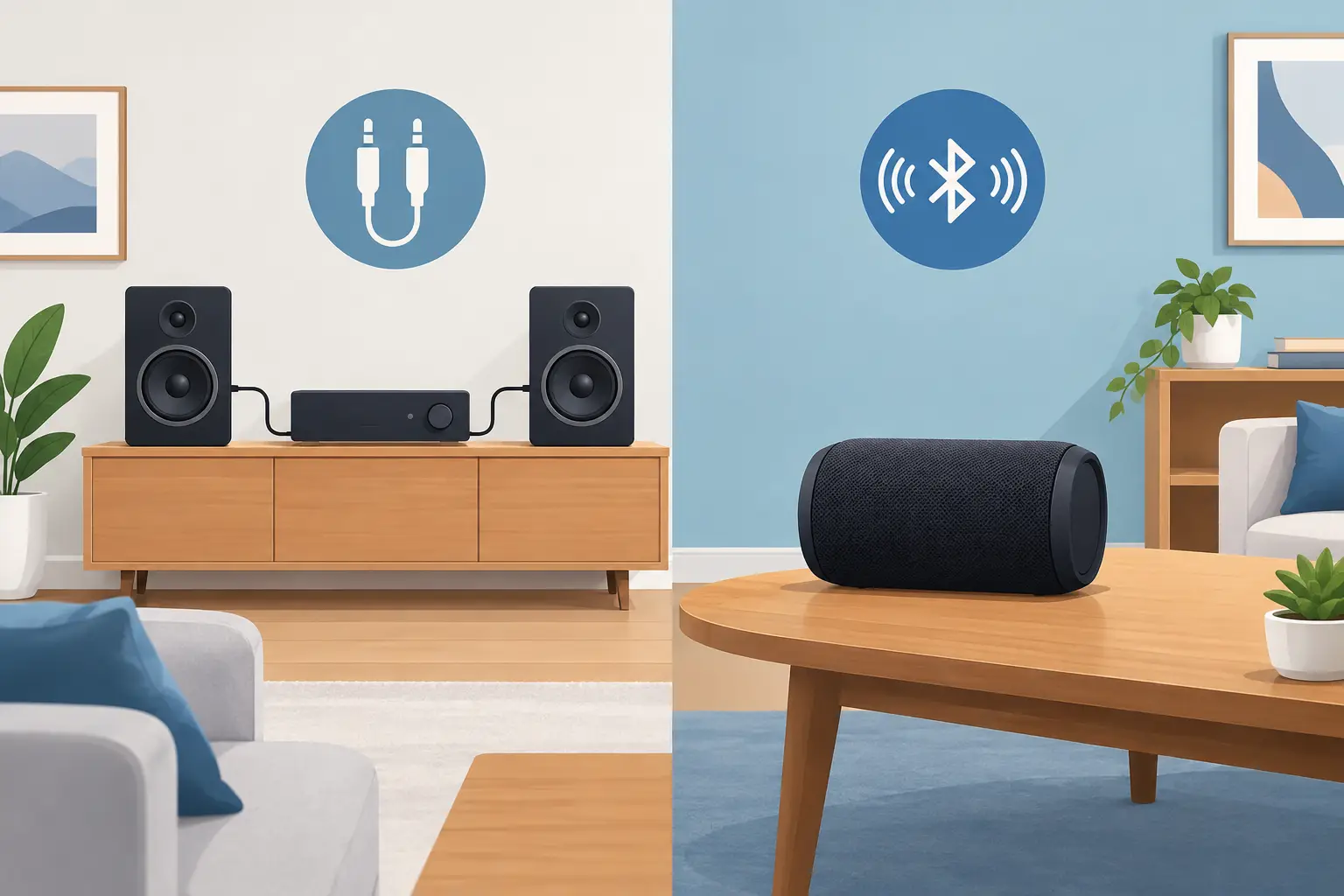
A great audio system should fill a room without filling it with clutter, charging cables, and confusing controls. When comparing wired versus wireless speakers, the better choice is rarely about which technology is newer. It is about how you use the room, what level of performance you expect, and how much flexibility you want after installation.
For a dedicated theater, a whole-home music system, or a new build where walls are already open, wired speakers often provide the cleanest long-term answer. For a finished room that needs music without a renovation, wireless speakers can be a practical fit. The best systems frequently use a thoughtful mix of both.
Wired Versus Wireless Speakers: The Real Difference
The simplest distinction is how audio reaches the speaker. A wired speaker receives its signal through physical speaker wire, usually from an amplifier or audio distribution system. A wireless speaker receives audio over Wi-Fi, Bluetooth, or another wireless connection.
That description is useful, but it does not tell the whole story. Most wireless speakers still need power. Unless they are portable and battery-operated, they need an outlet nearby. That means “wireless” often removes the speaker cable, not every visible cable in the room.
Wired systems place more of the equipment out of sight. Speakers can be installed in ceilings, walls, cabinetry, or carefully selected locations around a room, while amplifiers and source equipment are organized in a central location. The result can feel simple: press play from a phone, touchscreen, or voice control, and music is already where you want it.
Wireless systems put more technology inside each speaker. That can make setup faster, especially for a single room, but it also means each speaker depends on its own network connection, power source, software, and controls.
When Wired Speakers Make More Sense
Wired speakers are usually the stronger choice when sound quality, visual cleanliness, and long-term dependability matter most. They are especially well suited to dedicated listening spaces, media rooms, patios, kitchens, great rooms, and homes that need music in several areas.
Consistent sound in larger spaces
A wired speaker system has the advantage of a direct physical connection. There is no need for each speaker to negotiate a Wi-Fi signal across a large home or through dense construction materials. That can be valuable in homes with stone, plaster, metal framing, or challenging room layouts.
For multi-room audio, a properly designed wired system also creates a more unified experience. The kitchen, living room, and patio can play the same music at the same time, at the right volume for each space. Or each area can play something different without turning the home into a collection of disconnected speaker apps.
Better options for discreet installation
Many homeowners want rich sound without seeing large speakers, equipment racks, or loose wires. In-ceiling and in-wall speakers are a natural fit for that goal. When they are placed correctly and paired with the right amplification, they provide even coverage while keeping the room focused on the furniture, finishes, and architecture.
This is especially helpful during a new build or major renovation. Running speaker wire before drywall is installed is straightforward and gives you more choices later. It is one of those decisions that costs far less to plan early than to add after the home is complete.
A stable foundation for theater audio
Theater systems benefit from precision. Front, center, surround, and subwoofer channels must work together to make dialogue clear and action believable without overwhelming the room. Wired connections remain the standard for custom theater environments because they support flexible speaker placement and reliable performance.
That does not mean every theater speaker has to be visible. A well-designed room can use architectural speakers, hidden equipment, and intuitive control while still delivering an involving movie experience.
Where Wireless Speakers Shine
Wireless speakers solve a different problem: getting enjoyable sound into a room quickly, with minimal disruption. They are often an excellent choice for a bedroom, home office, finished basement, apartment, or a space where running new wire would require opening walls.
Fast improvements in finished rooms
If you want better music in a room this month rather than during a future remodel, wireless speakers can be appealing. A few well-chosen speakers may provide fuller sound than a single tabletop device, and many can be grouped for synchronized playback.
They also make it easy to test how you use music at home. You may discover that the patio becomes your favorite listening area, or that you want audio in the laundry room more often than expected. That insight can guide a future permanent installation.
Flexible placement, within reason
Wireless speakers can move with changing furniture and changing needs. That flexibility is useful in rooms that serve several purposes or for homeowners who are not ready to commit to built-in speakers.
Placement still matters. A speaker tucked into a corner, placed behind furniture, or set far from its paired speaker will not sound its best. Wireless does not eliminate the basic rules of good audio. It simply makes the physical installation less involved.
Easy expansion for modest needs
Adding one speaker to a home office or two speakers to a casual family room can be simple with the right wireless platform. The experience depends heavily on Wi-Fi quality, though. If music drops out, lags between rooms, or struggles during busy network use, the issue may not be the speakers at all. It may be the home network.
A Wi-Fi assessment is often worthwhile before building a large wireless audio system. Strong coverage, proper equipment placement, and a network designed for connected devices make a noticeable difference in daily use.
The Trade-Offs to Consider Before You Choose
Wired systems generally cost more upfront because they involve design, cable routing, amplification, installation, and finishing work. In return, they offer a polished appearance and a foundation that can serve the home for many years. They are not always the least expensive option, but they can be the better value when audio is part of the home’s long-term plan.
Wireless speakers usually have a lower entry cost and less installation work. However, replacing several wireless speakers over time, managing separate power connections, or working around Wi-Fi limitations can change that calculation. Product ecosystems also matter. A speaker platform that feels convenient today may have fewer choices or different compatibility rules years from now.
Sound quality is not a simple wired-wins, wireless-loses question. High-quality wireless speakers can sound very good in the right room. Yet a thoughtfully selected wired speaker, properly positioned and powered, typically has more room to deliver scale, detail, and dynamic range, particularly in larger rooms.
Control deserves equal attention. The best system is not the one with the most features. It is the one everyone in the home can use without instructions. A single familiar app may be enough for a casual room. For whole-home audio, it often makes sense to coordinate music control with the other technology you use every day.
A Practical Way to Decide
Start with the room rather than the product. Ask whether the space is finished, whether you want speakers to disappear into the architecture, and whether the room is used for background music, focused listening, or movies. Then consider how often you expect to use the system and whether you may expand it later.
Wired audio is often the better fit if you are building, renovating, planning a theater, or want music throughout several areas with minimal visual distraction. Wireless audio is often the better fit if you need a quick upgrade in one or two finished rooms, want portable flexibility, or are still learning how your household uses music.
There is also a middle ground. A home can have wired speakers in the main living areas and theater, then use wireless speakers where flexibility matters more. The key is designing the system so it feels intentional rather than pieced together.
For Northeast Ohio homeowners and builders, planning audio alongside Wi-Fi, television placement, and structured wiring can prevent many avoidable compromises. Tri-County Technology helps turn those early decisions into systems that are easy to enjoy long after the project is finished.
The right speakers should disappear into the rhythm of your home: clear music while you cook, a fuller movie night, and reliable sound in the places where people naturally gather.


No responses yet