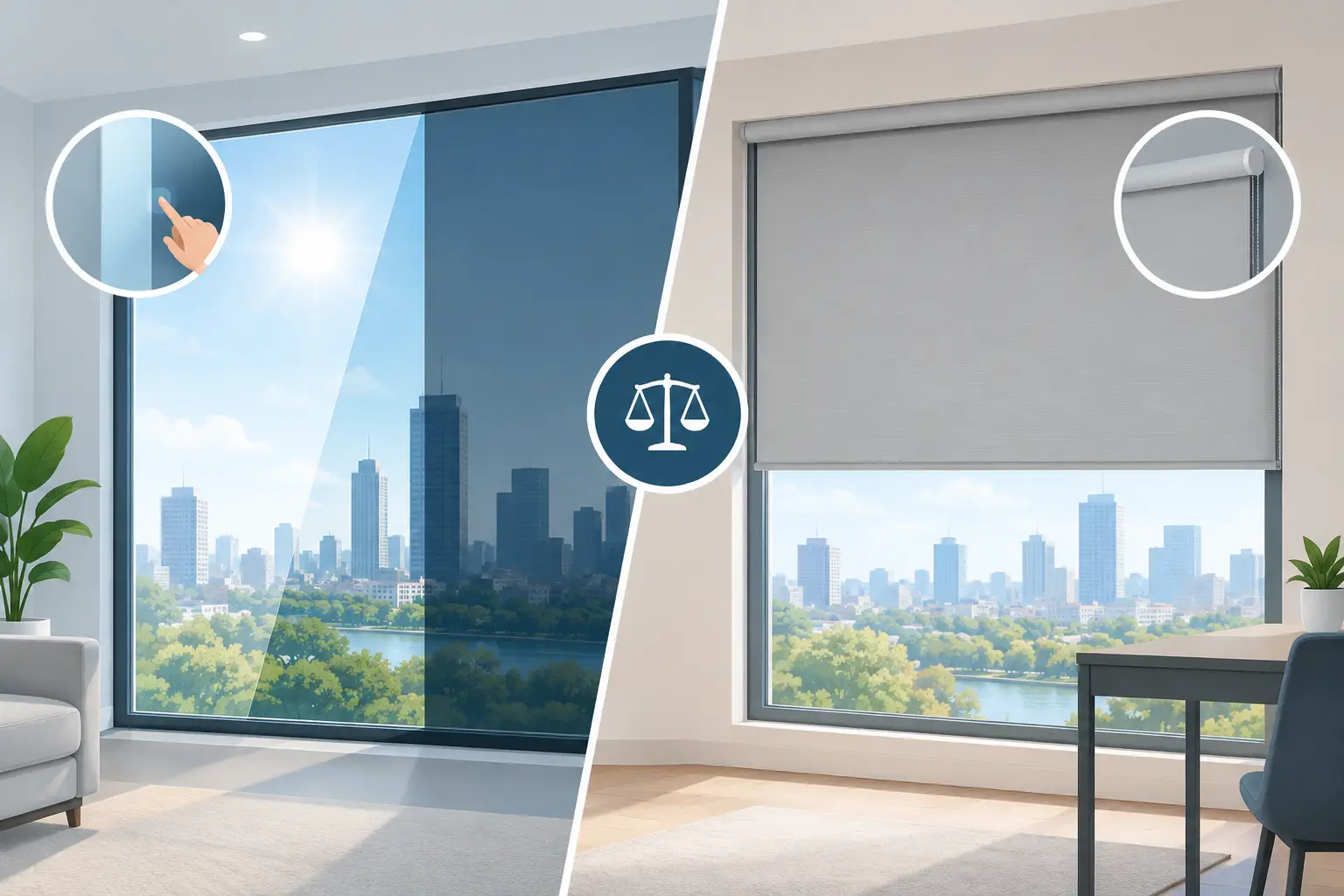
A wall of glass can make a room feel exceptional until afternoon glare hits the television, a street-facing bathroom needs privacy, or summer sun turns the room into a hot spot. Smart film versus window shades is not simply a choice between two modern finishes. Each solves a different daily problem, and the right answer depends on how you use the room, what the glass faces, and how much control you want.
For many homes, the best decision is not about choosing the most advanced-looking option. It is about creating a comfortable room that works quietly from morning through evening.
Smart Film Versus Window Shades: The Core Difference
Smart film is an electrically controlled film applied to glass. In its clear state, it allows a view through the window. When activated, it changes to a frosted appearance, obscuring the view while still allowing light to enter. It is most often selected for instant privacy in bathrooms, interior glass walls, sidelights, home offices, and other areas where a curtain or shade would feel visually heavy.
Window shades are physical treatments that lower, raise, tilt, or adjust to manage light, glare, views, and privacy. They are available in many fabrics and styles, from light-filtering rollers to room-darkening shades, woven materials, cellular shades, and drapery. Motorized options can be controlled by a wall keypad, handheld remote, app, schedule, or selected smart home controls.
The distinction matters: smart film primarily changes visibility through the glass. Shades can manage visibility, incoming light, glare, and, in certain applications, heat gain. That broader role makes shades the more versatile choice for many exterior windows.
Where Smart Film Makes the Most Sense
Smart film shines when privacy must appear instantly without covering the window permanently. A bathroom window near a neighboring home is a common example. With smart film, the glass can remain clear when the room is unoccupied and turn frosted when privacy is needed. The same idea works well for a glass-walled office, a fitness room, or an interior partition that needs to switch between open and private.
It also has a clean architectural appeal. There is no fabric stack above the window, no visible cords, and no treatment moving across the glass. In contemporary spaces with minimal trim or unusual glass shapes, that can be a meaningful design advantage.
Still, frosted is not the same as shaded. When smart film is in its private state, daylight enters the room as a diffuse glow. That can be beautiful, but it will not create a dark room for a projector or eliminate every source of screen glare. If the priority is preserving daylight while blocking a direct view, smart film is a strong fit. If the priority is controlling sunlight, it may not be enough on its own.
Important smart film considerations
Applied smart film needs power, careful wiring, and professional finishing around the glass. The electrical connection should be planned early, especially in a new build or a renovation with limited access around the window frame. A clean result depends on accurate measurements, compatible glass, well-managed wiring, and a plan for the control method.
It is also worth distinguishing applied smart film from smart glass. Smart glass is manufactured as part of the window or glass panel, while smart film is added to existing glass. Both can provide switchable privacy, but they differ in cost, installation timing, appearance at the edges, and warranty considerations. For an existing home, film can be a practical retrofit. For a custom home with extensive specialty glass, smart glass may be worth considering during design.
Why Window Shades Remain the Flexible Choice
Window shades offer more ways to tune a room. A light-filtering shade can soften harsh daylight while maintaining a bright atmosphere. A solar shade can reduce glare and help preserve an outward view during the day. A room-darkening treatment can support better sleep, movie watching, or a more controlled presentation environment.
That flexibility is especially useful on large exterior windows. South- and west-facing glass can bring welcome light in cooler months, then become uncomfortable in late afternoon. A properly selected shade gives the homeowner a practical way to respond to changing conditions rather than accepting one fixed level of privacy or daylight.
Motorization makes shades much easier to live with. Instead of walking to several windows every day, you can create simple routines: open bedroom shades in the morning, lower sun-facing shades before the room gets too bright, or close them at night for privacy. The best systems feel natural because they support the rhythm of the home without demanding constant attention.
Fabric and openness change the result
Not all shades perform the same way. The fabric, color, lining, and openness factor all influence privacy, glare reduction, and visibility to the outdoors. A highly open solar fabric may preserve a view in daylight but offer limited nighttime privacy when interior lights are on. A room-darkening fabric offers stronger coverage but reduces daytime views and light.
This is where professional guidance is valuable. A sample held up in a showroom is helpful, but the real decision should consider window direction, neighboring sightlines, room function, trim details, and the homeowner’s expectations after dark.
Cost, Comfort, and Long-Term Value
Smart film usually carries a higher cost per square foot than standard window shades, particularly once electrical work and detailed installation are included. Large glass panels, custom shapes, and difficult-to-reach wiring paths can increase the project cost further. Its value is strongest where immediate switchable privacy solves a specific design or lifestyle challenge.
Motorized shades can range widely in price based on window size, fabric, motor type, power options, and control features. A basic manual shade may be the more economical option for a low-use room. In a great room with tall, hard-to-reach windows, motorization can be a practical investment that makes the treatment more likely to be used consistently.
For energy comfort, shades often have the advantage. Cellular shades can add an insulating layer at the window, while certain roller fabrics help reduce solar exposure. Results vary with the product and installation, but shades give homeowners more tools for managing a room’s temperature and glare. Smart film should not be selected with the expectation that it will replace a dedicated solar-control treatment.
When Using Both Is the Better Answer
Some rooms benefit from both technologies. Consider a bathroom with a large window: smart film can provide immediate privacy while preserving the clean look of the glass, while a shade can offer additional light reduction when desired. In a glass-walled office, smart film can make meetings private at the touch of a button, while a shade on an exterior-facing wall helps control late-day glare.
This combination is not necessary everywhere. It works best where the room has two separate needs: privacy from nearby views and active control of sun or darkness. Treating those needs as separate decisions often produces a more satisfying result than asking one product to do everything.
Questions to Ask Before Choosing
Start with the daily problem, not the product. Is the concern a direct view into the room, harsh sunlight, television glare, sleeping comfort, or maintaining an architectural look? Then consider when the problem occurs. A window that only needs privacy at night may call for a different solution than one exposed to neighboring views all day.
Also think about how you want the room to feel when the treatment is active. Smart film keeps the window bright but obscured. Shades can preserve a partial view, softly filter light, or make the room substantially darker. Neither experience is automatically better. They create different environments.
For builders and renovators, timing matters as much as product selection. Smart film and motorized shades both benefit from early planning. Power locations, low-voltage pathways, window measurements, trim depth, and finish details should be coordinated before drywall and final trim whenever possible. Retrofitting remains possible, but early coordination usually provides cleaner choices and fewer compromises.
A good window solution should not make the home feel more complicated. Whether the answer is switchable film, motorized shades, or a thoughtful combination, the goal is simple: the room should look right, feel comfortable, and respond easily when the light or privacy needs change.
No responses yet