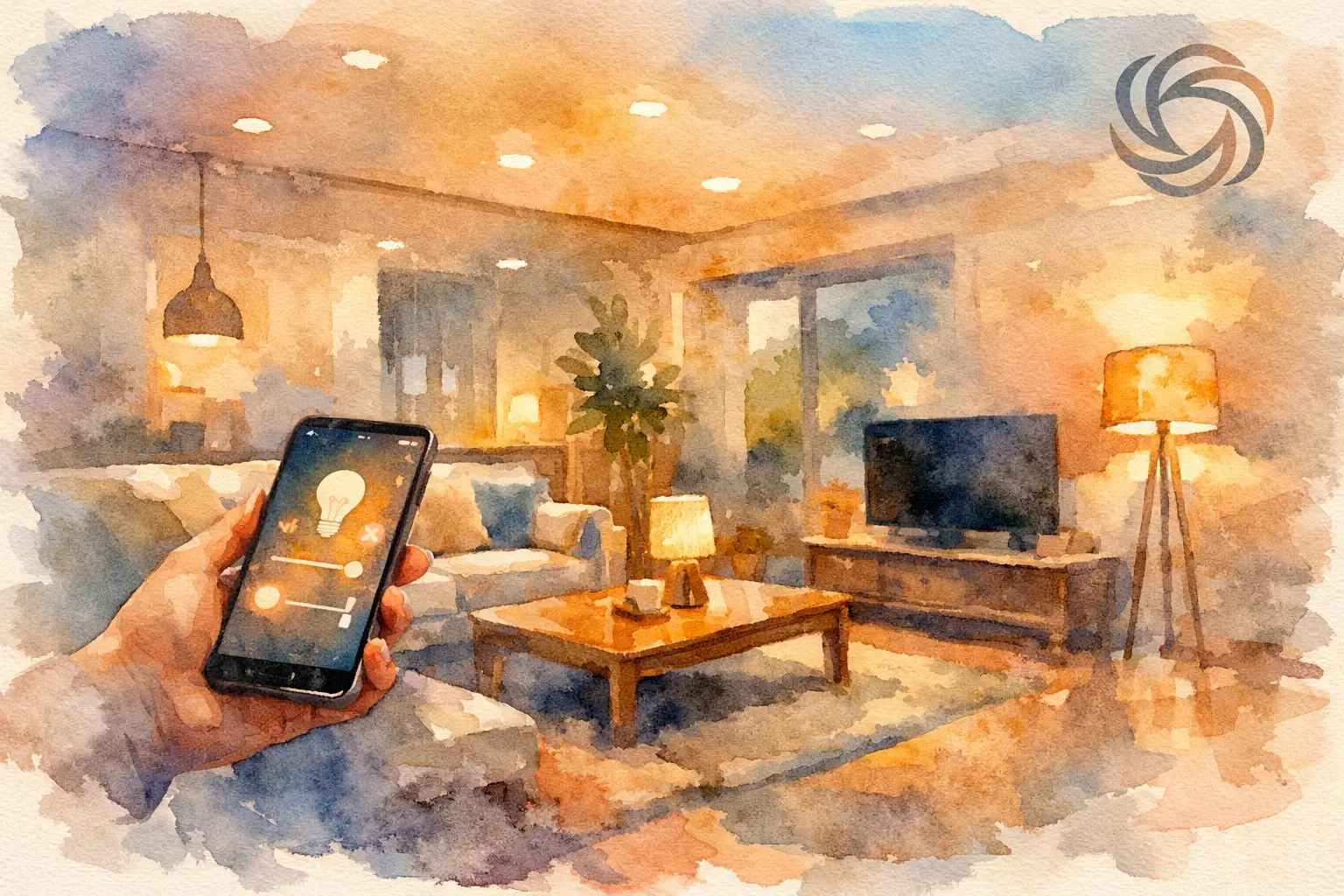
A good lighting control retrofit example usually starts the same way – not with blueprints, but with frustration. Maybe the kitchen is bright at 6 a.m. when it should be gentle. Maybe the porch light gets left on all night. Maybe one room has five switches and nobody remembers which one does what. The goal of a retrofit is not to make a home feel more technical. It is to make lighting feel easier, more comfortable, and more predictable without tearing the house apart.
For most homeowners, that matters more than the hardware. They want better control, cleaner routines, and fewer small annoyances. A well-planned retrofit can deliver that by upgrading the way lights are managed while preserving much of the existing wiring and keeping the home looking finished.
A real-world lighting control retrofit example
Picture a two-story home built in the early 2000s. The layout is good, the finishes still work, but the lighting feels dated. The kitchen has recessed cans, pendants over the island, and under-cabinet lighting, all controlled from different spots. The family room has lamps on plug-in timers that drift out of sync. The primary suite has bedside lamps, overhead fixtures, and a bathroom vanity that all need separate switches. Outside, the front entry and patio lights are manually controlled, so they are often either forgotten or overused.
In this lighting control retrofit example, the homeowner is not asking for a full remodel. They want cleaner control, some automation, and a system that feels natural to use every day. They also do not want drywall cuts throughout the house or a confusing app that only one person understands.
The solution is usually a room-by-room retrofit built around smart dimmers, keypads where they make sense, scene programming, and a simple control interface on phones or tablets. In some homes, motion sensing is added in transitional spaces like mudrooms, pantries, and hallways. Outdoor lighting is scheduled around sunset and sunrise. Bedrooms get softer presets for evenings and early mornings. Shared living areas get one-touch scenes like Entertain, Cooking, Reading, and Goodnight.
What stays in place is just as important as what changes. Existing fixtures may remain. Much of the branch wiring stays. Decorative style is preserved. The home feels more refined, not reinvented.
What changes during a lighting control retrofit example
The most noticeable change is that lighting starts behaving like part of the home instead of a collection of isolated switches. That shift sounds small until you live with it.
In practical terms, standard wall switches are often replaced with intelligent dimmers or switches that communicate with a central app or coordinated system. In spaces with multiple switch locations, controls can often be simplified so the user no longer has to guess which switch controls which load. In open-concept areas, several lighting layers can be grouped into scenes that suit specific activities.
That means the kitchen can move from bright meal prep lighting to a warmer dinner setting with one touch. A bedtime routine can turn off downstairs lights, dim the hallway, and leave only the pathway to the bedroom softly lit. Exterior lights can come on automatically in the evening and turn off at a sensible hour, rather than running until morning.
The second major change is consistency. With a retrofit, lights can respond the same way every day. That is useful for comfort, but it also helps with energy habits and peace of mind. If you leave town, the house can still look occupied. If you head upstairs at night, one command can settle the main floor without a walk through every room.
What a retrofit does not always require
Homeowners often assume lighting upgrades mean major construction. Sometimes they do, but often they do not.
A retrofit can frequently be completed using existing switch boxes, existing wiring paths, and current fixtures, provided the loads are compatible and the electrical condition is sound. That makes it a strong option for lived-in homes where owners want a meaningful upgrade without the disruption of opening walls in every room.
There are limits, and those should be clear from the start. Older homes may have shallow back boxes, crowded boxes, or wiring conditions that affect what controls can be installed. Certain fixtures, especially older LEDs or specialty loads, may need testing or replacement to dim properly. Multi-way circuits can be simplified, but they need to be mapped correctly. This is where a professional site review matters.
A good retrofit plan respects the house as it exists. It does not force a wish list onto wiring that cannot support it cleanly.
Where retrofit lighting control delivers the biggest payoff
Not every room needs the same level of control. The best projects focus first on the areas people use constantly.
Kitchens are usually high value because they serve so many functions throughout the day. Morning coffee, homework, cooking, cleaning, and evening wind-down all benefit from different light levels. Family rooms and great rooms are next because layered lighting makes a visible difference there. Primary suites also benefit quickly, especially when bedside control and nighttime paths are improved.
Entryways, stair halls, mudrooms, and exterior doors are strong candidates for automation because they are tied to routines. Small changes in those spaces can make the house feel more thoughtful every day. Outdoor lighting is another smart place to retrofit because scheduled control improves curb appeal, visibility, and convenience at the same time.
For small businesses, the same logic applies. Reception areas, conference rooms, offices, and exterior lighting often gain the most from retrofit controls. Better scheduling and easier scene selection can improve how the space works without requiring a major renovation.
Cost, complexity, and the trade-offs
The reason many homeowners ask for a lighting control retrofit example is simple – they want to know what this looks like in real life, including the trade-offs.
The first trade-off is scope. A whole-home retrofit creates the most consistent experience, but a phased approach may be the better fit for budget or timing. Starting with common areas and exterior lighting often makes sense. That gives the homeowner immediate benefits while leaving room to expand later.
The second trade-off is between simplicity and customization. More scenes, more device types, and more automation rules can create a highly tailored system, but they can also make the setup harder to manage if it is overbuilt. The best systems feel simple because the programming is intentional. Most households do not need endless options. They need the right few settings, in the right places, working reliably.
The third trade-off is fixture compatibility. If the goal is smooth dimming and polished performance, some older bulbs or drivers may need to be replaced. That adds cost, but it avoids flicker, buzzing, and uneven dimming later. Reliability usually costs less when it is addressed at the beginning instead of patched after installation.
Why professional planning matters
Lighting control looks easy from the outside because the visible pieces are small. The hidden work is where the project succeeds or fails.
A proper retrofit starts with load evaluation, switch-leg mapping, and a clear understanding of how the home is used. It also includes thinking through wall aesthetics, keypad labeling, app layout, schedules, and what should happen during normal daily routines. The technology matters, but usability matters more.
That is especially true in existing homes, where every box, circuit, and fixture tells a slightly different story. An experienced integrator can spot where retrofit controls will work well, where fixture updates may be needed, and where a simpler solution is actually the smarter one. That keeps the finished system intuitive instead of impressive on paper and frustrating in practice.
For homeowners in Northeast Ohio, that planning step can also account for seasonal daylight changes, entry lighting during darker winter afternoons, and exterior schedules that make sense throughout the year. Those details are small, but they shape how comfortable the house feels.
What success looks like after installation
The best retrofit projects do not announce themselves every five minutes. They quietly remove friction.
Lights come on where and when they should. Shared spaces feel calmer at night. Guests can use the room without a lesson. The app is there when needed, but the house does not depend on it for every task. If someone wants to press a button on the wall, that still works. If they want a scheduled routine or a one-touch scene, that works too.
That balance is what makes a retrofit worth doing. You are not replacing familiar habits with complexity. You are refining the experience of living in the home.
A well-executed lighting upgrade should leave you with one clear feeling: the house finally responds the way you thought it should all along.


Comments are closed