A camera that misses the moment a package disappears is not much comfort, no matter how polished its app looks. Wired vs wireless security is less about choosing the newest device and more about choosing a system that will keep working through everyday life, changing weather, power interruptions, and a busy home Wi-Fi network.
For a new home, major renovation, or a property that needs better coverage, the right answer depends on the building, the priorities, and how much flexibility is needed later. Both approaches can deliver clear video, alerts, and remote viewing. The differences show up in reliability, installation planning, maintenance, and how naturally the system fits into the home.
Wired vs Wireless Security: Start With the House
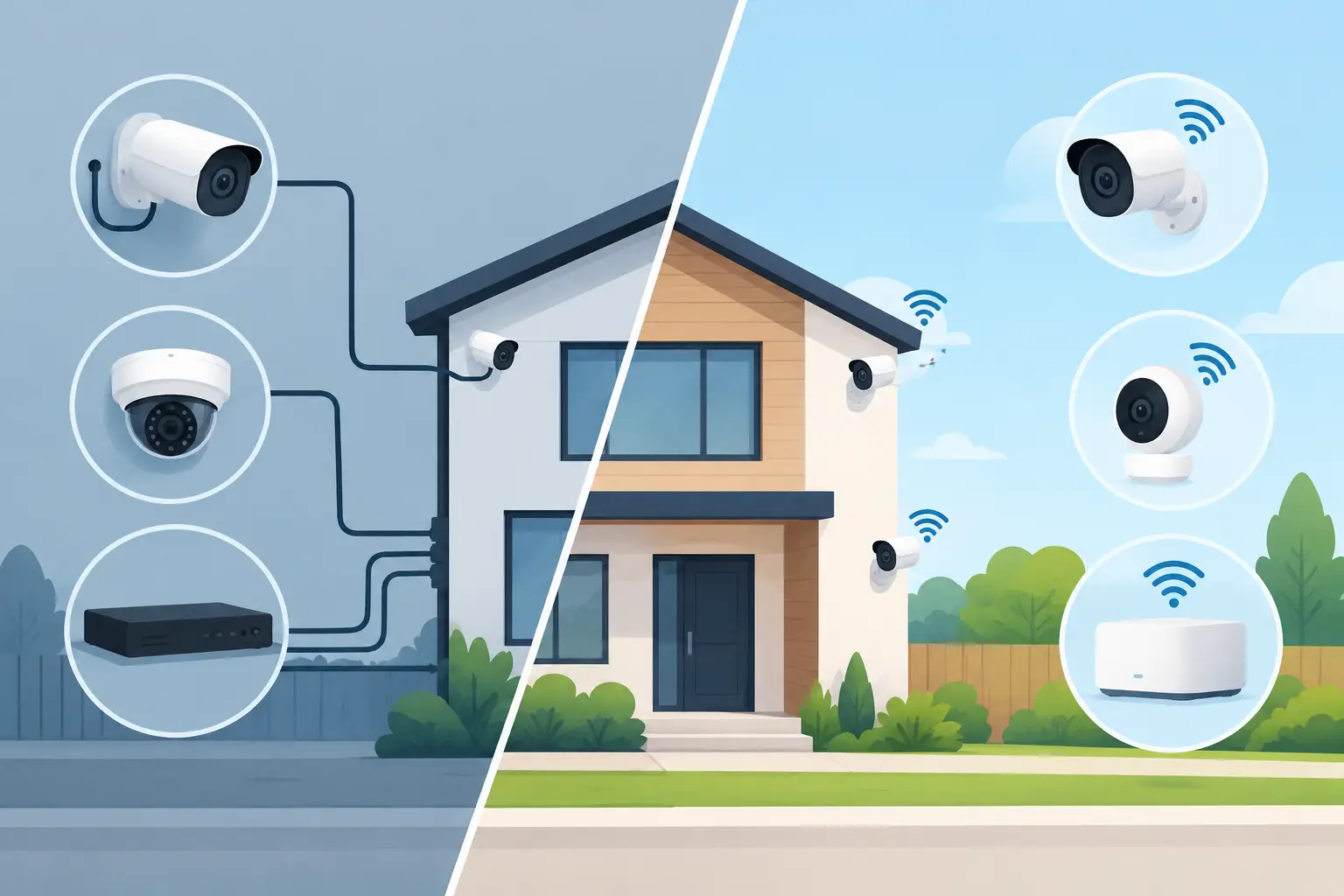
A wired system uses low-voltage cabling to connect cameras and other devices back to central equipment. In many cases, one Ethernet cable provides both power and data. The cable can be run inside walls, through attics, or during construction before drywall is installed, leaving the finished space clean and uncluttered.
A wireless system sends video over Wi-Fi or another radio connection. Most wireless cameras still need power, either from a nearby outlet, a rechargeable battery, or a small solar panel. “Wireless” usually describes the data connection, not a completely wire-free installation.
That distinction matters. A battery-powered camera can be a practical choice for a detached garage, side gate, rental property, or location where opening walls is not reasonable. But a professionally planned wired system is often the better foundation for permanent, high-use coverage around a primary residence or small business.
Reliability Is Usually the Deciding Factor
Wired connections are consistent because they do not compete with phones, televisions, streaming devices, gaming systems, and appliances for Wi-Fi capacity. A hardwired camera has a direct path back to the recorder or network equipment. That helps support continuous recording, higher-resolution video, and dependable performance across larger properties.
Wireless systems can work very well when the Wi-Fi design is strong. The issue is that many homes have Wi-Fi coverage that is excellent in the family room and weak near the driveway, rear patio, or second-floor exterior wall. A camera placed at the edge of coverage may still appear online but suffer from delayed alerts, reduced video quality, or intermittent disconnects.
Ohio weather adds another practical consideration. Exterior equipment must handle heat, cold, rain, and snow, while wireless signals may have to pass through brick, stone, insulation, masonry, and metal siding. A site review can reveal signal challenges before a camera is mounted in a location that looks ideal but performs poorly.
Power Changes the Day-to-Day Experience
A wired camera powered through Ethernet does not need routine battery charging. It remains ready for recording and notifications as long as the system and the home have power. For homeowners who travel often, manage several properties, or simply do not want another maintenance task, that consistency is valuable.
Battery cameras offer flexibility, but batteries create a schedule. Cold temperatures can shorten battery life, frequent motion events use more power, and a camera may need attention at the least convenient time. Solar charging can reduce the need to recharge, although shade, rooflines, and winter daylight can limit its effectiveness.
There is also a difference in how devices behave during a power outage. A battery camera may continue operating temporarily, but its Wi-Fi connection and internet service may not. Wired equipment can be supported with battery backup for the network and recording hardware, helping preserve local recording and allowing a properly designed system to recover gracefully when utility power returns.
Installation: Plan Early or Work Around the Finished Space
New construction is the ideal time to install wiring. Cables can be placed behind walls and above ceilings while the structure is open. This creates a clean result, avoids exposed cords, and gives future owners a useful technology foundation. Builders can also coordinate camera locations with exterior lighting, trim, soffits, landscaping, and rooflines so equipment is positioned thoughtfully rather than added as an afterthought.
That does not mean existing homes are limited to wireless options. Experienced low-voltage installers can often route cable through attics, basements, crawlspaces, utility areas, and exterior pathways with minimal disruption. The available route, construction materials, and desired camera locations determine what is practical.
Wireless equipment is often quicker to place, especially in a finished home. It can be an excellent answer where a single location needs coverage quickly or where running a cable would require significant construction work. The trade-off is that placement still has to account for Wi-Fi strength, power access, charging needs, and a secure mounting surface.
Recording and Privacy Deserve Equal Attention
The camera is only one part of the experience. Homeowners should understand where video is stored, how long it is retained, and what happens if the internet connection goes down. Some wireless products rely primarily on cloud storage and may require an ongoing subscription. Others offer local storage, while many wired systems use a dedicated recorder inside the home or business.
Local recording can provide more control and continuous capture without relying entirely on internet bandwidth. Cloud access can be convenient for remote viewing and receiving clips. A well-designed system may combine local recording with remote access, giving the homeowner practical visibility without making the experience complicated.
Privacy also begins with placement. Cameras should cover entry points, driveways, garages, and shared exterior areas without unnecessarily pointing into a neighbor’s private space. Interior cameras require even more care. The goal is useful awareness, not a home that feels intrusive.
When Wireless Is the Better Choice
Wireless is not a lesser option. It is the right fit when flexibility matters more than continuous recording or when the location is difficult to wire. A homeowner may want to monitor a shed, a temporary construction area, a detached structure, or one vulnerable side of the property without a larger installation project.
It also makes sense for people who expect to move soon or want to expand coverage gradually. Starting with a thoughtfully placed wireless camera can solve an immediate concern while leaving room for a more permanent wired system later.
The key is to avoid treating wireless as a shortcut around planning. Before installation, confirm signal strength at the exact mounting location, determine how power will be handled, and test the camera’s view at day and night. A clear daytime image does not always reveal glare from porch lights, reflections from windows, or a dark approach path after sunset.
When Wired Is Worth the Investment
Wired systems are generally the better choice for homes where dependable, around-the-clock coverage is the priority. They are especially well suited to new builds, renovations, larger homes, properties with long driveways, and locations where Wi-Fi coverage is inconsistent.
They also make sense when the homeowner wants a finished result that disappears into the architecture. Proper cable routing, clean equipment placement, and coordinated network design keep technology in the background while it does its job. There are no hanging power adapters, no regular ladder trips to retrieve a camera, and fewer variables to troubleshoot.
For custom home builders, prewiring creates options without forcing every homeowner into the same equipment package. A home can be prepared for cameras at key exterior locations and upgraded later as needs change. That is often more cost-effective than reopening finished walls after move-in.
Choose the System That Will Be Easy to Live With
The best wired vs wireless security decision is not based on a single feature or an online product comparison. It comes down to how the property is built, what needs to be seen, how much maintenance is acceptable, and whether the network can support the system reliably.
A professional evaluation can identify the right camera angles, cable routes, Wi-Fi improvements, recording approach, and power backup needs before equipment is selected. That planning turns a collection of devices into a system that feels simple to use and dependable when it matters.
Technology should offer quiet reassurance, not another household chore. Choose the approach that lets you check in when you need to, then get back to enjoying the home.


No responses yet