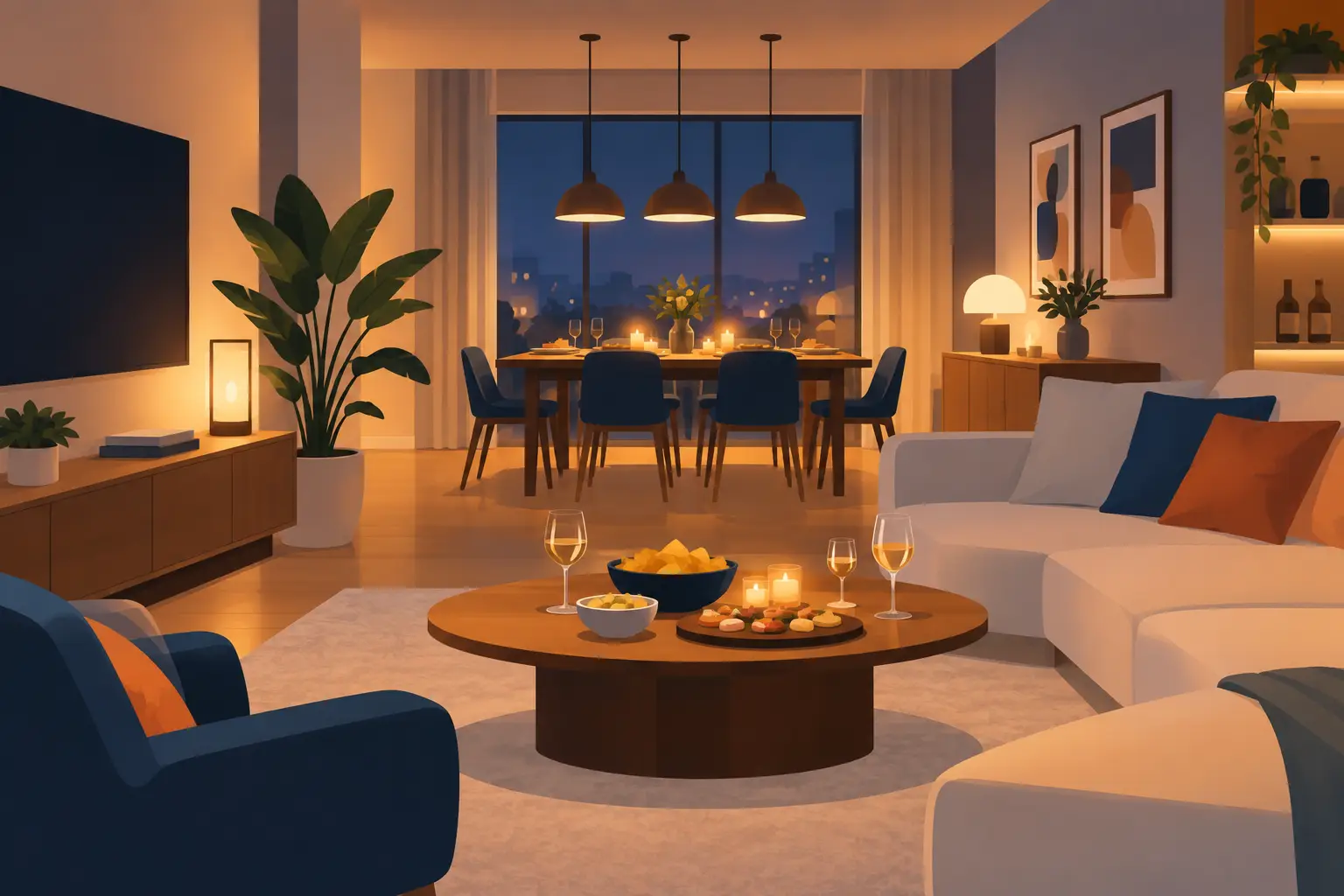
A good gathering rarely begins when the first guest arrives. It begins when the room feels ready: the kitchen is bright enough for finishing touches, the living area feels welcoming rather than flat, and no one is hunting for switches once the conversation starts. The best lighting scenes for entertaining make that preparation feel effortless, then let the atmosphere shift naturally as the evening unfolds.
For homeowners, builders, and renovators, lighting scenes are one of the most practical ways to make a home feel polished without making it complicated. Instead of treating every fixture as a separate decision, a scene brings several lights together at useful levels with one simple command. The result is a home that supports the occasion quietly, whether it is a relaxed family dinner, a neighborhood party, or a full house during the holidays.
Why Lighting Scenes Change the Way You Host
Entertaining asks more of a room than everyday living does. Guests need to see where they are walking, find a drink, and sit comfortably. At the same time, harsh overhead lighting can make a carefully designed space feel more like a workspace than a place to linger.
The answer is not simply using less light. It is using the right light in the right place. A well-designed scene balances general illumination with accent lighting, decorative fixtures, under-cabinet light, and outdoor lighting where appropriate. It gives the room depth, helps people move comfortably through the home, and creates a warmer visual rhythm.
Just as important, a scene removes the small interruptions that can pull a host away from guests. Rather than adjusting several dimmers as daylight fades, you select one setting from a wall keypad, app, or voice command. The technology stays in the background, while the home feels considered and comfortable.
Best Lighting Scenes for Entertaining
The most useful scenes are based on moments that happen repeatedly in your home. A custom system should reflect how you actually host, not force your routine into a preset label. Still, these scenes provide a strong starting point for most homes.
Welcome Scene
The welcome scene sets the tone before anyone rings the doorbell. It should create a clear, inviting path from the driveway or porch to the main gathering area, while making the entry and foyer feel open rather than overly bright.
Inside, aim for a gentle wash of light from ceiling fixtures or recessed lighting, supported by pendants, sconces, or lamps where they add character. In an open-concept home, the kitchen and living room can be lit at moderate levels so the house feels active and ready without revealing every detail at full brightness.
This is especially valuable in Northeast Ohio during darker fall and winter evenings. Guests should immediately feel that the home is welcoming, and hosts should be able to greet them without stopping to adjust lights room by room.
Prep and Serve Scene
Before the gathering begins, function matters most. A prep and serve scene raises light levels in the kitchen, pantry, beverage station, and dining table area. Task lighting under cabinets becomes particularly helpful when chopping, plating, or setting out food.
This scene is not meant to be the final mood. It is the practical setting that keeps preparation calm and prevents shadows on counters and work surfaces. Decorative pendants can remain on, but they should support the brighter task lighting rather than carry the entire load.
For homes with a large island, this is often the scene that gets used most often. It gives hosts enough light to work while allowing adjacent living spaces to remain warmer and less intense.
Dinner Scene
The dinner scene should make the table the visual center of the room. Lower the general lighting, preserve enough brightness for guests to see their food and one another clearly, and let pendants or a chandelier provide a soft focal point.
The right dimming level depends on the fixture, ceiling height, wall colors, and the amount of daylight still entering the room. There is no universal percentage that works in every house. A dining room with dark finishes may need more ambient light than a bright kitchen with reflective surfaces.
The goal is warmth without strain. If guests cannot comfortably read a menu or see a serving dish, the room is too dim. If every corner is equally bright, the scene may lack the intimacy that makes a meal feel special.
Cocktail and Conversation Scene
Once dinner transitions into conversation, the light should become more relaxed. In a cocktail and conversation scene, lower the dining fixture slightly and bring attention to seating areas, a bar, fireplace wall, artwork, or built-in shelving.
This is where layered lighting earns its place. Table lamps, wall sconces, cove lighting, and carefully aimed accent fixtures can create a comfortable glow that recessed lights alone cannot provide. The room feels softer, while pathways to the kitchen, restroom, and outdoor areas remain easy to navigate.
For an open floor plan, consider giving the kitchen a slightly higher level than the living room. People naturally gather near food and drinks, so a little extra brightness there is useful. The lounge area can be dimmer to encourage guests to settle in.
Game Day or Watch Party Scene
A screen should not have to compete with a fully lit room, but total darkness is not ideal either. A game day or watch party scene keeps low-level illumination around the perimeter of the room, with enough light for snacks, conversation, and safe movement.
Dimming overhead fixtures while maintaining accent or wall lighting helps reduce glare and makes the display more comfortable to watch. If the room includes a bar or snack counter, keep that area at a usable level without spilling too much light onto the screen.
This scene works best when it is tuned in the actual room after installation. Screen placement, window direction, fixture type, and seating layout all affect the final settings. A professional setup accounts for those details instead of relying on a one-size-fits-all preset.
Outdoor Gathering Scene
Patios, decks, and outdoor kitchens need a different approach. The goal is not to flood the yard with light. It is to define the spaces guests will use: the door, steps, dining table, grill area, and seating zone.
Soft lighting near the house can make indoor and outdoor entertaining feel connected. Step and pathway lighting improve visibility, while dimmable fixtures near seating areas help avoid the glare that can make an outdoor space feel exposed. If you entertain near a fire feature, set surrounding lights low enough to preserve its natural atmosphere.
Outdoor scenes also benefit from simple scheduling. A scene can come on before guests arrive and turn down later in the evening, so the exterior feels intentional without requiring another task from the host.
Design the Scene Around Layers, Not Just Dimmers
A lighting scene is only as useful as the lighting plan behind it. Dimming a single row of recessed fixtures will change brightness, but it will not create much visual interest. The most inviting spaces use layers with distinct jobs.
Ambient lighting provides overall visibility. Task lighting supports activities such as serving food or preparing drinks. Accent lighting adds depth by highlighting architectural details, shelves, artwork, or textured walls. Decorative fixtures contribute personality and often become a focal point even when they are not the brightest source in the room.
Each layer does not need to be present in every room. In fact, adding fixtures simply for the sake of complexity can work against a clean design. The right plan depends on how the space is used, the natural light it receives, and which features are worth emphasizing.
Keep Controls Simple Enough to Use
A scene that requires several taps or a complicated app will not feel convenient when guests are arriving. The best approach usually combines a few clearly labeled wall controls with mobile access for adjustments and automation in the background.
Labels should describe real moments, such as Welcome, Dinner, Party, or Outdoor. Avoid technical names that only make sense to the installer. The people living in the home should know exactly what will happen when they press a button.
It is also wise to include a practical all-on setting for cleanup and a bedtime setting that turns off main entertaining areas while leaving a low path of light where needed. These small details make the system useful long after the party ends.
When Professional Planning Makes the Difference
Lighting scenes are easiest to add during a new build or major renovation, when fixture locations, wiring, finishes, and window treatments can be coordinated early. They can also be added to an existing home, although the available options depend on the current wiring and fixtures.
A thoughtful consultation looks beyond the equipment. It considers sightlines, ceiling heights, furniture placement, daylight, how rooms connect, and what a typical evening looks like for the household. Tri-County Technology designs lighting control around those habits, then programs scenes that are easy to use from day one.
Start with the moments you want your home to support. When lighting follows those moments instead of asking for constant attention, guests notice the comfort of the space and you get to enjoy the gathering with them.


No responses yet