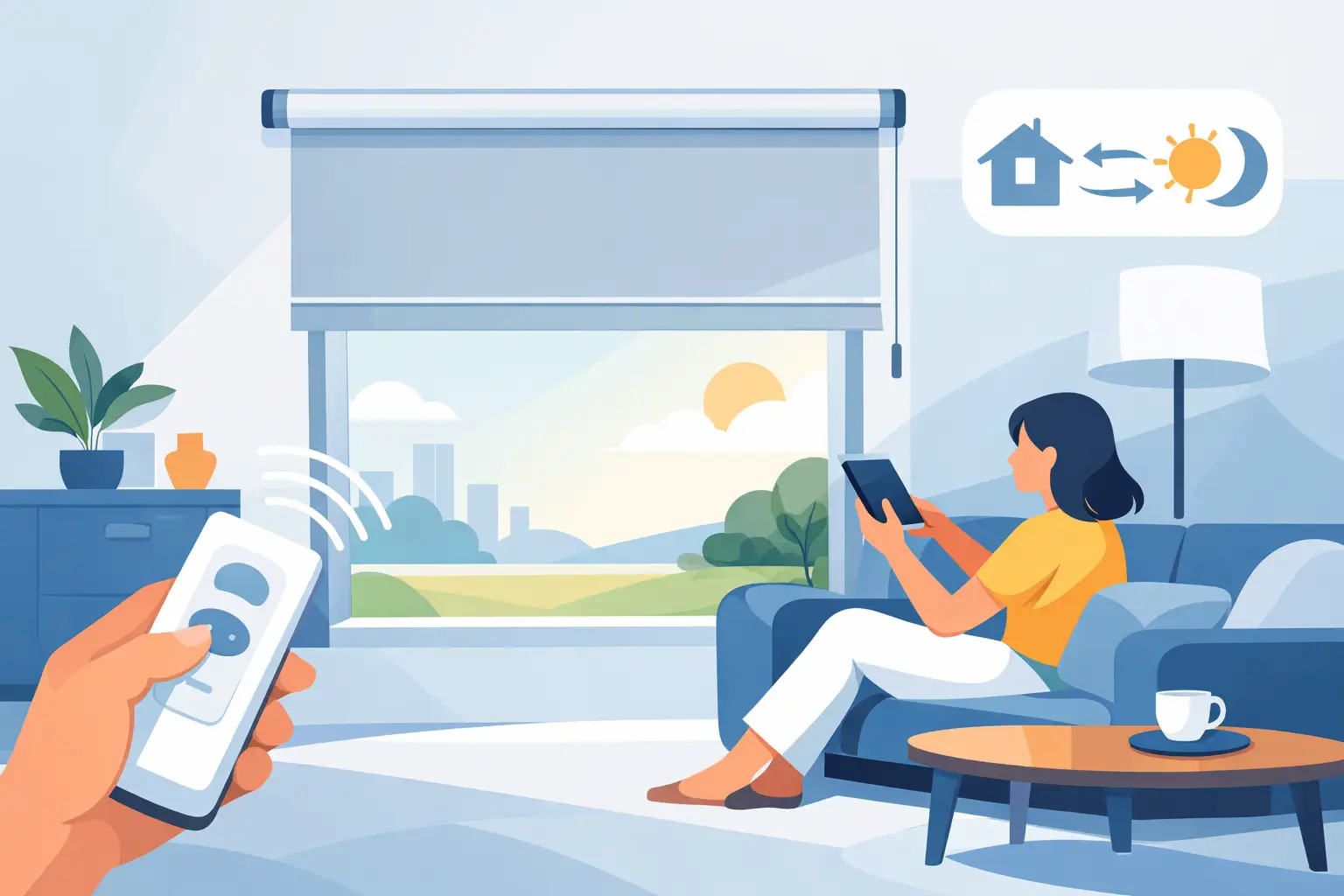
The afternoon sun is hitting the family room just as a movie starts, your hands are full while carrying in groceries, or you are already tucked into bed when you remember the upstairs shades are still open. Motorized shades handle these small daily moments with a single tap, a scheduled setting, or an automatic response built around how you live.
For homeowners and builders, the appeal is not technology for its own sake. It is a more comfortable home that manages light and privacy quietly, without cords, clutter, or a collection of remotes. When designed well, automated window treatments feel like a natural part of the room from the first day.
What Motorized Shades Actually Improve
Motorized shades give you precise control over daylight. That can mean softening glare across a kitchen island in the morning, protecting flooring and furnishings from intense afternoon sun, or creating a darker environment for a midday nap. Instead of adjusting each window one at a time, you can move one shade, an entire room, or selected areas of the home together.
Privacy is another practical benefit. Large windows are a defining feature in many newer homes, but they can leave living spaces exposed after dark. A scheduled evening setting can lower shades at the time your household typically settles in. For a home with multiple levels, hard-to-reach windows, or a wall of glass, that convenience becomes especially meaningful.
The right fabric also contributes to year-round comfort. Solar fabrics can filter harsh light while preserving a view, while room-darkening and blackout materials provide more coverage where needed. In Northeast Ohio, where bright summer afternoons and cold winter nights place different demands on windows, shades can support a more consistent indoor environment. They are not a replacement for proper insulation or HVAC design, but they can be a useful part of an energy-conscious home.
Just as importantly, motorization removes the cords and manual hardware that can interrupt an otherwise clean interior. The result is simpler to use and easier to keep visually calm.
Choosing the Right Motorized Shades for Each Room
The best choice is rarely one shade style repeated throughout the house. Each room has a different relationship with light, privacy, views, and daily routines. A thoughtful plan starts with those needs before choosing fabric colors or control methods.
Living Areas: Preserve Light Without the Glare
In kitchens, great rooms, and open living areas, homeowners often want daylight without the discomfort of direct sun. Light-filtering or solar shades are frequently a good fit because they reduce glare and soften the room while maintaining a connection to the outdoors. The openness of the fabric determines how much view remains and how much light is filtered.
This is where automation can feel particularly useful. Shades can lower during the brightest part of the day, then raise later to bring back natural light. If a room is used for television or entertaining, scene-based control can adjust the window treatments alongside the room’s lighting for a more comfortable setting.
Bedrooms: Make Rest More Predictable
Bedrooms usually call for more privacy and better light blocking. Room-darkening or blackout shades are often worth considering, especially for children, shift workers, or anyone sensitive to early sunrise. A timed morning setting can gradually raise the shades instead of turning the room from dark to bright all at once.
Layered treatments can be a smart option in primary bedrooms. For example, a light-filtering shade may be used during the day while a more opaque treatment handles nighttime privacy. The trade-off is additional cost and planning, but the result offers greater flexibility than a single fabric can provide.
Hard-to-Reach Windows: Make Them Useful Again
Clerestory windows, stairwell windows, and tall two-story glass can look beautiful while being difficult to manage manually. Motorization turns those windows into functional parts of the home rather than features that stay in one position all year.
For these locations, professional planning matters. The installer needs to account for mounting, power, signal strength, shade size, and future service access before the project is complete. A clean installation protects both the appearance and the long-term reliability of the system.
Power Options Matter More Than Most People Expect
Motorized window treatments can be powered in several ways, and the best choice depends on the home, the window locations, and the stage of the project.
Battery-powered shades are a strong option for many retrofit projects. They avoid opening finished walls and can provide a clean appearance when installed properly. The practical consideration is maintenance: batteries will eventually need to be replaced or recharged, and that task is less convenient for tall or difficult-to-reach windows.
Hardwired shades are often the preferred choice for new construction and major renovations. Low-voltage wiring can be planned before drywall, creating a dependable permanent power source with no routine battery upkeep. This approach takes more coordination early in the build, but it usually delivers the cleanest long-term result.
Rechargeable systems offer a middle ground for some homes. They can be a good fit where wiring is not practical, though they still require an occasional charging plan. There is no universal answer. The right recommendation comes from understanding how often each shade will move, where it is located, and how much maintenance the homeowner wants to manage.
Control Should Feel Familiar, Not Complicated
A good motorized shade system should not require a lesson every time someone wants to let in more light. Wall keypads, handheld remotes, mobile apps, voice control, and smart home interfaces can all work well, but the best systems keep the everyday experience simple.
Most households benefit from a few clearly named settings rather than endless individual controls. A “Morning” setting might raise the kitchen and living-area shades. A “Movie” setting might lower the room’s shades to reduce screen glare. An “Away” setting can place selected shades in a preferred position while the home is unoccupied.
Schedules are useful, but they should follow real routines instead of creating new ones. A family that leaves early may want shades to open after the house is empty. Someone who works from home may prefer more precise daytime control to manage glare at a desk. Automation is most helpful when it remains flexible enough for an ordinary day that does not go exactly as planned.
Integration can also be valuable when it supports a single, intuitive control experience. The goal is not to put every function on a phone. A well-designed system gives you easy physical control when you want it and automation when you do not want to think about it.
Why Professional Design Makes a Visible Difference
Window treatments sit at the intersection of interior design, electrical planning, and daily use. A shade can be well made and still disappoint if it is measured incorrectly, mounted in the wrong position, paired with the wrong fabric, or installed with an unreliable power plan.
Professional design begins with the window itself. Measurements must account for trim, recess depth, obstructions, handles, and the desired coverage. Fabric selection should consider orientation, nearby homes, view preservation, room use, and how the material looks when backlit at night. For wide openings and larger shades, motor capacity and mounting details deserve close attention as well.
For builders, early coordination is especially valuable. Planning window treatment wiring alongside structured wiring and other low-voltage needs prevents last-minute compromises. It also helps keep finished spaces clean by avoiding exposed power supplies, improvised charging access, or controls added after the fact.
At Tri-County Technology, the focus is on making these decisions practical. That means designing around the home, selecting controls people will actually use, and installing the system with the same attention given to the room’s finished appearance.
A Better Starting Point Than Picking a Fabric First
It is tempting to begin with color, and appearance certainly matters. But the most useful first question is simpler: what do you want this window to do at different times of day? Once that answer is clear, fabric openness, opacity, power, and controls become easier to narrow down.
Start with the rooms that create the most friction now. It may be the bright family room, the bedroom that wakes too early, or the windows that are simply too high to adjust comfortably. A well-planned motorized shade system does not ask you to change your routine. It gives your home a quieter, more comfortable way to support it.


Comments are closed