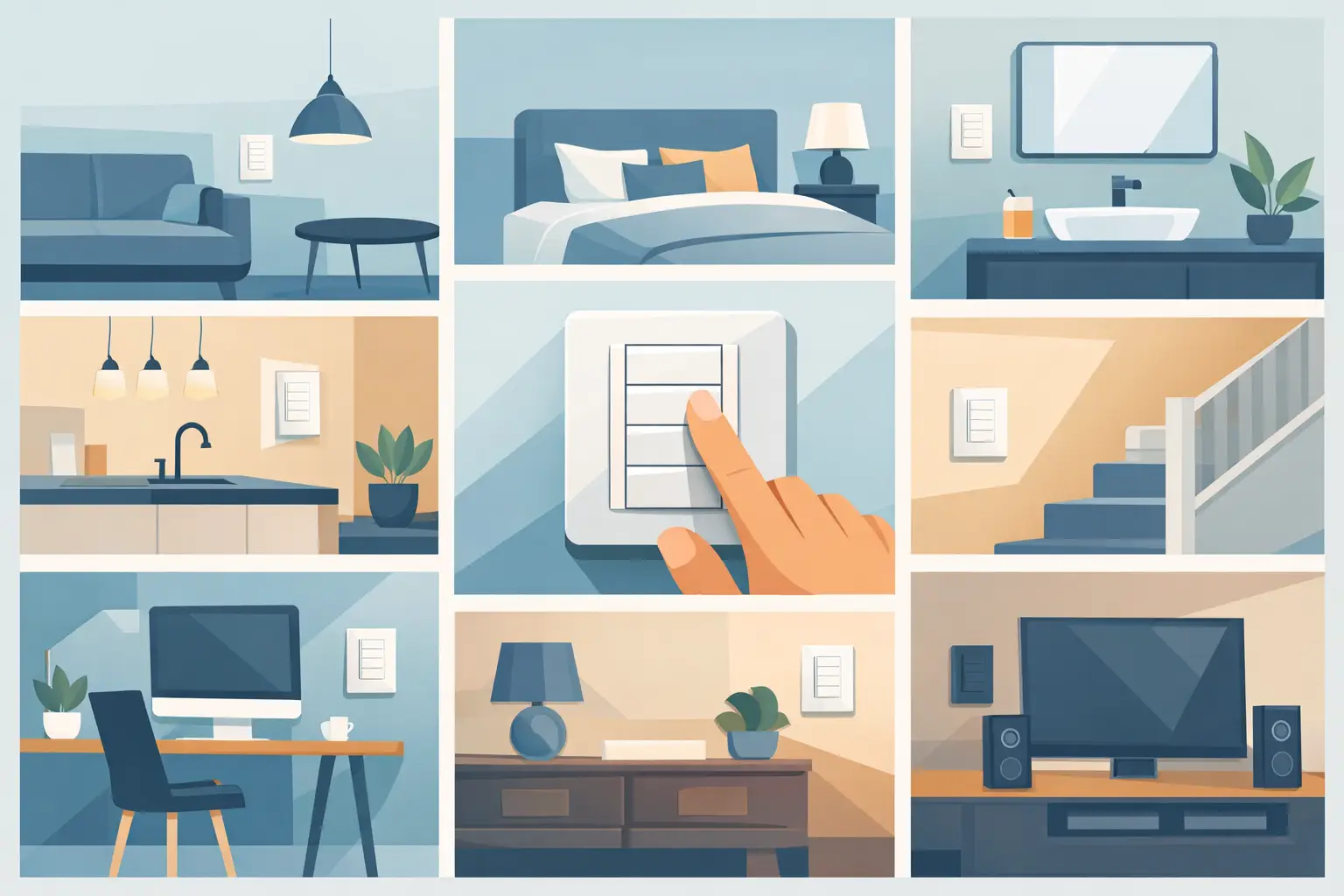
A well-designed keypad can replace a row of switches with a small, calm control point that makes the room easier to live in. The best Lutron keypad design ideas start with a simple question: what should happen when someone walks in, leaves, settles in for the evening, or gets ready for bed? When the answer is clear, the buttons, engraving, and placement become much easier to plan.
A keypad is not just a nicer-looking wall control. It is a daily-use interface for the lighting scenes that shape how a home feels. Done well, it removes guesswork. A homeowner should be able to press one clearly labeled button and get the right light level without explaining the system to a guest or reaching for a phone.
Start With Routines, Not Button Counts
It is tempting to begin by choosing a keypad style or deciding how many buttons fit on the wall. Start instead with the moments that repeat every day. In a kitchen, that may be bright morning light, focused cooking light, a softer dinner setting, and an all-off command. In a primary bedroom, the priorities may be getting dressed, reading, relaxing, and turning off the home’s common-area lights from bed.
The goal is not to put every possible lighting adjustment on the keypad. Too many choices make a sophisticated system feel complicated. A strong design usually gives each button a clear purpose and leaves fine adjustments to dimming controls or the Lutron app when needed.
For most rooms, three to five useful scene buttons are more valuable than a keypad filled with labels that are rarely used. The right number depends on the space. A large open-concept main floor may deserve more scene options than a guest bedroom, while a simple entry may need only a welcoming scene and an off button.
Lutron Keypad Design Ideas That Feel Natural
Give each room a simple lighting story
Think of each keypad as a short list of the room’s best versions. A great room might include Entertain, Relax, TV, and Off. These labels communicate an outcome rather than the technical name of a fixture group. Someone does not need to know which recessed lights or sconces are included. They only need to know that Relax creates the comfortable setting they want.
In kitchens, labels such as Cook, Dine, Clean, and Off tend to work well because they follow the room’s natural rhythm. For a bathroom, Morning, Evening, Night, and Off can support both daily routines and comfortable late-night use. A Night scene may bring a few fixtures to a low level rather than switching on bright overhead lighting.
Avoid scene names that are clever but unclear. A label may make perfect sense during installation but become frustrating months later. Plain language ages well and is easier for family members, guests, and future homeowners to understand.
Use an all-off button where it earns its place
An all-off command is one of the most practical additions to a lighting control plan. It is especially useful near exterior doors, in the primary suite, at the top of a stairway, or beside the door leading from the garage into the home. One press can turn off selected lighting zones without a final walk through the house.
The trade-off is scope. A button labeled Off in the kitchen should normally turn off the kitchen, not unexpectedly darken the entire home. Reserve labels such as Goodnight or Whole Home Off for commands with a broader purpose, and place them where that purpose is obvious. Clear engraving prevents surprises.
Match keypad style to the architecture
Lutron keypads are available in different button layouts, finishes, and aesthetic families. The right choice should support the home’s interior rather than call attention to itself. A clean, contemporary home may suit a minimalist engraved keypad in white, black, or a neutral tone that blends with the trim. A more traditional interior may call for a finish that coordinates with the wall plate, hardware, and nearby devices.
Consistency is usually more important than making every room identical. Use the same keypad family throughout the home when possible, then let finish and engraving adapt to the room. For example, a dark keypad can look intentional in a moody theater or study, while a light finish may disappear more gracefully against pale walls in bedrooms and hallways.
Button layout matters, too. Larger buttons can be easier to identify at a glance, particularly in busy common areas. More compact layouts can work nicely where only a few commands are needed. A professional design review helps keep the controls useful without making the wall feel crowded.
Coordinate engraving with how people speak
Engraving is where an elegant keypad becomes truly intuitive. Use words people already use in conversation: Kitchen, Patio, Reading, Movie, Goodnight. If the household calls the family room “the den,” use Den. If a room has a commonly used nickname, the labels should reflect it.
Keep labels short. Long phrases can be harder to scan and may force awkward abbreviations. “Dinner” is often better than “Dining Area Scene.” “Away” is easier to read than “Turn Off Main Floor.” The programming can be detailed behind the scenes; the interface should remain simple.
For homes with multiple levels, consistency helps. If the main-floor keypad uses “All Off,” avoid calling the same command “Off House” upstairs. Small differences create hesitation, especially for visitors or household members who do not interact with the system every day.
Put controls where decisions happen
Placement matters as much as programming. A keypad by the room entrance is useful for arrival and departure scenes. A second keypad near a seating area can be worthwhile in a large great room, where walking back to the door just to adjust lighting becomes annoying. In a primary suite, bedside control is often one of the most appreciated upgrades because it supports nighttime routines without getting out of bed.
There is no universal rule that every room needs multiple keypads. More locations add convenience, but they also add cost and visual presence. Focus on transition points and frequent-use positions first. A consultation during new construction or a renovation is the best time to identify those locations before drywall and finishes limit the options.
Let keypads support daylight and window treatments
Lighting scenes become even more useful when paired with motorized window treatments. A Morning button might raise shades and bring on gentle light. A Movie button can lower shades while adjusting the room’s lighting for comfortable viewing. In a sun-facing room, a daytime scene can reduce glare without making the space feel closed off.
The key is restraint. Not every lighting button needs to move a shade. Combining too many actions can make the system feel unpredictable. Pair functions only when they consistently belong together in a real routine. A thoughtful programmer can build scenes that feel quiet and expected rather than theatrical.
Plan for guests and changing needs
A home should not require a tutorial. Guests should be able to find a room’s basic lighting controls and understand the labels without help. That is one reason clearly engraved keypads are preferable to relying only on an app or voice commands. Physical controls are immediate, familiar, and dependable when hands are full or a phone is charging elsewhere.
It also helps to plan for life changes. A nursery may later become a study. A guest room may become a bedroom for an aging parent. Programming can be updated, but simple layouts and flexible scene names reduce the need for frequent changes. In many cases, a label like Relax will remain useful longer than a highly specific label tied to one stage of life.
Room-by-Room Priorities for Lutron Keypads
Common areas benefit most from scene control because they serve several purposes throughout the day. Great rooms, kitchens, dining areas, and finished lower levels are good places to prioritize thoughtful keypad programming. These are the rooms where a single button can replace several manual adjustments and make the space feel ready for the moment.
Bedrooms generally need fewer options, but their controls should be placed carefully. Bedside keypads and low-level nighttime scenes can add real comfort. Bathrooms benefit from time-of-day scenes, particularly when bright lighting is welcome in the morning but unpleasant overnight.
Hallways, mudrooms, and laundry rooms usually call for simplicity. A basic on, off, or appropriately labeled scene may be all that is needed. Overdesigning utilitarian spaces can make the system harder to maintain without adding meaningful value.
A Professional Plan Keeps the Details Aligned
Keypad design touches electrical locations, lighting loads, wall finishes, window treatments, and the way a family moves through the home. That coordination is why planning early is valuable, especially for custom homes and major renovations. It allows the controls to feel intentional rather than added after the fact.
For existing homes, a retrofit can still make a noticeable difference. The best approach is to identify the rooms where lighting is used most often and solve the daily frustrations first. Tri-County Technology helps homeowners and builders turn those routines into clean, approachable control plans that fit the home instead of competing with it.
The most successful keypad is rarely the one with the most buttons. It is the one that makes a familiar moment feel easier: arriving home to the right light, settling into a movie, or ending the day with one confident press.


Comments are closed