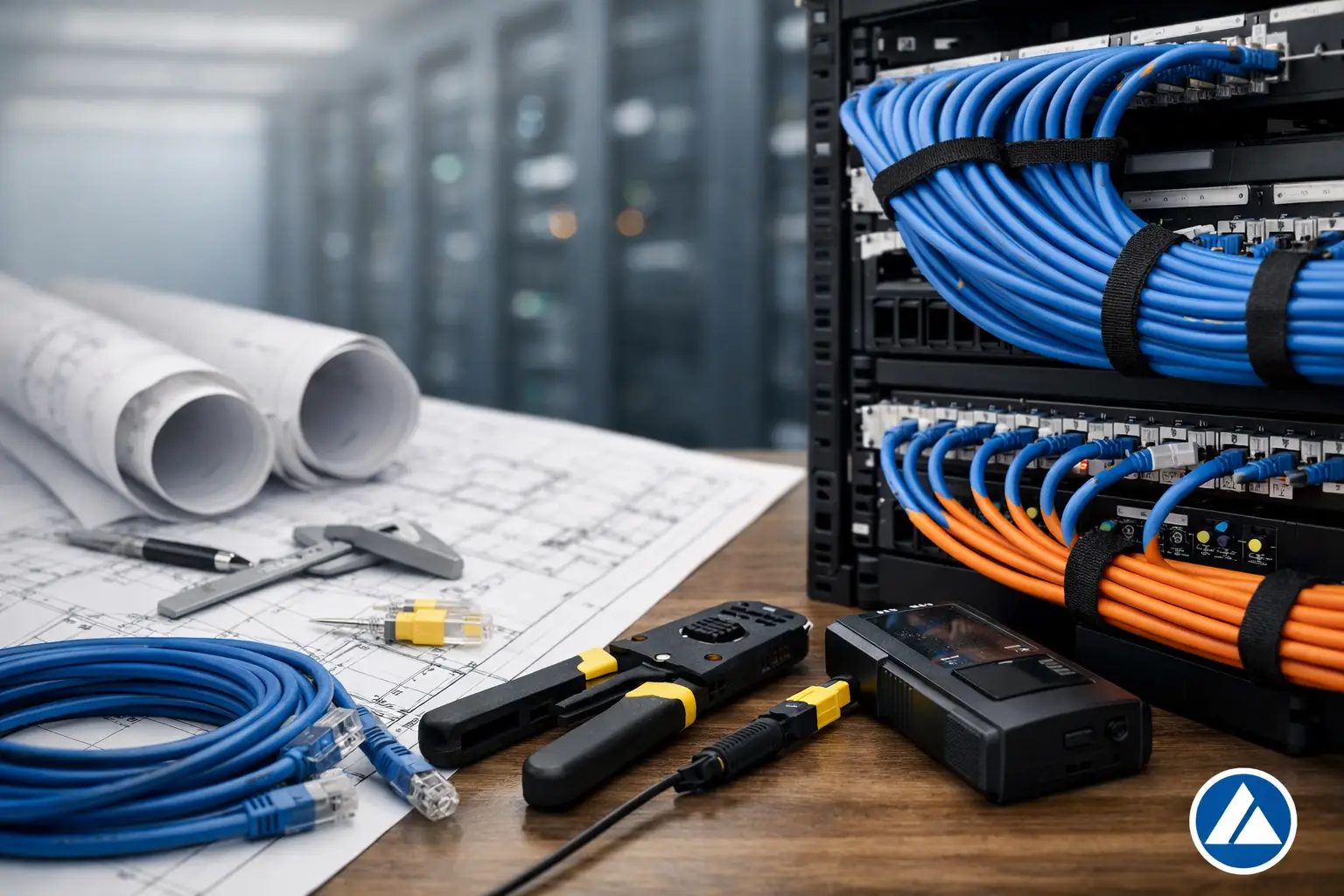
A fast internet plan cannot fix bad wiring behind the walls. If you are figuring out how to plan structured cabling, the real goal is not just getting wire from one room to another. It is building a clean, dependable foundation for Wi-Fi, TVs, cameras, audio, workspaces, and the devices you will add later.
Good cabling should feel invisible once the project is done. You should not be thinking about weak signals in the back bedroom, messy equipment stacked in a closet, or whether one renovation decision now will create limits two years from now. A solid plan keeps technology reliable, easy to expand, and easier to live with every day.
What structured cabling actually means
Structured cabling is the organized low-voltage wiring that supports your connected systems. In a home or small business, that often includes Ethernet runs for data, wireless access points, streaming devices, TVs, surveillance, audio components, and smart system hardware.
The key word is structured. This is not a collection of random cables pulled wherever someone happened to need them. It is a planned system with a central location, labeled runs, consistent cable types, and enough capacity to support both current needs and future upgrades.
That planning matters because your walls and ceilings are the expensive part to revisit. Devices change quickly. Infrastructure should not.
Start with the rooms, not the rack
One of the most common mistakes in how to plan structured cabling is starting with equipment before thinking through daily use. The better approach is to walk the property room by room and ask a simple question: what needs to work here, now and later?
In a family room, that might mean hardwired connections for a TV, streaming box, gaming console, and a nearby wireless access point. In a home office, it could mean dedicated data lines for a desktop, printer, VoIP phone, and stronger wireless support for video calls. In a small business, front-of-house and back-office needs are usually different, so planning should reflect how each space actually operates.
Think beyond the obvious rooms. Outdoor living areas, garages, media rooms, home gyms, flex spaces, and bedrooms often get overlooked during planning. Those are the spaces where people later ask for better coverage, a cleaner TV setup, or added smart features.
Choose a central location carefully
Every structured cabling plan needs a central distribution point where your low-voltage wiring terminates. This may be a dedicated media enclosure, utility room, equipment closet, or rack space, depending on the size of the project.
This location should be accessible, dry, ventilated, and practical for service. It should also be positioned with cable pathways in mind. A tight linen closet on an outside wall may seem convenient until it becomes crowded, overheated, and difficult to work in.
A little extra space goes a long way. Even a modest home can outgrow a cramped cabinet once you add network gear, audio hardware, surveillance storage, and power management. Planning for neat cable management and future service access will save time and frustration later.
Plan cable types based on use, not guesswork
Most structured wiring plans for homes and small commercial spaces rely heavily on Ethernet cabling. Category choice matters, but it should match the project.
Cat6 is a strong fit for many installations because it supports high speeds, handles most common connected systems well, and offers good long-term value. Cat6A may make sense in larger properties, in spaces where longer runs are expected, or where you want more headroom for future bandwidth needs. There is no prize for overbuilding every run if the property will never use that capacity, but there is also risk in choosing the cheapest option without considering how the space will evolve.
Fiber can be useful in certain cases, especially between buildings or for specialty backbone needs, but it is not automatically necessary for every residence. The right answer depends on distance, system goals, and budget.
This is where professional design helps. The best wiring plan is not the one with the most cable. It is the one that supports the way the property will actually be used.
How to plan structured cabling for coverage and performance
A good cabling plan supports both wired devices and strong wireless performance. That is an important distinction. Many people think structured cabling and Wi-Fi are separate decisions, but they work together.
Wireless access points perform best when they are placed where coverage is needed, not where wiring happened to be easiest. That means cabling should be planned to support ceiling-mounted or strategically located access points in the right zones of the home or office. If you skip that step, you often end up relying on signal workarounds instead of proper design.
Hardwiring also improves network stability by taking heavy-use devices off Wi-Fi. Smart TVs, desktops, media players, and some surveillance equipment often perform better on wired connections. That leaves more wireless capacity available for phones, tablets, and mobile devices.
The result is not just better speed. It is a smoother everyday experience.
Think ahead about furniture, finishes, and renovations
Structured cabling should work with the space, not fight it. A clean plan takes into account where TVs will be mounted, where desks will sit, how millwork or built-ins may affect outlets, and whether a finished basement or remodel is coming later.
This is especially important in new construction and major renovations. Once drywall is up, your options narrow quickly. Even in retrofit projects, thoughtful planning can reduce wall damage and help prioritize the most valuable cable paths.
It also helps to think about life changes. A guest room may become an office. A bonus room may become a media space. A small business may add workstations. Planning a few extra runs in the right places is usually far less expensive than opening walls later.
Labeling and documentation are part of the plan
A structured cabling system is only as usable as it is organized. Every cable run should be labeled clearly at both ends, and there should be a simple record of what goes where.
That may sound minor, but it affects everything from faster troubleshooting to easier upgrades. Without documentation, even a well-installed system can become confusing over time, especially after device swaps, internet provider changes, or room reconfigurations.
Professional labeling and cable management also support a cleaner final result. That matters more than people expect. When equipment is organized, service is simpler and system reliability tends to improve because connections are easier to identify and maintain.
Budget for the infrastructure that matters most
When budgets tighten, cabling sometimes gets treated like an area to trim. That can be shortsighted. The visible parts of a system, like TVs or smart devices, are easier to replace later. The wiring behind the walls is the part you want to get right early.
That does not mean every project needs every possible run. It means the plan should prioritize the infrastructure with the most long-term value. A smart design can often balance present needs and future flexibility without overspending.
In practical terms, that may mean wiring key TV locations properly, prewiring likely access point positions, supporting office areas well, and leaving expansion paths where appropriate. It is not about excess. It is about avoiding avoidable limitations.
When professional planning makes the biggest difference
If the property is large, if multiple systems need to work together, or if the project includes new construction or major renovation, professional planning is usually worth it. The same is true when reliability matters more than trial and error.
An experienced low-voltage integrator can identify blind spots before installation starts, coordinate with builders and electricians, and help you avoid the common issue of having technology added in pieces without a unifying plan. For homeowners and business owners who want technology to work quietly in the background, that level of coordination can make the whole project feel much simpler.
For properties in Northeast Ohio, where many projects involve a mix of older homes, remodels, and modern upgrades, thoughtful structured wiring design can be especially valuable. The right plan respects the building, supports current needs, and leaves room for what comes next.
A well-planned cabling system is not exciting in the flashy sense. That is exactly the point. When it is done right, your network feels steady, your spaces stay cleaner, and the technology around you becomes easier to trust.


Comments are closed