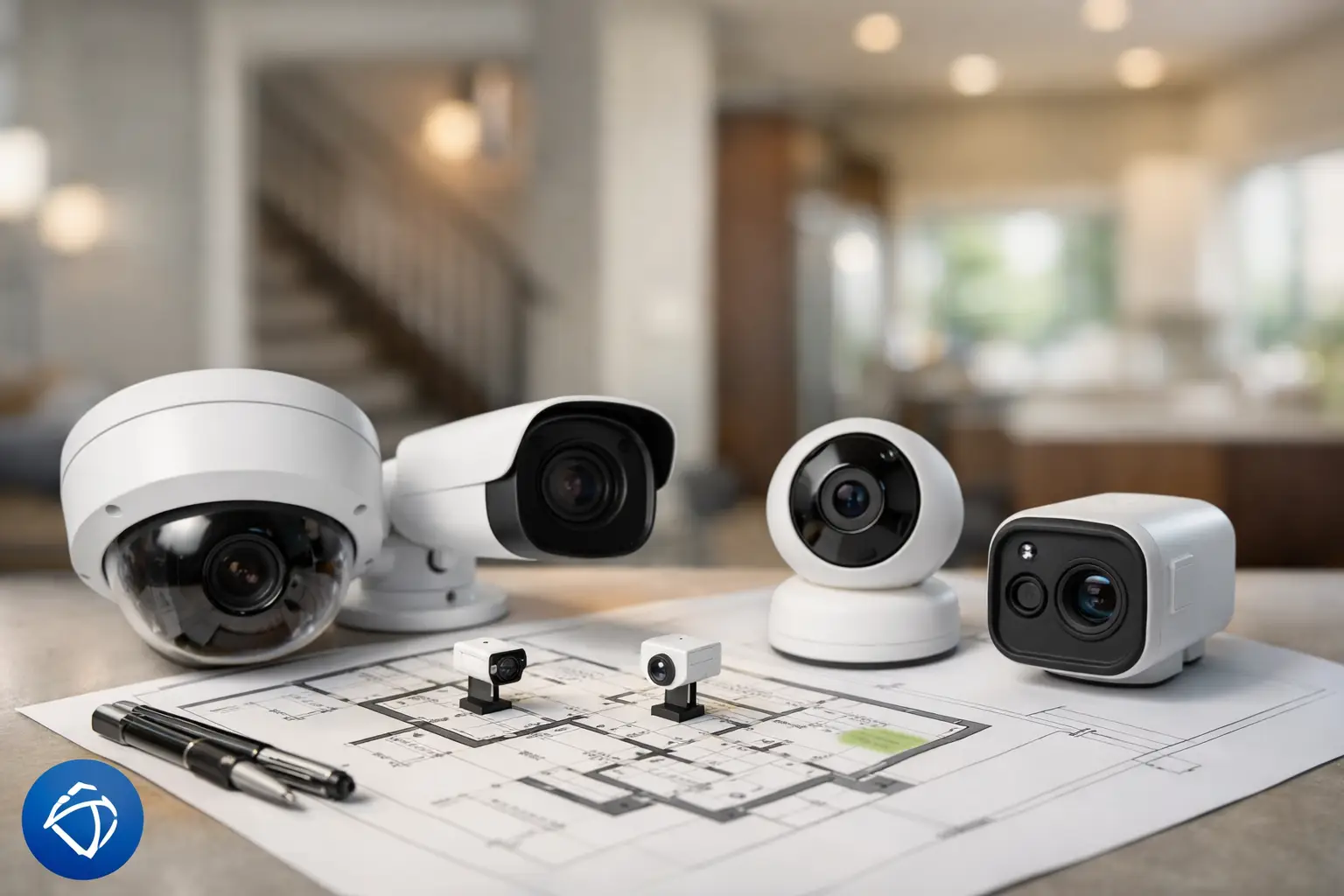
If you are asking how many security cameras needed for your property, the real question is what you need to see clearly, consistently, and without blind spots. A small ranch home, a two-story house with a detached garage, and a neighborhood storefront will all have very different coverage needs. The right answer is rarely the biggest number. It is the number that protects the areas that matter most and works reliably every day.
How many security cameras are needed for most properties?
Most homes need between 3 and 8 security cameras. Small businesses often need 6 to 16, depending on the layout, entrances, inventory, parking areas, and whether there are public-facing spaces to monitor.
That range sounds broad because camera count is driven by layout, not square footage alone. One compact home with a simple front and back entry may be well covered with three carefully placed cameras. A larger home with side access, a backyard gate, basement walkout, and driveway may need six or more to avoid gaps.
For a business, the same principle applies. A small office with one front door and a rear employee entrance may need only a handful of cameras. A retail space with a register area, stock room, parking lot, and multiple entry points will need more thoughtful coverage.
Start with risk, not with quantity
The easiest mistake is shopping by camera count. Four cameras in the wrong places create a false sense of security. Three cameras in the right places can do far more.
Start by identifying the spaces where visibility matters most. In most homes, those are front doors, back doors, garage doors, driveways, first-floor windows that are hidden from the street, and any side yard path someone could use without being noticed. Inside, some homeowners also want coverage of the main entry hall, mudroom, or an area where packages, valuables, or secondary access points are located.
For a business, priority areas usually include customer entrances, checkout or transaction areas, main workspaces, product storage, rear exits, and parking areas. If there is one spot where an incident is most likely to happen or where you would most want video later, that spot deserves attention first.
A practical way to estimate how many security cameras are needed
A simple planning method works well for most properties. Count your main entry points first. Then count any outdoor approach areas that are not fully visible from those entry cameras. After that, decide whether you want any interior verification cameras.
For most homes
A typical home camera plan often looks like this:
One camera at the front door or front approach, one covering the driveway or garage area, and one at the back door or backyard access. That gets many homes to three cameras quickly.
From there, add cameras for a side yard gate, basement door, detached garage, or blind corner. If your lot is wider, your home sits farther back from the street, or landscaping creates visual obstructions, one extra camera can make the entire system more effective.
For most small businesses
A basic business setup often starts with one camera per entrance, one covering the main transaction or reception area, one for the back-of-house or storage area, and one for the exterior parking or loading area. That is often four to six cameras before accounting for additional rooms, hallways, or outdoor coverage.
The goal is not to watch every inch of wall space. The goal is to clearly document who entered, where they went, and what happened in the areas that matter operationally and legally.
Where camera placement matters more than camera count
A single well-placed camera can cover an entire approach, while a poorly placed one may miss faces, license plates, or critical movement. That is why camera count should follow placement strategy, not the other way around.
Mounting height matters. Too low, and a camera is easier to tamper with. Too high, and you may only capture the tops of heads. Field of view matters too. Wide-angle cameras are useful for broad scenes, but they can make distant details less clear. Narrower views often produce better identification in focused areas like entry doors or gates.
Lighting also changes the plan. A back patio may look easy to cover during the day but become difficult at night if glare, reflections, or poor ambient light interfere with the image. In Ohio, seasonal conditions can play a role too. Snow glare, early winter darkness, and heavy rain can all affect what a camera actually captures.
Common camera counts by property type
There is no universal formula, but these examples are useful starting points.
A condo or apartment with one main entry and limited exterior responsibility may only need one or two cameras, depending on building rules and whether you want interior entry coverage.
A small single-family home often needs three to four cameras. One for the front, one for the rear, and one for the driveway or garage is common. A fourth may cover a side entrance or blind spot.
A medium to large home often lands between five and eight cameras. Multiple doors, a wider lot, pool area, detached structure, or basement walkout all add coverage needs.
A small office or boutique retail location may need six to ten cameras. A larger business with multiple zones, public access areas, and exterior monitoring often needs more.
These are planning ranges, not hard rules. A well-designed five-camera system can outperform a poorly planned eight-camera one.
When fewer cameras make sense
More cameras are not always better. Every added device increases wiring, recording load, network demand, storage use, and future maintenance. If a camera overlaps heavily with another or watches an area with little actual value, it may not improve security in a meaningful way.
This is especially true for homeowners who want clean installation and simple daily use. A system should feel dependable and easy, not oversized and fussy. In many cases, careful positioning and the right camera type reduce the need for extra units.
When you may need more coverage
Some properties do justify a larger system. Corner lots, long driveways, detached garages, and homes with several exterior doors often need more than the average count. The same goes for businesses with public traffic, outdoor equipment, or multiple areas where incidents could occur.
You may also want more cameras if remote awareness matters to you. Some owners are less focused on incident review and more focused on checking daily activity, deliveries, parking, or after-hours visibility. That does not mean placing cameras everywhere. It means planning around your real habits and concerns.
Indoor cameras versus outdoor cameras
Outdoor cameras usually carry the heaviest security value because they show approach, arrival, and exit. That is where most systems should begin.
Indoor cameras can still be useful, especially near main entry paths, common areas, or sensitive business spaces. But many homeowners prefer a lighter indoor footprint for privacy and comfort. That is a reasonable choice. If outdoor coverage is strong and entries are well documented, indoor cameras may only be needed in select areas.
For businesses, interior coverage is often more important because it helps document transactions, employee movement, customer interactions, and events that happen after someone enters.
Don’t forget recording and usability
The right number of cameras is also the number your system can support well. More cameras create more footage, and that affects storage capacity, playback speed, and how easy the system is to use when you actually need it.
A camera system should make it easy to find an event, view a clear image, and confirm what happened without frustration. That is one reason professionally designed systems tend to perform better over time. The setup is based on actual use, not just a box count.
At Tri-County Technology, this is often where homeowners and business owners see the difference between having cameras and having coverage. Good design keeps the system simple to live with while still delivering the visibility and peace of mind you expected.
How to decide with confidence
If you want a reliable estimate, walk the property as if you were trying to approach it unnoticed. Look for doors, gates, driveways, side paths, dark corners, and areas hidden by fences or landscaping. Then ask yourself two questions: where would I want a clear face view, and where would I want a wider scene view?
That exercise usually reveals the right camera count quickly. It also helps separate true coverage needs from the temptation to overbuild.
A well-planned camera system should feel calm, not excessive. You should be able to check your property easily, review events without guesswork, and trust that important areas are covered when it matters most. If you start with the way the space is actually used, the right number of cameras becomes much easier to see.


Comments are closed