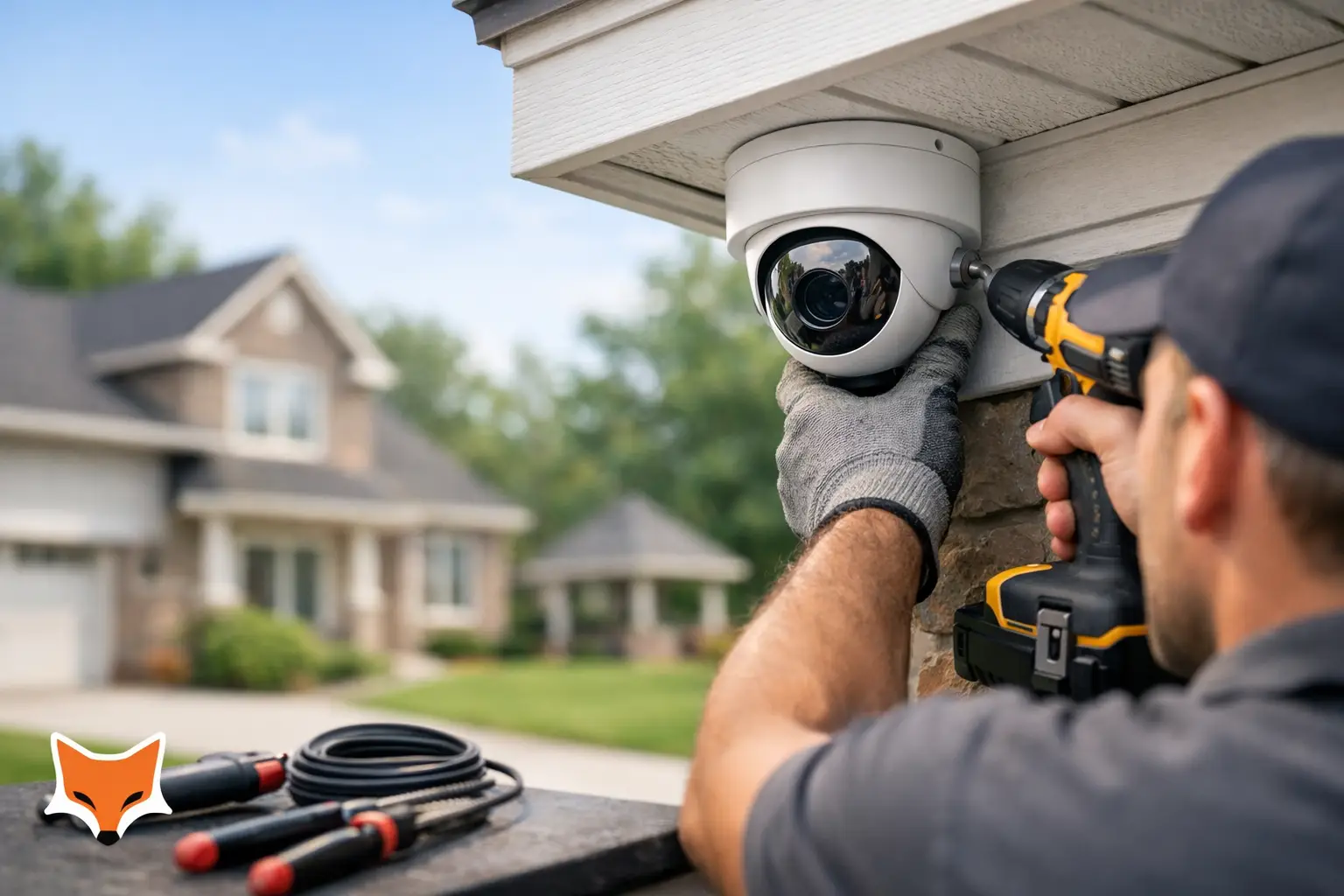
A camera mounted too high to identify faces or too low to avoid glare can create a false sense of security. That is why Strongsville security camera installation should start with a clear plan, not a box of equipment. The right system helps you see what matters, record usable footage, and check your property without fighting with an app or a mess of exposed wiring.
For homeowners and small business owners, the goal is usually simple. You want better awareness, dependable recording, and a setup that fits the property without becoming one more thing to manage. Good camera installation is less about having the most devices and more about making smart choices about coverage, image quality, storage, and daily usability.
What good Strongsville security camera installation really means
A well-designed camera system should feel easy to live with. You should be able to pull up live views quickly, review recorded clips without guesswork, and trust that the cameras are covering the areas that matter most. In practice, that means balancing visibility, reliability, and clean installation.
For a home, that often starts with the front entry, driveway, backyard access points, and any side yard that is less visible from the street. For a small business, the focus may shift toward customer entrances, delivery areas, parking lots, and interior zones where incidents are most likely to occur. The best layout depends on how the property is used every day.
This is where many DIY systems fall short. People tend to buy cameras first and solve the rest later. That can leave gaps in coverage, weak Wi-Fi connections, poor nighttime footage, and notifications that are either too frequent or not useful enough.
Start with placement, not products
Camera placement has more impact than brand names or feature lists. A high-resolution camera still underperforms if it points into direct sunlight, misses the path people actually use, or captures a wide scene without enough detail where it counts.
At front doors, a camera should frame faces clearly while handling changing light throughout the day. At driveways, you may want a wider view for vehicle movement or a more focused angle for identifying activity near parked cars. Backyards often need attention to fence lines, patio doors, and detached structures. Each area calls for a different field of view and mounting strategy.
There is always a trade-off between broad coverage and fine detail. One camera can watch a large space, but a tighter shot usually gives better identification. That is why a thoughtful design often performs better than simply adding more devices. Fewer cameras in the right places can be more useful than a larger system installed without a plan.
Homes and businesses have different priorities
In residential settings, convenience matters almost as much as image quality. Homeowners want alerts that make sense, remote viewing that works quickly, and cameras that blend into the home rather than making it feel overly commercial. Clean wiring and discreet placement matter because the system becomes part of the living environment.
In small business settings, consistency and record retention tend to move higher on the list. You may need more predictable coverage over longer hours, a clearer view of entries and transactions, and a storage plan that supports review when needed. The right answer depends on the risk profile, layout, and daily traffic patterns of the space.
Wired vs. wireless cameras
This is one of the first decisions people ask about, and the honest answer is that it depends on the property.
Wireless cameras can be a practical choice in certain retrofit situations where running wire would be difficult or where a lighter system is appropriate. They can work well when the Wi-Fi network is strong and the camera locations are close enough to maintain a stable connection. The downside is that wireless performance is tied to network conditions, and battery-powered models can add maintenance that people underestimate.
Wired cameras are often the stronger long-term solution for reliability, especially for larger homes, detached garages, and small commercial spaces. They support more consistent performance, reduce dependence on local wireless conditions, and usually make more sense when you want continuous recording. A professional installation also keeps the result clean, with cable routes planned to protect both appearance and performance.
If you are deciding between the two, think beyond the first day. Ask what the system will feel like six months from now. Reliable footage, fewer connection issues, and less ongoing maintenance often matter more than the initial convenience of a quick install.
Image quality matters, but so does lighting
People often focus on resolution first, and it does matter. Higher image quality can improve your ability to identify faces, vehicles, and activity. But resolution alone does not solve poor lighting, bad angles, or heavy contrast between bright and dark areas.
Night performance is especially important in Ohio properties where seasonal light conditions change early and often. A camera facing a dark yard, a bright porch light, or reflective snow will behave differently than one mounted under even lighting. Good system design accounts for those conditions before installation, not after a missed event.
That is also why professional camera placement can make such a difference. The goal is not just to capture motion. It is to capture usable video when it counts.
Remote access should be simple
A security camera system is only helpful if you can use it without frustration. For most homeowners and business operators, that means an app that opens quickly, camera views that load reliably, and notifications that are helpful instead of constant.
This is where the broader network environment starts to matter. Cameras do not live in isolation. They depend on stable connectivity, thoughtful setup, and enough bandwidth to support live viewing and recording. If the Wi-Fi is weak at the far corner of the house or the detached building, the camera experience will suffer no matter how advanced the hardware is.
A better installation looks at the full picture. Camera locations, recording method, network health, and mobile access all work together. When those pieces are aligned, the system feels quiet and dependable, which is exactly how security technology should feel.
Strongsville security camera installation for retrofit and new construction
New construction gives you more flexibility. Wiring paths can be planned early, camera positions can be coordinated with the architecture, and equipment can be integrated in a way that keeps the finished space clean. That usually leads to the most polished result.
Retrofit projects are different, but they can still be done well. The key is knowing how to route wiring discreetly, where to place cameras for the best coverage without overcomplicating the project, and how to work with the structure you already have. An older home or an existing business may require more creative planning, but a thoughtful installer can still deliver a clean and reliable outcome.
This is one reason many property owners in Strongsville prefer a custom approach over a one-size-fits-all kit. The building, the layout, and the goals are not all the same, so the design should not be either.
What to expect from a professional install
Professional installation is not just about mounting cameras. It is about making sure the system works the way people expect it to work when real life happens. That includes camera positioning, cable management, recording setup, mobile app configuration, and testing under actual conditions.
It also means addressing the details that are easy to overlook. Is the camera angle useful at night? Can the homeowner review footage without a confusing menu? Will the system remain dependable during daily use, not just during the handoff appointment? Those details shape whether a camera system becomes a trusted part of the property or another piece of technology that gets ignored.
For many clients, the biggest benefit is confidence. They do not want to become security specialists. They want a setup that is easy to understand, installed neatly, and ready to support daily life with less friction. That is the approach Tri-County Technology brings to connected home and business systems across Northeast Ohio.
A better camera system starts with the right questions
Before choosing equipment, it helps to ask what you actually need the cameras to do. Are you trying to see who is at the front door, monitor deliveries, check on a second property, review activity around a business, or simply add peace of mind when you are away? Those goals affect camera type, placement, storage, and how the system should be designed.
The best Strongsville security camera installation is not the one with the longest feature sheet. It is the one that fits the property, supports your routine, and gives you clear answers when you need them. When security technology is planned well, it does its job quietly in the background and lets you get on with your day.


Comments are closed