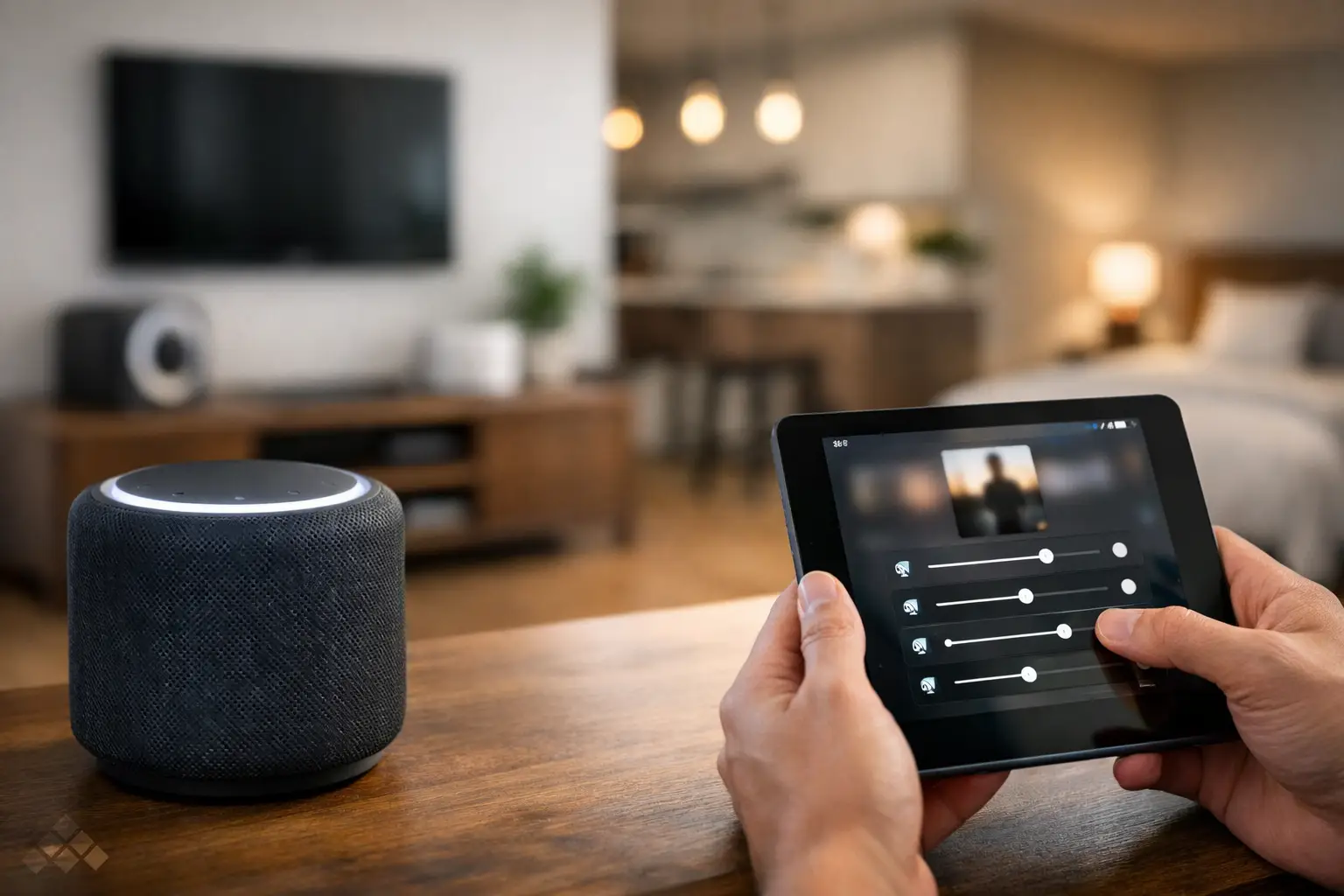
A good whole-home audio setup should feel almost invisible. Music starts where you want it, volume stays consistent, and nobody has to stand in a hallway trying to reconnect a speaker. If you are wondering how to set up multi room audio system the right way, the goal is not just sound in more places. It is dependable performance, simple control, and a setup that fits how you actually use your space.
That matters because multi-room audio can be either a daily convenience or a daily irritation. The difference usually comes down to planning. Speaker choice, wiring, network strength, room layout, and control options all affect whether the system feels polished or pieced together.
What a multi-room audio system should do well
At its best, a multi-room audio system lets you play the same music everywhere, send different audio to different rooms, and control everything from a phone, keypad, touchpanel, or voice assistant. In a home, that might mean background music in the kitchen and patio while someone else listens to a podcast in a home office. In a small business, it might mean consistent audio across customer areas without creating dead spots or volume problems.
The most important decision is not the brand name on the speaker. It is how you want the system to behave. Some people want casual streaming in a few rooms. Others want built-in speakers, hidden equipment, and a cleaner look with centralized control. Those are very different setups, and they lead to different hardware choices.
How to set up multi room audio system with the right plan
Start with zones. A zone is any area that needs its own audio control. Sometimes one room is one zone. Sometimes an open kitchen, dining room, and family room should share a single zone because people move through them together. Defining zones well makes the system easier to use and keeps you from overbuilding.
Next, think about how each zone will be used. Background music in a bathroom has very different demands than movie audio in a media room or energetic playback on a covered patio. This is where many DIY systems get off track. They treat every room the same, even when the listening habits are not the same.
Then look at infrastructure. If the house is under construction or being renovated, wired speakers and centralized equipment usually offer the cleanest result. If the walls are finished and you want a lighter upgrade, wireless speakers may be the more practical route. Neither approach is automatically better. Wired systems tend to win on long-term stability and aesthetics, while wireless systems can reduce installation time and disruption.
Choosing between wired and wireless audio
Wired multi-room audio uses in-ceiling, in-wall, or outdoor speakers connected back to amplifiers and source equipment. This approach is popular in larger homes because it keeps the technology out of sight and supports a more permanent, polished finish. It also gives you more flexibility to scale over time.
Wireless audio is often easier to start with. You place smart speakers or wireless components in each room, connect them to your network, and group them through an app. For apartments, finished homes, or smaller projects, that can be an excellent fit. The trade-off is that wireless systems depend heavily on strong Wi-Fi, available power outlets, and the limitations of the manufacturer’s platform.
There is also a middle ground. Some homes use wired speakers in main living areas and outdoor spaces, then add wireless audio in secondary rooms. That kind of hybrid design can work well when comfort, appearance, and budget all need to stay balanced.
Speaker placement matters more than most people expect
Once you know your zones, speaker placement becomes the next big factor. Good placement creates even coverage so the room sounds comfortable instead of loud in one spot and weak in another. In-ceiling speakers are common for distributed audio because they stay out of the way visually, but they still need to be positioned with the room layout in mind.
Furniture, ceiling height, hard surfaces, and room shape all affect the result. A long kitchen may need two speakers where a smaller sitting room only needs one pair. Outdoor audio needs special attention because open air does not contain sound the way interior walls do. You may need more speakers at lower volume rather than one or two pushed too hard.
This is one area where professional design often makes a visible difference, even though the benefit is really what you hear. A clean-looking system is good. A clean-looking system that also sounds balanced throughout the room is better.
The network is part of the audio system
If your music drops out, delays from room to room, or struggles to connect, the problem is not always the speakers. It is often the network. Multi-room audio places a steady load on Wi-Fi and wired networking, especially when several zones are streaming at once.
That is why reliable coverage matters before you add devices. In larger homes and many retrofit projects, weak signal areas or older networking hardware become obvious as soon as audio is added. If the house already has Wi-Fi trouble, multi-room audio will not hide it. It will expose it.
A stronger network may mean adding properly placed access points, improving router performance, or hardwiring certain components where possible. For homes in Northeast Ohio with thicker walls, additions, or detached outdoor spaces, this step can be especially important. Good audio starts with good connectivity.
Control should feel simple from day one
One of the biggest reasons people invest in multi-room audio is convenience. If the controls are confusing, that benefit disappears fast. The best systems let you start music quickly, adjust volume without hunting through menus, and switch sources without interrupting the room.
For some households, app control is enough. For others, in-wall keypads or touchpanels make more sense, especially in frequently used spaces like kitchens, primary suites, and patios. Voice control can also be useful, but it should support the system rather than carry the whole experience. It is a nice option, not always the best primary interface.
Try to keep control consistent across the property. If one room uses a separate app, another depends on a handheld remote, and a third requires a streaming workaround, the system starts to feel fragmented. A unified control experience is usually what makes a professionally planned setup feel easier to live with.
Sources, streaming, and everyday use
Before you buy equipment, decide what you want to listen to. Most people want access to streaming services, internet radio, podcasts, and personal device playback. Some also want TV audio in selected zones or the ability to send a turntable or other local source to multiple rooms.
This is where compatibility matters. Not every platform handles the same services, and not every system shares sources in the same way. If you want to watch a game in the family room while sending that same audio to the patio, the system needs to be designed for it. If you only need music streaming in separate rooms, the setup can be simpler.
There is no single best feature set for everyone. The right fit depends on your routines. A family that entertains often will prioritize easy grouping and outdoor coverage. A business owner may care more about dependable background audio and simple daily control for staff.
Budgeting without creating weak points
A multi-room audio project can scale from a few wireless speakers to a fully integrated whole-home system. The key is spending where performance and usability really improve. Good speakers, stable amplification, and a strong network usually matter more than adding extra features you may not use.
It is also smart to think ahead. Even if you start with a few zones, prewiring or planning for future expansion can save money later. That is especially true in new construction and major remodels, where opening walls later becomes the expensive part.
At Tri-County Technology, this is often where practical design makes the difference. The right system is not the one with the most parts. It is the one that feels intuitive every day and keeps working the way it should.
When professional installation is worth it
Some smaller wireless systems are reasonable for a hands-on homeowner to set up. But once you are combining multiple zones, built-in speakers, outdoor areas, or integrated control, the project gets more technical quickly. Wiring paths, amplifier sizing, speaker load, acoustic balance, and network planning all need to line up.
Professional installation also helps avoid the issues people notice later, like visible equipment, awkward speaker placement, inconsistent volume, app confusion, or dead zones on the patio. The result is usually quieter in the best sense of the word. The technology does its job without constantly asking for attention.
If you are planning how to set up multi room audio system in a new home, renovation, or existing property, start with how you want it to feel. Not flashy. Not complicated. Just easy to use, dependable, and ready whenever you are. That is the standard a good audio system should meet every day.


Comments are closed