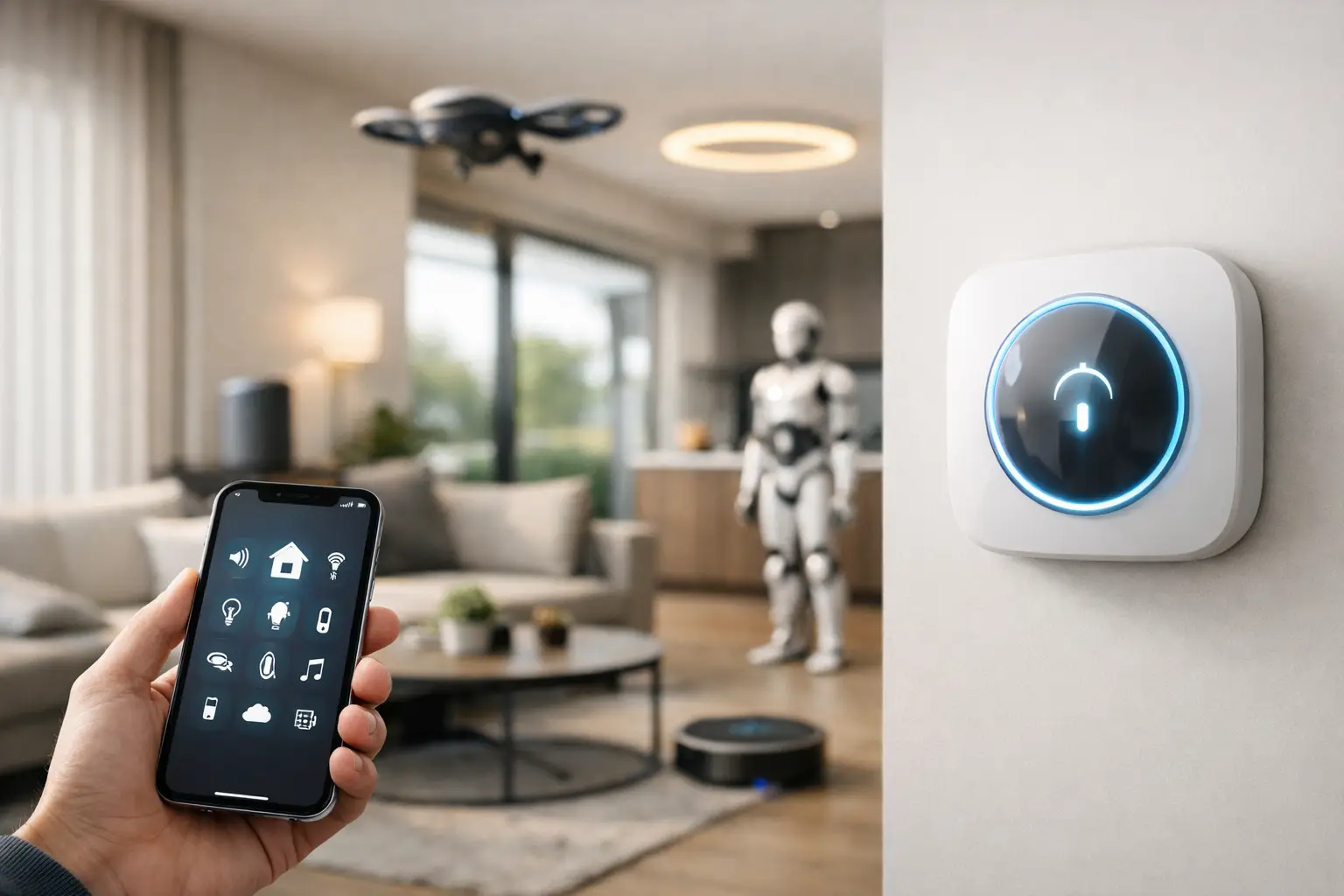
A lot of homeowners are no longer asking how many smart devices they can add. They are asking a better question: will this actually make daily life easier? That is what makes smart home trends 2026 worth watching. The next wave is less about novelty and more about homes that feel calmer, more responsive, and easier to live with.
That shift matters because many people have already experienced the downside of disconnected tech. A video doorbell from one brand, speakers from another, Wi-Fi that struggles in the back bedroom, and lighting or shades that work well until they do not. The smart home is maturing, and the biggest changes in 2026 are pointing toward systems that are more unified, more reliable, and far less demanding of the people who use them.
Smart home trends 2026 are moving toward simplicity
For years, smart home marketing focused on features. More voice commands, more app controls, more gadgets. In practice, most homeowners want fewer moving parts. They want the kitchen lights to respond the same way every time. They want music in the living room without opening three apps. They want to leave for the weekend and know the house is secure.
That is why one of the strongest smart home trends 2026 will bring is simplification. Not less technology, but better-organized technology. Systems are being designed to work together more naturally, with fewer duplicate controls and less guesswork. A good setup increasingly means one clean interface, sensible automation, and dependable performance in the background.
This is also changing the way people shop for upgrades. Instead of buying isolated products, more homeowners are planning around outcomes. Better sleep. Easier mornings. Safer deliveries. Stronger Wi-Fi for work, streaming, and gaming. It is a healthier way to think about technology because it keeps the focus on daily comfort rather than gadget count.
1. Reliable whole-home Wi-Fi is becoming the foundation
If the network is weak, every smart feature feels weaker than it should. Cameras buffer. Audio drops. Apps lag. Video calls freeze. In 2026, strong Wi-Fi will not be treated as a nice extra. It will be recognized as the infrastructure behind nearly everything else.
That is especially true in larger homes, renovated homes, and properties with dead zones caused by building materials or outdated layouts. A professionally planned network can make more difference than adding another smart device. Coverage, speed, and device management all matter, but so does placement. Where access points are installed, how the wiring is handled, and how traffic is balanced can determine whether the system feels dependable or frustrating.
For homeowners in older homes across Northeast Ohio, this trend has practical value. Many houses were not built with modern connectivity demands in mind. Smart upgrades work best when the network is treated like part of the home itself, not as an afterthought.
2. Smart security is getting more useful, not just more visible
Security systems are becoming more intelligent in ways that reduce noise instead of adding it. That means better notifications, clearer camera views, and more meaningful remote awareness. Homeowners do not need ten alerts a day. They need the right alert at the right time.
In 2026, expect more emphasis on integrated security experiences. Doorbell cameras, outdoor surveillance, lighting responses, and mobile control are working together more cleanly. The result is a home that can help you monitor packages, check on kids coming home, or confirm that everything is secure at bedtime without turning your phone into a constant source of interruption.
There is a trade-off here. More cameras and more settings do not automatically create more peace of mind. If the system is poorly designed, security becomes something you manage instead of something that supports you. The better direction is thoughtful placement, clear views, fast access, and controls that are easy enough for everyone in the house to use.
3. Lighting, shades, and comfort settings are becoming more automatic
One of the most practical smart home trends 2026 will highlight is comfort through quiet automation. Homeowners are showing more interest in systems that respond to routines without requiring constant input. Morning light levels, evening privacy, movie-time scenes, and bedtime wind-down settings are all becoming more common.
Motorized window treatments are a good example. They are not just about convenience or style, though they offer both. They can help manage glare, protect interiors, support privacy, and improve comfort throughout the day. When paired with lighting control and simple schedules, they create spaces that feel more settled and intentional.
This is where smart home design often works best. Not with flashy commands, but with small adjustments that happen at the right time. It depends on the household, of course. Some people want strong personalization room by room. Others want a few dependable scenes and nothing more. The right answer is usually the one that feels natural within your routine.
4. Whole-home audio is becoming easier to live with
Audio is one of the clearest examples of smart technology improving everyday life without demanding attention. Music in the kitchen during breakfast, podcasts in the home office, and better sound in the family room all add value when they are simple to control.
What is changing in 2026 is the expectation around ease of use. People still want great sound, but they also want fewer remotes, fewer connection issues, and less visible clutter. That is pushing demand toward cleaner installations, app interfaces that make sense, and systems that can move from casual listening to entertainment mode without extra steps.
There is also growing interest in audio that fits the room rather than dominating it. For many homeowners, the goal is not to show off equipment. It is to create an environment that feels polished and comfortable. Good system design matters here because speaker placement, source management, and network stability all affect the experience.
5. Smart homes are paying more attention to energy use
Energy efficiency is no longer separate from comfort. The smart home is starting to connect those two ideas more effectively. In 2026, more homeowners will look for systems that help reduce waste without making the house feel restrictive.
Scheduling plays a role, but so does responsiveness. Lighting that adjusts based on routine, shades that help control heat gain, and devices that can be monitored remotely all support smarter energy habits. These are not dramatic changes on their own. Together, they can make the home feel more efficient and more manageable.
This trend works best when expectations are realistic. Smart systems can help reduce unnecessary use, but they are not magic. The payoff depends on the home, the equipment, and how people actually live in the space. The advantage is that well-designed automation can make better habits almost effortless.
6. Retrofit-friendly upgrades are becoming a bigger priority
Not every smart home project starts with new construction. In fact, many of the most meaningful upgrades happen in lived-in homes where owners want better performance without a full rebuild. That is one reason retrofit-friendly solutions are gaining momentum.
In 2026, more homeowners will look for ways to improve security, entertainment, lighting, and connectivity while preserving the look and feel of the home. Clean installation matters. So does minimizing disruption. People want upgrades that feel intentional, not patched together.
This is where professional planning has a real advantage. Existing homes often come with hidden challenges, from inconsistent wiring paths to weak signal areas and equipment that was installed over time with no overall plan. A retrofit done well can make an older setup feel dramatically more current without turning the project into a major construction event.
7. Professional integration is standing out from DIY fatigue
The DIY market helped make smart home technology more familiar, but it also created a lot of homes with mixed apps, partial compatibility, and unreliable performance. Many people are reaching the point where they do not want to troubleshoot their house anymore.
That is one of the clearest smart home trends 2026 will reinforce. Professional integration is becoming more appealing not because homeowners are less capable, but because their time is more valuable. They want systems designed around the way they live, installed cleanly, and supported when updates or changes are needed.
A professionally integrated system also tends to age better. It can be expanded more thoughtfully, managed more consistently, and used more confidently by everyone in the household. That matters whether the goal is a media room, stronger surveillance, whole-home audio, or simply a home that responds the way it should.
What these trends mean for homeowners
The larger pattern is clear. Smart homes are getting quieter in the best sense of the word. Less gadget theater, more dependable comfort. Less app juggling, more intuitive control. Less clutter, more confidence.
For homeowners, that means the best upgrade may not be the newest device. It may be a stronger network, a better-planned lighting schedule, a cleaner audio setup, or a security system that gives useful information without constant distraction. The value is not in how advanced the technology sounds. The value is in how naturally it fits your day.
If you are planning updates in the next year, start with the parts of the home that feel inconvenient now. The room with poor Wi-Fi. The TV setup no one enjoys using. The entryway that could use stronger visibility. The shades you always mean to close. Good smart home design starts there, with real friction points and practical improvements that make the whole house feel easier.
Comments are closed