The first warm evening of the year is not the time to discover that a portable speaker cannot reach the patio, sounds harsh near the pool, or needs charging halfway through dinner. Well-designed outdoor audio makes music, a ballgame, or a favorite playlist part of the setting without turning the yard into a tangle of equipment and volume adjustments.
The goal is not simply to make sound louder outdoors. It is to create clear, comfortable sound where people actually gather, while keeping equipment discreet and easy to use. With the right layout, outdoor music can feel as natural as turning on the patio lights – present when you want it and quietly out of the way when you do not.
What Outdoor Audio Needs to Do Differently
Indoor speakers benefit from walls, ceilings, and furniture that help contain and reflect sound. Outside, sound has open space to travel through, competing with wind, traffic, conversations, water features, and the everyday activity of a neighborhood. A single speaker placed near the house often leads to a familiar problem: the people closest to it hear too much, while everyone farther away hears too little.
A better approach uses several speakers placed closer to listening areas at a lower volume. This spreads sound evenly across the patio, deck, outdoor kitchen, garden path, or pool area. Guests can talk comfortably without raising their voices, and the music stays where it belongs instead of carrying unnecessarily toward neighboring homes.
Weather is another major difference. Outdoor-rated speakers are designed to handle moisture, temperature swings, sunlight, and seasonal conditions. That does not mean every component should sit exposed all year. The electronics that power and control the system are typically installed in a protected interior location, while properly rated speakers and wiring are selected for the environment they serve.
For Northeast Ohio homes, planning also means accounting for changing seasons. A system should be built with durable materials, thoughtful wire routing, and connections that can hold up through humid summers, freezing temperatures, and everything between. The best installations are not defined by visible hardware. They are defined by dependable performance when the patio is ready to be used.
Designing Outdoor Audio Around How You Live
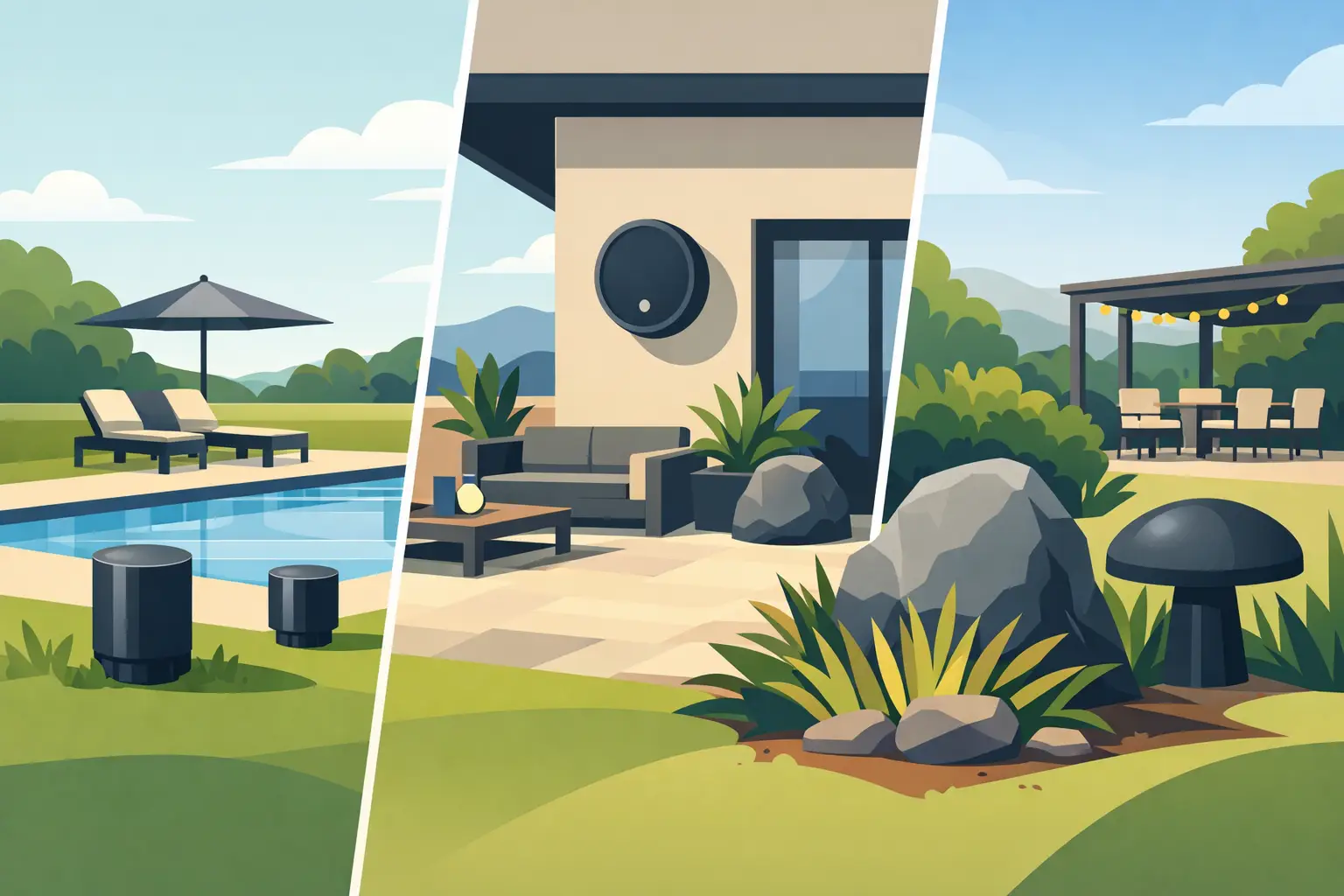
The right system begins with lifestyle, not a speaker count. Think about where people naturally sit, cook, dine, play, and move through the property. A covered porch may need a different speaker style than an open patio. A pool deck may need broad, even coverage. A garden or larger yard may benefit from landscape speakers that blend into planting beds.
Start with the listening areas
Most properties have more than one outdoor space, even if they are connected. The main patio might be used for dinner and conversation, while a fire pit becomes the gathering place later in the evening. A front porch may only need occasional background music. Treating every area as one large zone can make daily use less comfortable.
Separate audio zones give homeowners more choice. You may want music on the patio while the deck stays quiet, or one group may prefer a different source near the pool. Zones also make it easier to adjust volume for each area instead of making the entire property louder to satisfy one space.
This does not mean every project needs a complex control system. For some homes, one carefully designed zone is exactly right. For others, separate areas add meaningful flexibility. The best answer depends on the property, how the family entertains, and whether future expansion is likely.
Choose speakers for the setting
There is no single outdoor speaker type that fits every home. Surface-mount speakers work well under a porch roof, on a covered patio, or around an outdoor kitchen. They can be aimed toward the listening area, which helps focus sound where it is wanted.
Landscape speakers are often a strong choice for open yards, pool areas, and gardens. Small satellite speakers can be placed among shrubs or along hardscape edges, with an in-ground subwoofer adding low-frequency depth without a bulky visible cabinet. The result can feel more balanced than a pair of speakers mounted high on the house.
For some projects, rock-style speakers or other camouflaged options may fit the landscape. Their appearance can be useful, but sound quality and placement should still lead the decision. A speaker that disappears visually but is installed too far from the listening area will not deliver the experience homeowners expect.
Plan coverage before construction begins
Speaker placement has a larger impact than simply buying a more expensive model. A professional plan considers seating locations, walking paths, landscaping, rooflines, hard surfaces, and likely listening levels. It also considers where sound may reflect or travel beyond the property.
During new construction or a major renovation, this planning is especially valuable. Wiring can be run before walls, patios, and landscaping are complete, preserving a clean finished look. Conduit and extra wire paths can also be included for future speakers, a television location, or an expanded entertainment area.
Retrofit projects can be just as polished when planned carefully. Existing landscaping, siding, stonework, and patios call for a more tailored approach, but there are often practical routes that avoid unnecessary disruption. The priority is to protect the look of the home while making the system easy to maintain and enjoy.
Control Should Feel Familiar
An outdoor system should not require a separate lesson every time someone wants music. The simplest experience is often control from the same app, touchscreen, remote, or voice-enabled device already used inside the home. Select a source, choose the outdoor area, set the volume, and enjoy the space.
Reliable Wi-Fi also matters. Streaming audio depends on a stable connection, particularly when the listening area is farther from the home. If a phone loses connection on the patio or music drops near the pool, the problem may not be the speakers at all. It may be coverage, network capacity, or equipment placement.
A well-planned project looks at the complete experience: audio, connectivity, power, control, and the physical environment. That broader view prevents the frustration of installing excellent speakers that are limited by weak wireless coverage or inconvenient controls.
Avoid the Common Outdoor Audio Shortcuts
Portable speakers have their place, especially for a temporary gathering or a small balcony. They are convenient, but they are rarely the best answer for a permanent entertaining space. They need charging, can be easy to misplace, and usually create uneven sound when asked to cover a larger area.
Another shortcut is mounting two speakers near the back door and turning them up. This may sound acceptable at first, but it often creates hot spots near the house and thin coverage across the rest of the yard. More evenly distributed speakers at lower volume usually sound better and feel more considerate.
It is also tempting to make decisions based only on speaker appearance. A clean installation matters, but so do wire quality, amplification, speaker aiming, drainage around landscape components, and proper protection for connections. These details are what separate a system that works for one season from one that continues to perform year after year.
A Better Way to Plan the Project
Before choosing equipment, walk the property at the time you are most likely to use it. Notice where the sun sets, where guests tend to gather, and which areas need quiet as much as they need music. Consider how the space may change over the next few years, whether that means a new patio, a pool, expanded landscaping, or a finished porch.
Then bring those observations into the design conversation. A professional installer can translate how you use the property into speaker locations, zones, control options, and infrastructure that fit the home. At Tri-County Technology, the focus is on making the finished system feel simple from the first use, not asking homeowners to manage a collection of disconnected devices.
The most satisfying outdoor audio systems do not call attention to the technology. They simply make a morning coffee, family dinner, weekend cookout, or quiet evening outside sound a little better.


Comments are closed