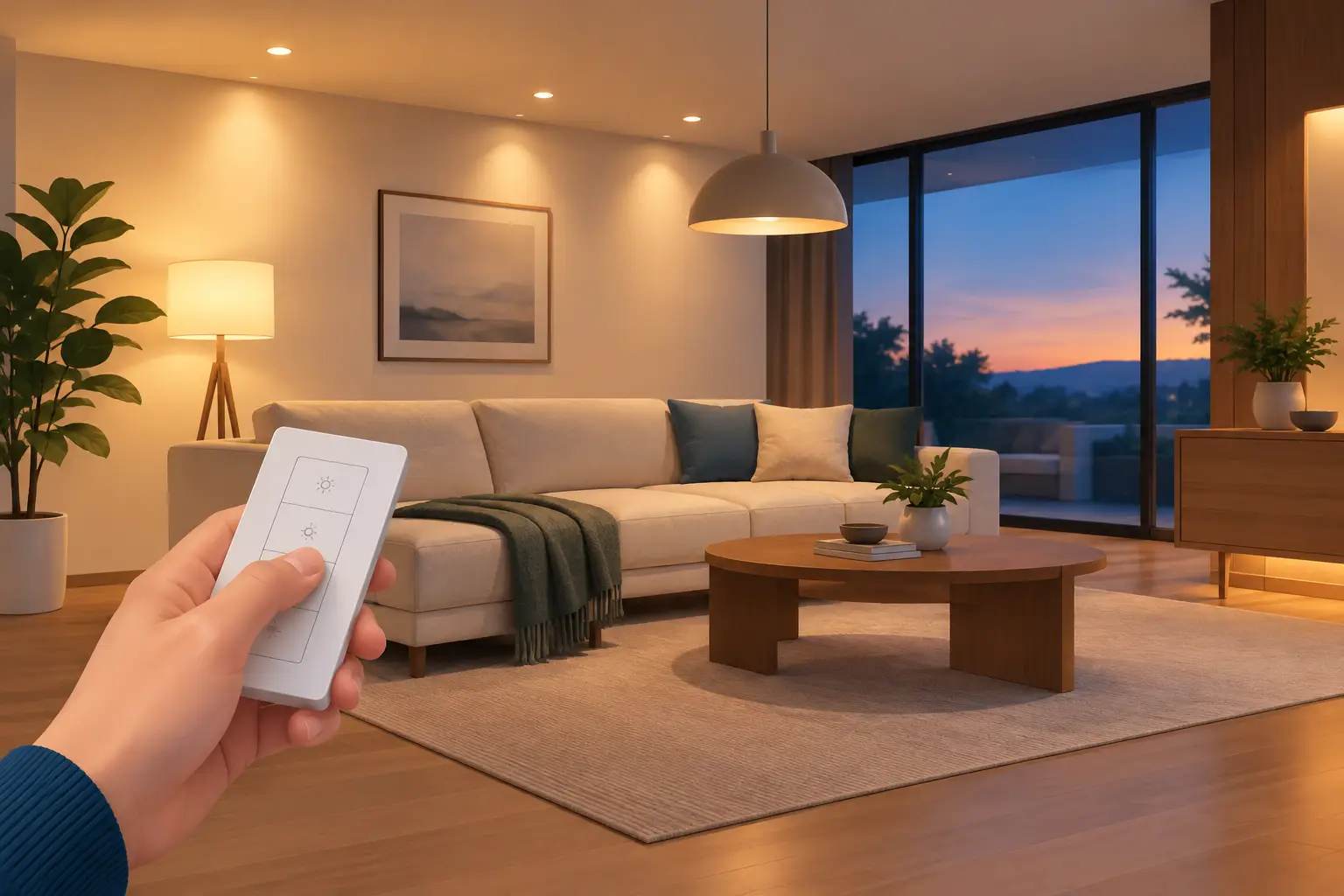
The lights that feel right at 6:15 a.m. are rarely the same lights you want after dinner. Lutron lighting gives a home the ability to respond to those moments with a tap, a keypad press, a scheduled routine, or an automatic adjustment. Instead of walking room to room to manage lamps, dimmers, and shades, homeowners can create a setting that supports the way they actually live.
For a new home, renovation, or focused upgrade, the goal is not more technology to manage. It is dependable control that feels natural from the first day. Thoughtful lighting control can make mornings calmer, movie nights more comfortable, and empty rooms less wasteful without turning everyday tasks into a complicated process.
What Lutron Lighting Changes in Daily Life
A well-designed lighting system is about more than turning fixtures on and off remotely. It helps each room serve more than one purpose. A kitchen may need bright, even light for preparing meals, softer light for a family dinner, and low pathway lighting after everyone else has gone to bed. With properly selected dimmers, keypads, and programmed scenes, each setting is ready when it is needed.
This also improves the feel of a home. Dimming reduces harsh contrast and gives decorative fixtures, under-cabinet lighting, and accent lighting a chance to work together. Rather than having every light at full output, a scene can use the right combination and level for the moment. The result is a space that feels considered without requiring constant adjustment.
Energy use is another practical benefit. Lights left on in a hallway, laundry room, or basement can be scheduled to turn off or managed from one convenient control point. Occupancy and vacancy sensing can be helpful in selected areas, particularly rooms that are often entered with full hands. These features should be used where they make sense, not added simply because they are available.
Control Should Feel Familiar
The best controls do not ask everyone in the household to use an app for a basic task. Physical dimmers and engraved keypads remain valuable because they are immediate and easy for guests, children, and family members to understand. A phone or tablet can be useful for adjustments from another room or while away, but it should complement the wall controls rather than replace them.
A bedside keypad, for example, can turn off selected lights throughout the home at the end of the evening. A button near the garage entry can activate a welcoming path through the house. These small details remove friction from routines people repeat every day.
Planning Lutron Lighting Around the Rooms You Use
The strongest projects start with a conversation about habits, not a catalog of devices. How does the family enter the home? Which spaces are used early in the morning? Are there rooms where bright light is needed for work but feels unpleasant at night? Answers to those questions shape the controls, scenes, and fixture groups that will be most useful.
In an open kitchen and living area, separate control of task, decorative, and ambient lighting makes a major difference. A single switch may be adequate in a simple room, but a shared living space often benefits from layered lighting that can shift throughout the day. The design should make it easy to set the entire area for cooking, entertaining, relaxing, or cleaning without creating a wall crowded with mismatched controls.
Bedrooms deserve equally careful planning. Soft bedside lighting, closet lighting, and a simple goodnight command can make the end of the day easier. Bathrooms may benefit from brighter grooming light paired with a lower overnight setting. In a home office, adjustable lighting supports focused work while reducing the hard transition between a workday and family time.
Window treatments can also be part of the experience. Coordinating motorized shades with room lighting helps manage glare, privacy, and the afternoon sun. It is especially useful in rooms with large windows, televisions, or work surfaces. The exact approach depends on window orientation, room use, and the homeowner’s preference for automation versus manual control.
Choosing the Right Lutron Lighting System
There is no single Lutron solution that fits every project. A smaller upgrade may focus on a few rooms and straightforward smart dimmers. A larger renovation or custom build may call for a more comprehensive system with coordinated keypads, shades, and whole-home scenes. The right choice depends on the home, the desired level of control, and the amount of future flexibility the owner wants.
Lutron Caseta can be a practical fit for targeted upgrades and homes where a homeowner wants app-based control alongside familiar wall dimmers. It is a sensible starting point when the goal is to improve a few high-use areas without expanding the project too far.
For larger homes and more detailed control requirements, professionally designed Lutron systems can offer more customization, a broader range of keypads, and a more unified experience across rooms. This is often a better fit for new construction, major renovations, and homeowners who want lighting and shades planned as part of the overall home technology design.
The trade-off is straightforward: more capability requires more planning. A modest system can deliver meaningful comfort with a smaller investment. A whole-home system provides a more tailored result, but it should be designed around real lifestyle needs instead of features that will go unused.
Why Professional Design Matters
Lighting control needs to work with the fixtures in the home, not against them. LED bulbs and fixtures vary widely in how they dim. An incompatible dimmer can cause flickering, humming, limited dimming range, or lights that do not fully turn off. Selecting compatible components and testing expected behavior protects the finished experience.
Installation details matter as well. Existing wiring, available space in wall boxes, multi-location switching, fixture loads, and the age of the home can all influence the best solution. In Northeast Ohio, retrofit work often means working thoughtfully within an established home while preserving its character and minimizing disruption.
Professional programming is where the system becomes personal. A scene labeled “Evening” should create an atmosphere the homeowner enjoys, not a generic preset someone has to revise later. Keypad labels should describe familiar actions in plain language. Controls should be placed where people naturally expect them. These decisions may seem small, but they are what make the system easy to live with over time.
A qualified integrator can also plan for growth. Perhaps the first phase includes the main living areas and primary bedroom, while future work adds shades, exterior lighting, or additional rooms. Establishing a clear plan early can prevent mismatched products and unnecessary rework later.
Routines That Earn Their Place
The most valuable automations are usually the quiet ones. A morning routine can gradually bring selected rooms to a comfortable level. An evening routine can lower common-area lights and close shades at a preferred time. A vacation setting can vary interior lighting patterns to make an unoccupied home look lived in.
Not every room needs a scene, schedule, or sensor. Over-automation can be frustrating when it behaves differently than expected. A good design leaves room for direct control and makes automated settings easy to adjust. Technology should support the household’s routine, not ask the household to change for the technology.
For builders, including lighting control early in the design process also creates a more polished handoff for clients. It keeps control locations intentional, helps coordinate electrical and low-voltage planning, and gives homeowners a system that feels complete when they move in rather than pieced together afterward.
A Better Starting Point for Your Home
Before selecting products, walk through a normal day in the home and identify the moments that feel inconvenient, too bright, or unnecessarily repetitive. Those moments are often the best places to begin. Whether the project is one room or an entire home, Lutron lighting works best when it is designed around comfort first and technology second.


Comments are closed