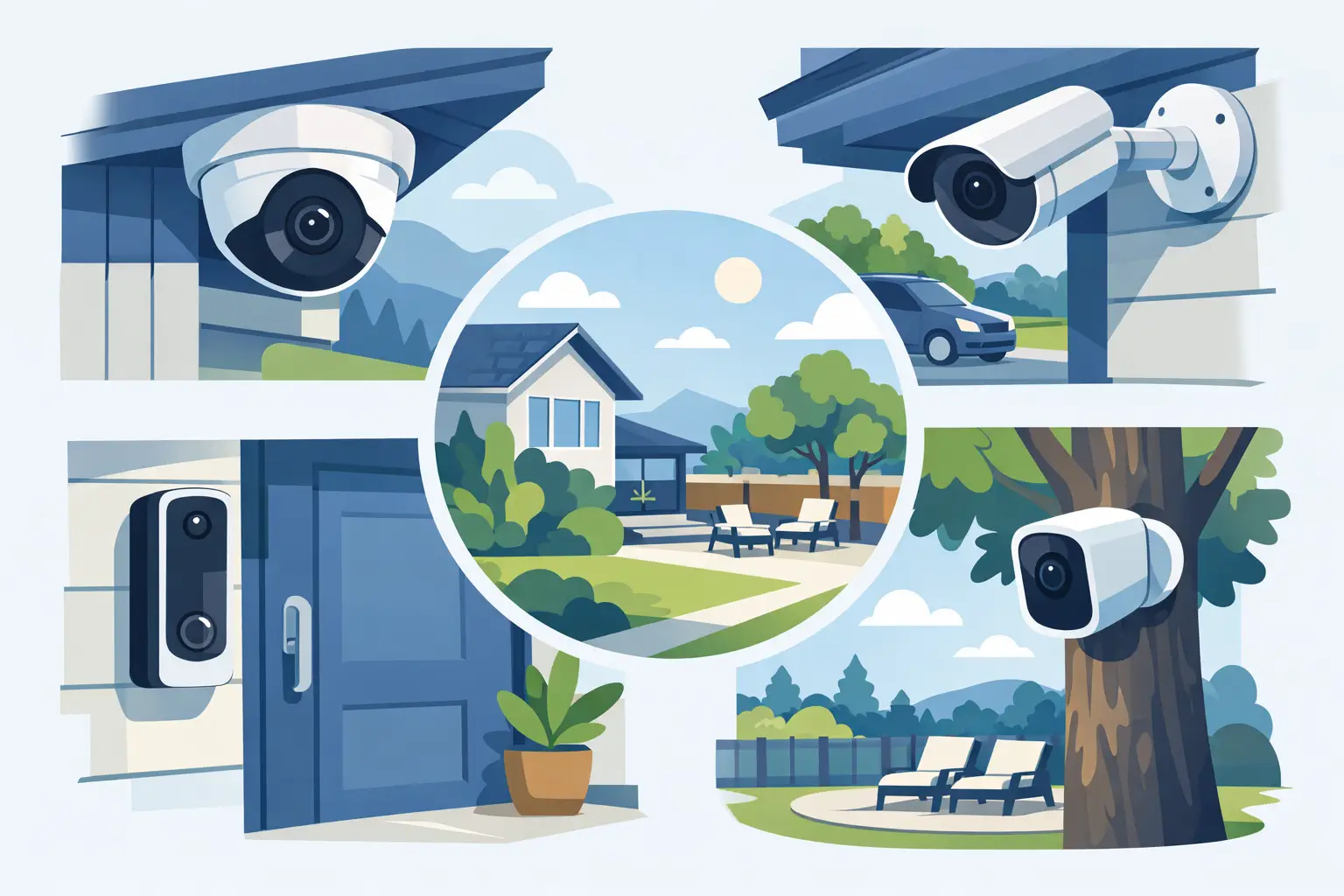
The best outdoor camera locations are not always the most obvious ones. A camera mounted high in a convenient spot may capture plenty of sky, glare, and passing headlights while missing the faces, vehicles, and activity that matter most. Thoughtful placement creates a useful view of daily activity around your home without filling the exterior with visible equipment or adding another complicated system to manage.
For homeowners planning a new build, renovation, or upgrade, the goal is simple: cover the areas where people, vehicles, packages, and service activity naturally move. Then make sure each camera has a reliable power source, a stable network connection, and a clear line of sight that holds up through Northeast Ohio weather.
Start With Activity, Not Just the Property Line
It is tempting to think in terms of covering every corner of the yard. In practice, that can lead to too many cameras and too little useful detail. The better approach is to map the everyday paths around the house: where visitors approach, where cars arrive, where deliveries are left, and which doors or exterior spaces are used most often.
A well-designed layout generally focuses on entry points and travel paths rather than distant edges of the property. Cameras perform best when they are positioned to capture a person approaching or passing through an area, not when they are aimed across a long, open expanse.
Height matters, too. Mounting a camera too low makes it easier to disturb and may limit its view. Mounting it too high can make faces harder to identify. For many locations, a position roughly 8 to 10 feet above the ground provides a balanced perspective while keeping the device out of normal reach. The right height still depends on the lens, mounting surface, and the distance to the activity you want to see.
Best Outdoor Camera Locations Around the Home
The front entry
The front door is usually the first priority because it captures visitors, deliveries, and the most common approach to the home. A doorbell-style camera can work well here, but it is not the only option. A properly placed exterior camera under the eave or near the entry can provide a wider view of the walkway, porch, and driveway approach.
Avoid aiming directly toward a bright street or placing the camera where a porch light shines into the lens. Backlighting can turn a clear daytime view into a silhouette. A slight downward angle toward the walkway usually produces a more useful image than a broad, straight-ahead view.
The driveway and garage approach
A driveway camera helps document vehicles arriving, leaving, or stopping near the home. It can also provide useful context for front-entry activity, especially when the driveway leads directly to a garage or side door.
The strongest location is often a corner of the garage, a second-story eave, or a nearby exterior wall that looks down the driveway at an angle. That angle is important. A camera facing a vehicle head-on may capture headlights at night but little else. A side view often gives better detail of the vehicle, its direction of travel, and anyone getting in or out.
If the driveway is long, one camera at the house may not be enough. It depends on whether the priority is seeing activity near the home or viewing vehicles farther from the structure. A professional site review can determine whether an additional location is worthwhile or simply adds cost without improving the result.
Side doors and service entrances
Side entrances are easy to overlook because they may not be used every day. Yet they are often where family members come and go, contractors enter, trash bins are stored, or packages are moved out of sight from the front porch.
Place a camera so it sees the approach to the door, not only the door itself. A camera aimed at the threshold may show someone once they have arrived, but a view of the path or gate leading toward it provides more context. Mounting under a soffit or eave can also reduce exposure to rain and snow while keeping wiring neatly concealed.
The rear door and patio
The rear of the home deserves attention when it includes a patio, deck, pool area, outdoor kitchen, or frequently used back door. This area often has several paths of travel: from the yard, through a side gate, from a detached garage, or from a walkout basement.
A corner-mounted camera can cover a broad patio or deck while still showing the rear entry. If outdoor entertaining is common, placement should be especially deliberate. The camera should support awareness around the space without creating an intrusive feeling for family and guests. Aim it toward access paths and doors rather than directly at seating areas whenever possible.
The backyard perimeter and detached structures
Large yards, sheds, workshops, and detached garages may call for a wider exterior view. These locations can be useful, but they are also where camera placement can become less effective. Long distances reduce meaningful detail, particularly at night.
Instead of trying to watch the entire backyard with one high, wide camera, identify the specific route someone would take to reach a detached structure or rear entrance. A camera covering that route is usually more valuable than one aimed across the full lawn. For a detached garage, a camera near the garage itself may be a better choice than relying on a distant camera mounted on the house.
Plan for Light, Weather, and Seasonal Changes
A camera view that looks excellent on installation day can change dramatically after sunset, after a heavy snowfall, or when summer landscaping fills in. Before finalizing a location, consider how the scene will look throughout the year.
Bright porch lights, garage fixtures, and reflective siding can create glare. Positioning a camera slightly away from those direct light sources can improve nighttime clarity. Avoid aiming toward the rising or setting sun when possible, especially on the east and west sides of the home.
Ohio weather adds another practical consideration. Snow accumulation, wind-driven rain, ice, and tree movement can affect a camera’s view. Eaves and soffits offer useful protection, but they should not block the lens or create a narrow tunnel-like view. Keep cameras away from areas where roof runoff, icicles, or heavy leaf buildup are common.
Landscaping deserves the same attention. A small ornamental tree may seem harmless in spring and become a constant source of motion alerts by July. Branches, tall grasses, and hanging baskets should stay outside the camera’s intended frame.
Keep Power and Connectivity Out of Sight
A camera is only as dependable as the connection behind it. Battery-powered options can be appropriate for limited or hard-to-reach areas, but they require charging and may be less consistent during cold weather or periods of frequent activity. For primary locations like the front entry, driveway, and rear door, wired power and a professionally planned network connection are often the more dependable long-term choice.
New construction offers the cleanest opportunity to run low-voltage wiring before walls are closed. In retrofit homes, experienced installers can often find discreet pathways through attics, basements, soffits, or exterior transitions. The objective is a finished look that feels like part of the home, not a collection of exposed cables and add-on devices.
Wi-Fi can support some camera installations, but exterior coverage should be tested where the camera will actually be mounted. A phone may show a strong signal near a window while the camera location under a metal soffit or at the far end of the garage performs very differently. In some homes, improving the wireless design or using a wired network connection is the better answer.
Respect Privacy and Avoid Unnecessary Views
Good placement protects your household while remaining considerate of neighbors and guests. Keep cameras focused on your own entrances, walkways, driveway, and outdoor areas. Avoid directing them toward neighboring windows, private outdoor spaces, or areas with no practical reason to monitor.
Inside your own property, think about comfort as well as coverage. A camera may be helpful near a patio entrance, for example, without being aimed at every chair around the fire pit. Small adjustments in angle can preserve the useful view while making the setup feel more appropriate for everyday living.
A Better View Comes From a Thoughtful Plan
The best outdoor camera locations work together as a coordinated system. Each one should answer a simple question: what activity does this view help us understand? When the answer is clear, the result is better coverage, fewer blind spots, less maintenance, and an exterior that still looks clean and welcoming.
Before mounting anything, walk the property at the times activity actually happens – when cars pull in after dark, deliveries arrive, children use the backyard, or outdoor lights come on. That short exercise often reveals the placement details that a quick sketch cannot. A carefully planned installation lets the technology stay quiet in the background while your home remains easy to enjoy.


Comments are closed