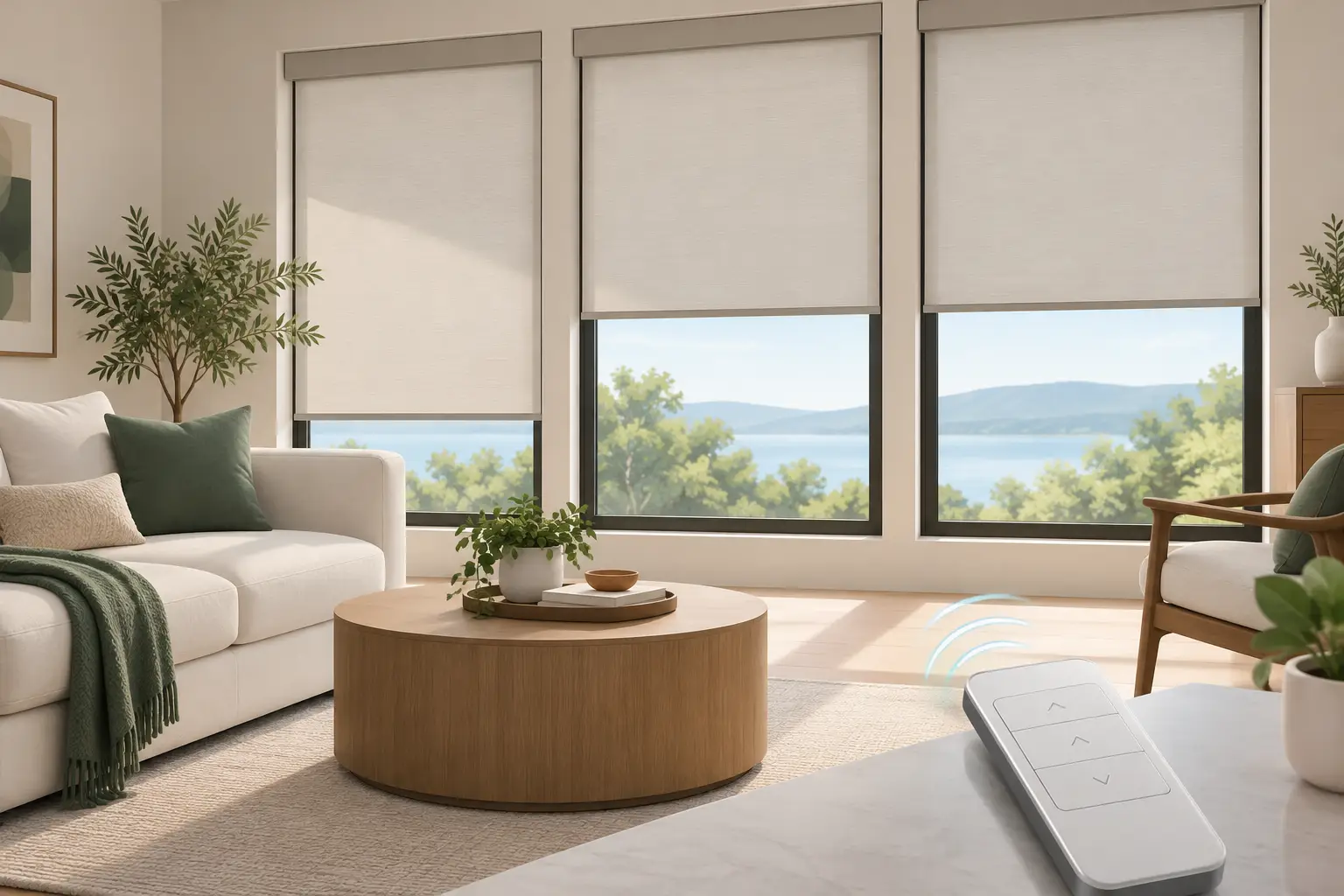
At 3 p.m., a west-facing wall of glass can turn a beautiful room into the least comfortable place in the house. Lutron shades address that daily problem with quiet, precise control over sunlight, glare, privacy, and heat – without asking you to walk from window to window.
For homeowners and builders, motorized shades are not simply an upgrade for hard-to-reach windows. When planned well, they become part of how a home feels throughout the day: bright when you want natural light, protected when the sun is harsh, and private when evening arrives. The best systems do this with very little effort from the people living there.
What Lutron Shades Change in Daily Life
Window treatments affect more than appearance. They influence whether a room is comfortable for reading, working, watching television, or relaxing. Traditional blinds and shades can handle those jobs, but only when someone remembers to adjust them. In a home with many windows, that often means they stay in one position all day.
Lutron shades can move on a schedule, respond to a button press, or become part of a room setting. A morning routine might raise bedroom shades gradually. A media-room setting can lower shades before a movie begins. In the evening, a single command can provide privacy throughout the main living areas.
That convenience matters, but it is not the whole story. Automated shade movement also makes daylight more useful. Instead of closing a room off from the outdoors to stop glare, homeowners can use fabrics that soften direct sun while maintaining a view. The room stays connected to the outside while screens, artwork, furnishings, and floors receive better protection from intense light.
Lutron Shades Are a Design Decision, Not an Add-On
The most polished installations are considered early, especially in a new build or substantial renovation. Shade pockets, wiring paths, window dimensions, trim details, and fabric selection all affect the finished result. Planning ahead allows the hardware to disappear into the architecture rather than becoming an afterthought.
That does not mean an existing home cannot benefit. Many retrofit-friendly options are available, including battery-powered systems that reduce the need to open walls. The right approach depends on the number of windows, how often shades will operate, the desired control method, and how much of the home is being updated.
Wired, battery-powered, and hard-to-reach windows
Wired shades are often a strong choice for new construction because power can be planned before drywall is installed. They avoid ongoing battery replacement and are well suited to larger projects with many shades operating regularly.
Battery-powered shades can be an excellent fit for finished homes, selective room upgrades, and windows where running new wire would be disruptive. They provide a clean result without major construction. The trade-off is maintenance: batteries will need replacement or recharging over time, with timing that varies based on shade size, fabric weight, and daily use.
Motorization is especially valuable for tall windows, windows behind furniture, skylights, and glass located in stairwells or other difficult areas. If a shade is inconvenient to reach, it is unlikely to be used consistently. Automation turns those windows into useful parts of the home rather than decorative glass that creates a comfort issue at certain times of day.
Choosing Fabrics for Light, Privacy, and Style
A shade system performs only as well as the fabric selected for the room. Fabric is not merely a color choice. It determines how much light enters, how visible the view remains, how much privacy the room receives, and how the shade looks when raised or lowered.
Solar fabrics are popular in living rooms, kitchens, offices, and spaces with large windows. They reduce glare and soften daylight while preserving some outward visibility. Openness levels vary. A more open weave generally offers a clearer view and more daylight, while a tighter weave offers greater glare control and privacy.
For bedrooms, nurseries, and media spaces, room-darkening or blackout fabrics often make more sense. They are designed for stronger light control, though homeowners should understand that side gaps may allow some light into the room depending on the window treatment and installation method. A true dark-room result may require careful planning around the window opening, side channels, and any adjacent light sources.
Privacy fabrics occupy the middle ground. They diffuse daylight pleasantly and limit visibility from outside, making them useful in bathrooms, bedrooms, and street-facing rooms. The right choice often changes from room to room. A single fabric throughout the whole house can look consistent, but it may not provide the best performance everywhere.
Control Should Feel Natural
The value of motorized shades comes from using them easily. Wall keypads offer a reliable, familiar way to control individual rooms or groups of shades. Handheld remotes are useful near seating areas and beds. Mobile app control adds flexibility when you are away from home or want to make a quick adjustment from another room.
For many households, scheduled operation is where the system becomes part of everyday life. Shades can rise with the morning, lower during the strongest afternoon sun, and close around dusk for privacy. Schedules should support the household rather than dictate it, so it helps to keep them simple and easy to override.
Lutron shades can also coordinate with other home systems. A “Goodnight” setting might lower shades in shared spaces while adjusting selected lights. A “Movie” setting can reduce reflected sunlight before a film starts. These are small changes, but they remove the repeated steps that make a room less enjoyable to use.
Where Professional Design Makes the Difference
A motorized shade project has details that are easy to miss when products are chosen one window at a time. Window widths and heights need accurate measurement. Fabric roll direction can affect appearance. Larger shades may require careful consideration of weight and mounting. Fascia, pockets, and exposed hardware should be selected to match the architecture and the homeowner’s preferences.
Control planning is equally important. It is better to decide early which shades should move together, where keypads should be located, and what should happen during common routines. A kitchen with multiple windows may need one simple control. A primary suite may benefit from independent control for bedside windows and a shared whole-room command.
For custom builders, early coordination prevents last-minute compromises. For homeowners updating an existing property, a site visit helps identify the cleanest path to power, control, and installation. Tri-County Technology approaches this work as part of the home’s larger comfort system, with attention to how the technology will actually be used after installation day.
Questions Worth Asking Before You Choose
Before selecting Lutron shades, consider what problem each window needs to solve. Is glare the issue, or privacy? Do you want to preserve a view, darken a bedroom, reduce afternoon heat, or make high windows easier to manage? The answer may be different for every room.
Also consider the finish level you expect. Recessed pockets can create an exceptionally clean appearance, but they require early construction coordination. Decorative fascia can conceal hardware in an existing home without altering the structure. Neither is universally better. The right answer depends on the home, budget, and project timing.
Finally, think beyond the first week of ownership. A good shade system should remain easy for guests, children, and future homeowners to understand. Straightforward controls, thoughtfully named scenes, and dependable programming matter more than a long list of features no one uses.
A well-designed shade system does not call attention to itself. It simply keeps the sun from interrupting a conversation, makes a screen easier to see, protects a favorite room from harsh afternoon light, and gives the home the privacy it needs at the end of the day.
No responses yet