The question, do motorized shades need wiring, often comes up after a homeowner has already pictured the convenience: shades lowering at sunset, opening gently in the morning, and responding from a wall keypad or phone. The good news is that wiring is not required for every motorized shade. The better answer is that the right power option depends on the window, the stage of the project, and how you want the system to feel over time.
For a new build or major renovation, hardwiring can create the cleanest long-term result. For an existing home, battery-powered or plug-in shades may provide the comfort and control you want without opening walls. Each approach can work beautifully when it is planned around the room rather than chosen as a one-size-fits-all solution.
Do Motorized Shades Need Wiring in Every Home?
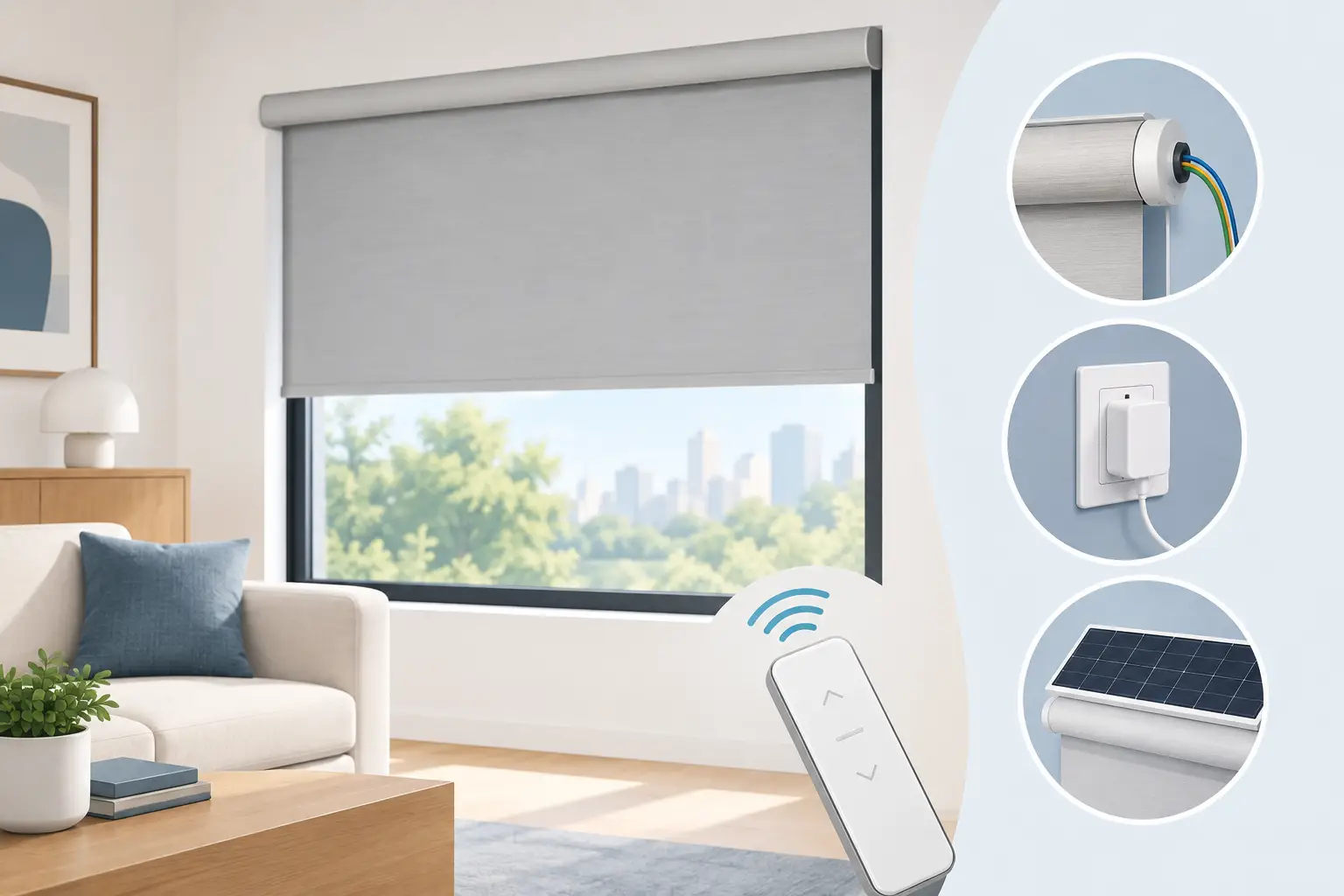
No. Motorized shades need a source of power, but that source does not always have to be low-voltage wiring concealed in the wall. Most residential motorized window treatments fall into four categories: hardwired, battery-powered, plug-in, and solar-assisted battery systems.
Hardwired shades receive low-voltage power from wiring installed during construction or renovation. Battery shades use rechargeable or replaceable battery solutions inside or near the shade. Plug-in shades connect to a nearby outlet, while solar-assisted shades use a small solar panel to help maintain their battery charge.
The choice affects more than installation. It influences the visual finish, ongoing maintenance, reliability, and the number of windows that can be managed comfortably as one system. A single shade in a finished guest room has different needs than twelve high windows in a great room.
Hardwired Motorized Shades: Best for New Construction
Hardwired shades are often the preferred choice for custom homes, additions, and wall-to-stud renovations. A professional can run low-voltage wiring to each shade location before drywall is installed, leaving the finished window area clean and free from visible cords, outlets, and battery tubes.
This option is particularly appealing for tall windows, hard-to-reach windows, and rooms with several shades operating together. Once installed, hardwired shades do not require routine battery charging. That makes them a practical fit for homeowners who want their window treatments to operate quietly in the background with minimal attention.
Hardwiring also gives builders and homeowners more flexibility in design. Power can be planned around recessed pockets, fascia details, and mounting locations so the shades feel integrated with the architecture instead of added afterward. In a room with carefully selected finishes, that difference is noticeable.
There is a trade-off. Wiring is easiest and most cost-effective before walls are closed. Adding it later may require selective drywall work, paint touch-up, or access through an attic, basement, or crawl space. It is still possible in many existing homes, but the route must be evaluated before assuming a fully concealed installation is practical.
When hardwiring is worth it
Hardwired shades are usually worth considering when you are building, renovating multiple rooms, installing shades on inaccessible windows, or creating coordinated scenes throughout the home. They are also a strong choice when you prefer a polished installation with as little recurring maintenance as possible.
For builders, early coordination matters. Shade wiring should be discussed alongside other low-voltage planning, window measurements, trim details, and ceiling design. A small decision during the design phase can prevent a much more complicated decision after move-in.
Battery-Powered Shades: A Flexible Retrofit Choice
Battery-powered shades have made motorized window treatments far more accessible for finished homes. They do not need wiring inside the wall, which means installation is typically faster and less disruptive. For many homeowners, that is the deciding advantage.
Modern battery systems can offer dependable operation and a clean appearance, especially when the battery pack is concealed behind the shade or located in an unobtrusive place. They can be controlled by a handheld remote, wall-mounted wireless keypad, app, or compatible smart home system, depending on the product selected.
Battery power is an especially good fit for individual rooms, modest window groups, and spaces where opening walls would not make sense. A bedroom, home office, nursery, or sunroom can gain privacy, glare control, and everyday convenience without turning the project into a renovation.
The consideration is maintenance. Batteries eventually need to be recharged or replaced. How often depends on shade size, fabric weight, frequency of use, temperature, and the motor system. A lightly used bedroom shade may run for a long time between charges, while a large shade that moves several times daily will need more attention.
Battery-powered shades are not a lesser option. They are simply an option that asks for occasional care. When the windows are easy to reach and the system is thoughtfully programmed, that maintenance is usually straightforward.
Plug-In Shades: Practical When an Outlet Is Nearby
Plug-in motorized shades use a standard outlet for power. They avoid battery maintenance and can be a sensible retrofit solution when an outlet is already near the window and the power cord can be routed discreetly.
This choice works best when the outlet placement, furniture layout, and window trim allow the cord to remain unobtrusive. In some rooms, a cord can be hidden behind drapery, cabinetry, or a carefully planned side channel. In others, it may be visible enough to distract from the finished look.
Plug-in shades can be an effective middle ground for homeowners who want consistent power but are not opening walls. They are less ideal for windows with no nearby outlet, prominent architectural views, or installations where every detail needs to be concealed.
Solar-Assisted Shades: Less Charging, Not No Charging
Solar-assisted shades pair a rechargeable battery system with a compact solar panel placed near the window. Daylight helps maintain the battery charge, reducing how often the shade needs manual charging.
They are useful on windows with reliable sun exposure, particularly those that are difficult to reach. However, solar is not a universal answer. Heavily shaded windows, north-facing windows, deep overhangs, or rooms with limited daylight may not provide enough energy to keep the battery fully maintained year-round.
The panel itself is also a design consideration. It is usually discreet, but it is still a visible component. Some homeowners are comfortable with that trade-off for reduced maintenance; others prefer the cleaner look of concealed wiring or a standard battery setup.
Control Does Not Depend on Wiring Alone
A common misconception is that wireless shades can only use a handheld remote, or that hardwired shades are the only ones that can be included in a whole-home control system. In practice, the motor’s power source and its control method are separate decisions.
Battery, plug-in, and hardwired shades can all be designed for convenient control. You may choose individual room control, grouped shades, scheduled operation, or scenes that respond to routines such as waking up, watching a movie, or settling in for the evening. The right design keeps those controls simple enough that everyone in the home will actually use them.
For example, a homeowner may want bedroom shades to open gradually in the morning while west-facing living room shades lower before afternoon glare becomes uncomfortable. That kind of daily comfort is possible with more than one power option. The key is choosing products and controls that work well together from the start.
How to Choose the Right Power Option
Start with the condition of the home. If walls are open, run the wiring. Even if you decide to begin with only a few shades, preparing key windows now can preserve options for later. Windows above stairs, behind large furniture, or in two-story spaces deserve special attention because servicing batteries there can become inconvenient.
Next, consider the scale of the project. A few shades in one room are often well suited to battery power. A larger home with many shades, scheduled scenes, and hard-to-reach windows may benefit from hardwired power in priority areas. A hybrid approach is common and sensible: hardwire the most demanding locations, then use battery shades where retrofit simplicity matters most.
Finally, think about the finish you expect. If visible cords, charging access, or solar panels would bother you, it is better to address that before selecting products. Motorized shades should support the room’s design, not create a new visual compromise.
Professional Planning Makes the Difference
The motor is only one part of a successful shade installation. Proper measurements, fabric selection, mounting details, power placement, and control programming all affect the result. A shade that looks right on paper can become frustrating if it interferes with trim, does not cover the glass as intended, or cannot be easily maintained.
For Northeast Ohio homes, professional planning can also account for changing daylight, large window walls, and rooms that experience strong summer glare or winter heat loss. The goal is not to add technology for its own sake. It is to make a room more comfortable, private, and pleasant to use.
Tri-County Technology helps homeowners and builders evaluate these details before installation, whether the project is a new custom home, a renovation, or a targeted upgrade to an existing space. The best power choice is the one that fits the home cleanly and continues to feel easy years after the installation day.
A well-planned motorized shade system should become part of the rhythm of the home: present when it improves comfort, and otherwise easy to forget.

No responses yet