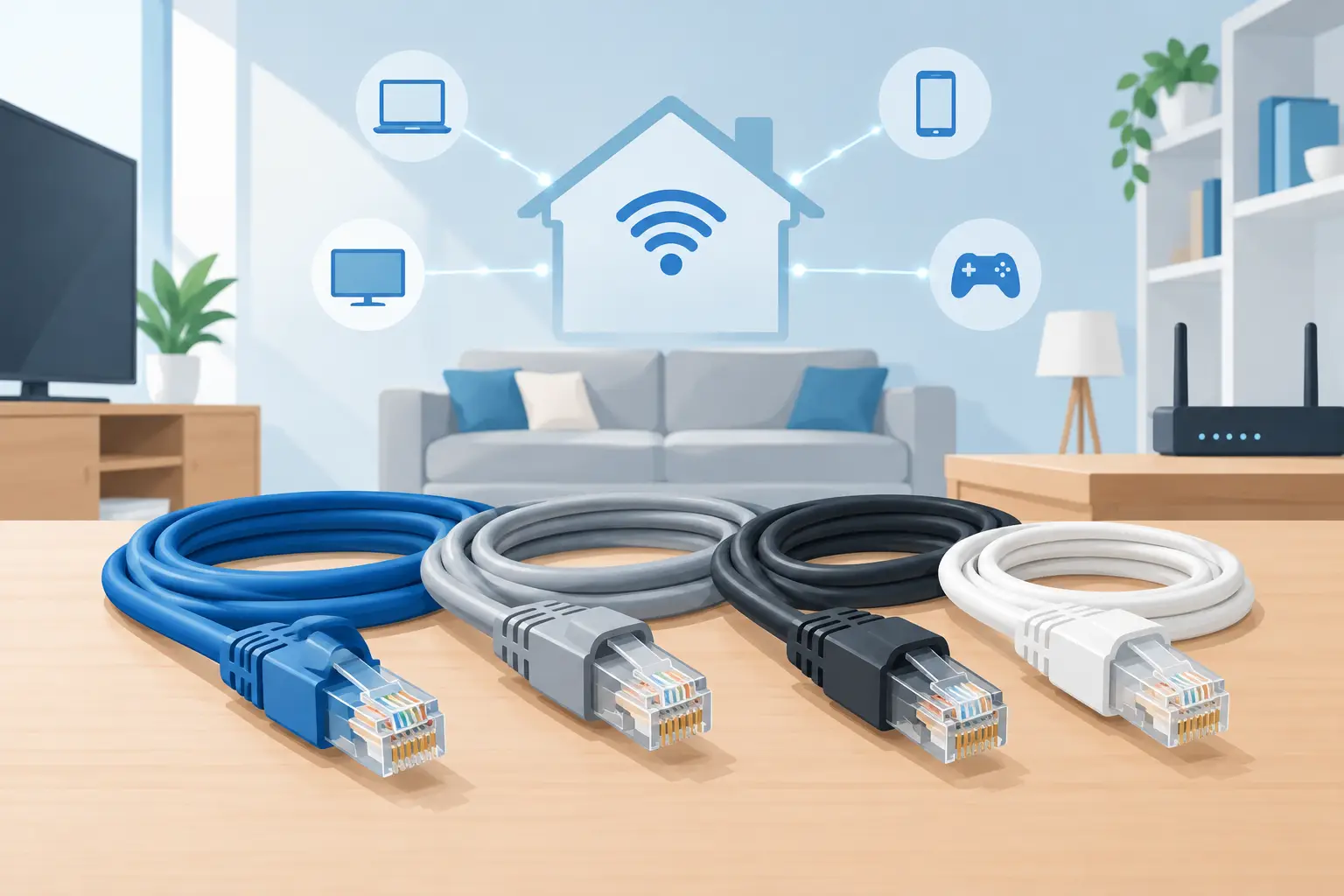
A fast internet plan cannot fix weak wiring behind the walls. When a video call freezes upstairs, a stream buffers in the theater, or Wi-Fi struggles at the far end of the home, the issue is often the network path rather than the service coming into the house. Choosing the best ethernet cable types during a build, renovation, or network upgrade gives every connected system a more dependable foundation.
For most homes, the answer is not simply to buy the highest-numbered cable available. The right choice depends on cable distance, expected internet and network speeds, the number of connected devices, where the cable will run, and whether it may need to support power as well as data. A well-planned wired network works quietly in the background, keeping daily technology simple and ready when you need it.
Why Ethernet Cable Still Matters in a Wi-Fi Home
Wi-Fi is essential for phones, tablets, and flexible everyday use. But wireless access points, televisions, desktop computers, media servers, and many smart home devices perform better when the backbone of the home is wired. Ethernet provides a stable connection that is not competing with walls, distance, neighboring networks, or household traffic in the same way wireless devices do.
A wired connection also lets wireless access points be placed where coverage is needed, rather than where an internet provider happened to install equipment. That can make a meaningful difference in larger homes, finished basements, outdoor living areas, and offices where dependable connectivity matters.
The cable you install now is difficult and expensive to replace later. That makes structured wiring one of the few technology decisions where modest planning can protect the home from avoidable disruption down the road.
The Best Ethernet Cable Types, Explained
Ethernet categories describe the performance standards a cable is designed to meet. Higher categories generally support higher speeds or longer distances at those speeds, but they are not automatically better for every project.
Cat5e: Suitable for Basic Gigabit Connections
Cat5e remains capable of supporting Gigabit Ethernet, or 1 Gbps, up to 328 feet. In a small space with modest needs, it can still handle everyday browsing, streaming, and basic device connectivity.
For new residential wiring, however, Cat5e is usually not the strongest long-term choice. The labor of pulling cable through walls is similar regardless of category, while Cat6 offers additional performance headroom for a relatively small difference in material cost. Cat5e may make sense when extending an existing run or working within a tight budget, but it is rarely the first recommendation for a new build.
Cat6: The Practical Choice for Many Homes
Cat6 is a dependable standard for modern residential networks. It supports 1 Gbps up to 328 feet and can support 10 Gbps on shorter runs, typically up to about 180 feet depending on installation conditions.
That makes Cat6 a strong fit for many homes. It has enough capability for high-bandwidth entertainment, home office equipment, wired wireless access points, and most smart home infrastructure. It is also generally easier to route and terminate than thicker cable categories.
If a project has average-sized rooms, a centrally located equipment space, and no unusual distance requirements, Cat6 often delivers the right balance of cost, installation flexibility, and performance.
Cat6A: Best for Long-Term, High-Performance Wiring
Cat6A supports 10 Gbps connections up to the full 328-foot channel length. That is its key advantage over Cat6. For larger homes, detached workspaces, demanding media systems, or owners who want more room for future upgrades, Cat6A is often the preferred choice.
The trade-off is physical size. Cat6A is thicker, less flexible, and requires more care around bend radius, pathway space, patch panels, and terminations. Those details matter. A cable category only delivers its expected performance when the full installation is designed and installed correctly.
For custom homes and major renovations, Cat6A is a sensible investment when the goal is to install once and avoid revisiting the walls later. It provides a capable backbone for years of changing technology without adding unnecessary complexity to daily use.
Cat7: Usually Unnecessary in Residential Projects
Cat7 is often marketed as a premium upgrade, but it is not commonly the most practical choice for US residential structured wiring. Its shielding and connector requirements can add cost and installation complexity, while the real-world benefit is often limited in a typical home.
Some products labeled Cat7 are sold with standard RJ45 connectors, which can make comparisons confusing. For most residential projects, properly installed Cat6 or Cat6A is a clearer, more established choice. A higher category printed on a box is not a substitute for a complete, standards-based installation.
Cat8: Built for Specialized Short Runs
Cat8 is designed for very high-speed networking in short-distance environments, such as data centers. It can support 25 Gbps or 40 Gbps over limited distances, typically up to 98 feet.
That capability is impressive, but it does not make Cat8 the default answer for a home. The cable is thicker, more expensive, and generally unnecessary for residential device connections. Unless a project includes a very specific, high-speed equipment-to-equipment need, Cat6A is usually the more practical long-term option.
Cable Quality Matters as Much as Cable Category
Not all cables marked with the same category are made to the same standard. One of the most important distinctions is conductor material. For permanent in-wall wiring, use solid bare copper cable. Avoid copper-clad aluminum, often called CCA, for fixed network runs.
CCA may cost less, but it can create problems with data performance, heat, and power delivery. This is especially relevant when a cable is supplying power to devices such as wireless access points, touchscreens, or other low-voltage equipment. Solid copper cable is more dependable and better suited to a professionally installed network.
The jacket rating matters, too. In-wall cable should be selected for its installation environment. Riser-rated cable is commonly used for vertical runs between floors. Plenum-rated cable is intended for certain air-handling spaces and may be required by local code. Outdoor cable needs a jacket designed to handle moisture, temperature changes, and sunlight when exposed.
These details are easy to overlook when buying cable online, but they are central to a clean, code-conscious installation that performs as expected.
Shielded vs. Unshielded Ethernet Cable
Most homes do well with unshielded twisted pair cable, often called UTP. It is easier to install, easier to terminate, and effective in normal residential conditions.
Shielded cable can help in areas with unusually high electrical interference, such as certain utility spaces or commercial environments with heavy equipment. But shielding only works properly when the entire system is designed for it, including compatible connectors, patch panels, and correct grounding. Installing shielded cable without that planning can add cost without solving a meaningful problem.
For standard residential runs, quality unshielded Cat6 or Cat6A is usually the cleaner and more sensible approach.
Plan the Network Around How the Home Will Be Used
The best cable is only part of the decision. Placement is just as important. A thoughtful wiring plan considers where people will work, watch, gather, and rely on strong wireless coverage.
At a minimum, it is wise to run Ethernet to fixed television locations, home office areas, wireless access point locations, and a central structured wiring location. Depending on the home, additional runs may serve a theater, exercise room, detached garage, patio, or future equipment locations. Pulling extra cable while walls are open is often inexpensive compared with adding it after finishes are complete.
It also helps to leave service loops, label both ends of every run, and use a centralized patch panel rather than loose, unmarked cables. These steps make future changes straightforward for homeowners and service professionals alike.
A Simple Recommendation for Most Projects
For many homes, Cat6 is a capable and cost-effective choice. For larger homes, custom builds, major renovations, or projects where long-term flexibility is a priority, Cat6A is usually worth considering. In either case, choose solid copper, in-wall-rated cable and make sure the installation method matches the cable’s performance level.
A dependable home network is not about filling walls with the most expensive cable. It is about making smart decisions before the drywall goes up, so the technology behind daily comfort, work, entertainment, and communication feels easy to live with for years to come.

No responses yet