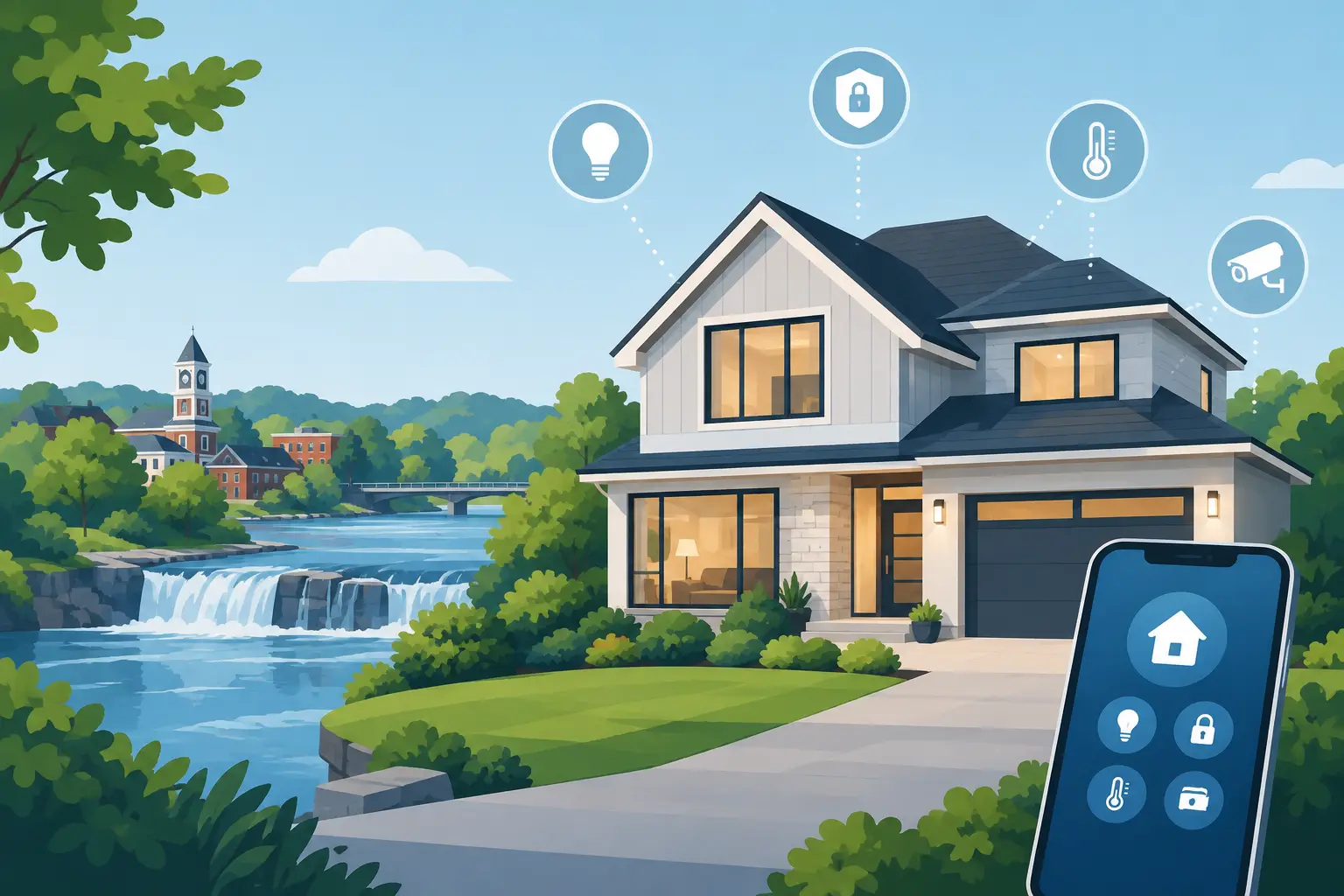
A home should not require a collection of apps, remotes, password resets, and trial-and-error fixes just to play music, dim the lights, or get reliable Wi-Fi upstairs. The best Chagrin Falls smart home upgrades reduce those daily frustrations with technology that feels natural to use and dependable enough to fade into the background.
For homeowners planning a renovation, finishing a lower level, moving into a new build, or simply tired of weak connectivity, the right starting point is not a gadget. It is a plan for how the home should feel and function. A professionally designed system considers the layout, construction materials, family routines, and the technology already in place before recommending equipment.
Start With the Systems You Use Every Day
The most valuable improvements are often the ones people notice least. Strong Wi-Fi, thoughtful lighting, easy entertainment control, and well-placed charging or network connections make a home more comfortable without turning it into a showroom of flashing devices.
A good design begins with a few practical questions. Where does Wi-Fi slow down? Which rooms are used for work, entertaining, or quiet evenings? Are there remotes piled on the coffee table? Does afternoon sun make certain rooms uncomfortable or wash out the television? The answers shape a system around real life rather than a generic package.
For many homes in Chagrin Falls, a phased approach makes sense. Start with the infrastructure that supports everything else, then add lifestyle features as rooms are renovated or needs change. This keeps the investment focused while leaving room for future improvements.
Reliable Wi-Fi Is the Foundation
Streaming, video calls, thermostats, speakers, televisions, and many everyday devices all depend on a healthy network. Yet many homes still rely on a router placed wherever the internet service entered the house. That may work in a small, open layout, but it often struggles in larger homes, older homes with dense walls, and properties with finished basements, outdoor living areas, or detached spaces.
Wi-Fi optimization is more than adding extenders. A properly planned network uses the right equipment in the right locations, with wired connections where they matter most. This helps video calls remain clear, entertainment systems respond quickly, and devices stay connected as people move from room to room.
Why placement matters more than most people expect
A network signal has to travel through plaster, brick, stone, metal ductwork, cabinetry, and floors. A powerful router cannot always overcome poor placement. Access points installed strategically throughout the home can provide more consistent coverage than a single device working too hard from one corner.
For new construction and major renovations, structured wiring is especially valuable. Running low-voltage cable while walls are open creates a clean foundation for Wi-Fi, televisions, audio, cameras, future equipment, and home office needs. It also avoids the visible cables and improvised workarounds that tend to appear when technology is added later.
Lighting and Shades Should Follow Your Routine
Lighting control is one of the simplest ways to make a home feel more settled. The goal is not to control every bulb from a phone. The goal is to create useful scenes that match the moments already happening in the home.
A morning setting can bring up the kitchen and hallway lights gently. An evening setting can warm the main living spaces and turn off lights left on elsewhere. A movie setting can lower the room lights without interrupting the conversation. Physical controls remain important, because the best systems work for guests, children, and anyone who does not want to reach for a phone.
Motorized window treatments add another layer of everyday comfort. They can reduce glare on a screen, help protect furnishings from intense sun, support privacy, and make tall or hard-to-reach windows easier to manage. In rooms with large windows, shades and lighting work particularly well together. The home can respond to changing daylight in a quiet, predictable way without constant manual adjustment.
There is a trade-off worth considering: fully automated routines are convenient, but only when they reflect how the household actually lives. A professional installer can help establish controls and schedules that feel helpful rather than overly rigid, with simple manual overrides whenever they are needed.
Bring Better Sound to the Rooms That Matter
Whole-home audio is not about having music playing everywhere all the time. It is about choosing where sound adds value. That may be the kitchen during dinner prep, the patio during a gathering, the primary bathroom in the morning, or the family room on a quiet weekend.
In-ceiling and architectural speakers can provide clear sound without taking up furniture space or introducing a tangle of cords. Rooms can play the same music together, or each area can play something different. The experience should be easy to start, adjust, and stop from familiar controls.
The right speaker plan depends on ceiling construction, room size, furnishings, and listening habits. A small pair of well-positioned speakers can outperform a larger system installed without attention to the space. Clean installation matters as much as sound quality, especially in carefully finished rooms.
Make Television and Theater Spaces Easier to Enjoy
A great television or projection room should not require a cheat sheet. One control should handle the basic experience: turn the system on, choose a source, set the volume, and enjoy the content. When equipment, remotes, and cables are planned well, the technology becomes far less noticeable.
For a living room, that may mean mounting a television at a comfortable height, concealing wiring, improving sound, and simplifying sources. For a dedicated media room, it may involve a projection screen, room-appropriate speakers, careful equipment placement, and lighting that supports viewing without creating glare.
Not every room needs a full theater system. In fact, matching the level of technology to the room is usually the better choice. A polished family room setup may be more useful than an elaborate system that sees limited use. The same principle applies to outdoor entertainment, where weather-rated equipment and thoughtful placement can create a welcoming space without overwhelming the landscape.
Plan for Flexibility, Especially in Older Homes
Chagrin Falls homes have a wide range of styles and ages, from historic properties to newer custom residences. That means no two projects should be approached the same way. Older homes may require creative routing to preserve finished walls and architectural details. Newer homes may offer easier access but still benefit from a coordinated design before furniture, finishes, and electronics are selected.
Retrofit work does not have to mean disruption. Experienced low-voltage installation focuses on clean pathways, discreet equipment placement, and an approach that respects the home. In some cases, wireless solutions are the practical choice. In others, a wired connection is worth the extra planning for long-term performance. The right answer depends on the home and the expectation for reliability.
Choose systems that remain easy to support
A smart home should be understandable after the installation crew leaves. That means clearly labeled equipment, intuitive controls, and a design that avoids unnecessary complexity. It also means choosing technology that can be maintained, adjusted, and expanded without starting over.
This is where professional guidance has real value. Instead of buying isolated products that may not work well together, homeowners can make decisions around the full experience: connectivity, control, appearance, performance, and future needs. Tri-County Technology approaches each project with that larger picture in mind, helping clients select practical systems that fit their homes and routines.
A Better Upgrade Starts With a Better Conversation
The most successful Chagrin Falls smart home upgrades are not defined by how much technology they contain. They are defined by the small moments they improve: a video call that does not freeze, music that fills the kitchen cleanly, shades that reduce harsh afternoon light, or a movie night that starts without sorting through remotes.
Begin with the friction points in your home, then build a plan around the rooms and routines that matter most. When technology is designed with care, it does its job quietly and leaves more room for living.


No responses yet