A kitchen playlist should not disappear when someone walks into the family room. A patio speaker should not require carrying a portable device outside or sorting through a stack of remotes. The best Westlake home audio ideas begin with these everyday moments, then build a system around how a household actually spends time at home.
For many homeowners, the goal is not a house full of visible equipment. It is clear sound in the rooms that matter, intuitive control, and a clean installation that fits the architecture. Whether you are planning a custom build, updating an older Westlake home, or finishing a basement, thoughtful audio design can make ordinary routines feel more enjoyable without adding complexity.
Start With the Rooms You Use Most
Whole-home audio does not need to mean speakers in every room. In fact, putting audio everywhere can be a poor investment if certain spaces are rarely used. A better approach is to identify the areas where sound will add real value: the kitchen, family room, primary bedroom, bathroom, basement, home office, and outdoor living area are common choices.
The kitchen is often the natural starting point. It is where people cook, gather, help with homework, and prepare for the day. A pair of properly placed in-ceiling speakers can fill the room with balanced music while keeping counters clear. If the kitchen opens to a great room, the two spaces may work best as separate audio zones. That gives one person the freedom to listen in the kitchen while someone else watches a game or movie nearby.
Bedrooms call for a lighter touch. Background music, a podcast, or relaxing audio at the end of the day does not demand the same speaker output as a family room. Smaller in-ceiling speakers or discreet wall-mounted options often provide more than enough coverage. The right system lets each room play something different, or groups several rooms together when the household wants the same music throughout the main level.
Westlake Home Audio Ideas for Open Floor Plans
Open floor plans are popular for good reason, but they can be challenging for audio. One pair of speakers mounted in the center of a large kitchen-great-room space may make sound audible without making it satisfying. People sitting at the island may hear too much from one direction, while those in the living area may turn the volume up to compensate.
In a larger shared space, multiple speakers distributed at lower volume usually sound better than one loud pair. This creates more even coverage and reduces the harsh, localized feeling that can happen when speakers are asked to cover too much square footage. Placement matters as much as speaker quality. Speakers should be positioned around furniture layouts, ceiling features, and listening areas rather than installed in a simple grid.
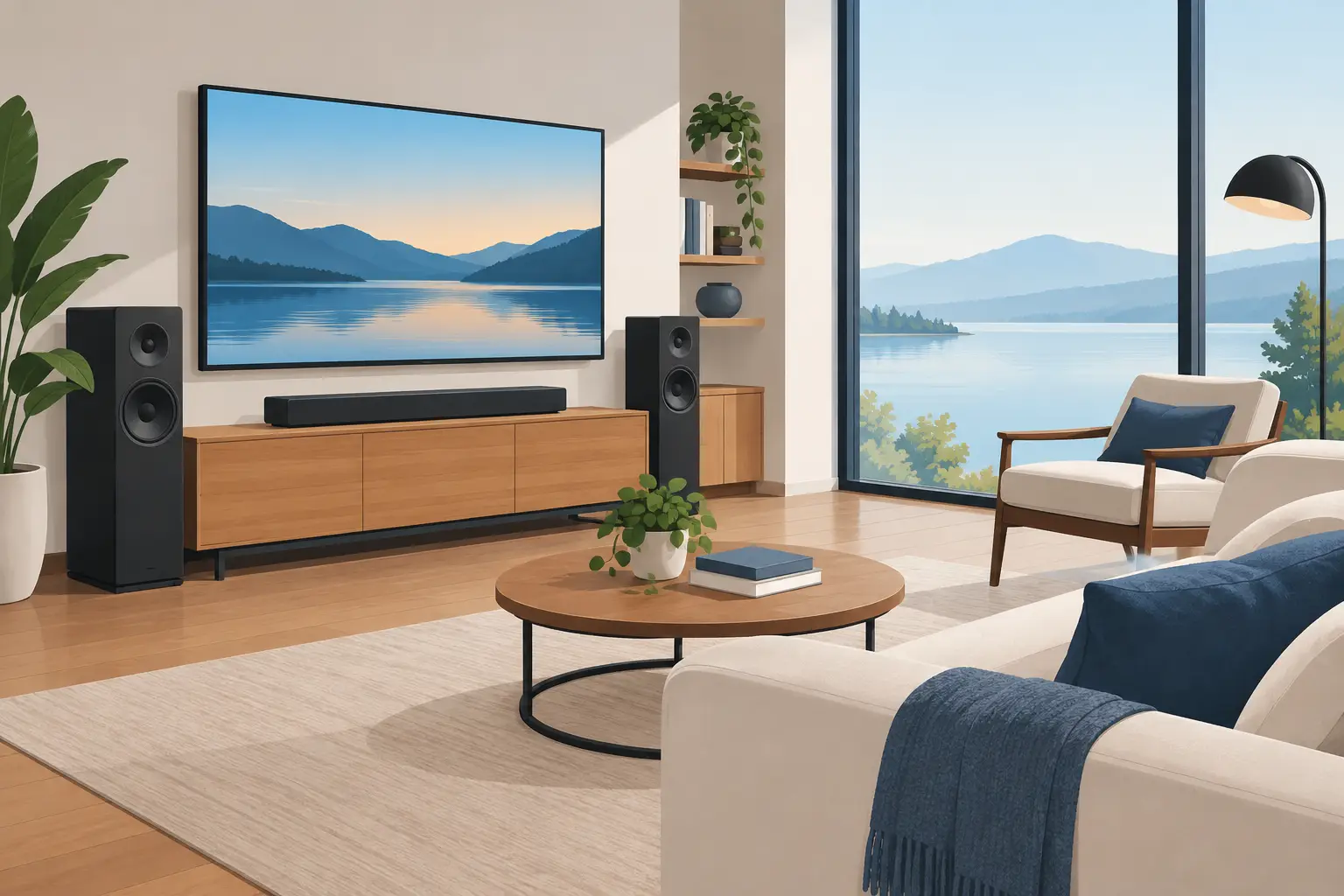
A media room or finished basement deserves its own plan. For casual TV viewing, a soundbar may be the right answer, especially where a clean, straightforward setup is the priority. For movie nights, sports, and gaming, a dedicated surround sound system can create a more immersive experience. The trade-off is that a surround system requires intentional speaker placement, equipment storage, and calibration. It is worth doing when the room will truly be used for entertainment, not just occasional viewing.
Keep Equipment Out of Sight, Not Out of Reach
Visible wires and crowded cabinets can make even good equipment feel like an afterthought. A professionally designed system places components where they can be serviced, ventilated, and kept out of daily view. This may mean a dedicated equipment closet, structured wiring area, or a cleanly organized media cabinet.
Planning for service access is particularly valuable in a renovation. Equipment should not be buried behind a television or crammed into an enclosed cabinet with no airflow. Thoughtful infrastructure protects the investment and makes future updates much simpler. It also keeps the room focused on the people and the space, not on blinking lights and exposed cables.
Make Control Feel Natural
Audio technology is only useful when everyone in the household feels comfortable using it. The goal is simple control from familiar devices, with the option for a wall-mounted control or handheld remote where it makes sense. A homeowner should be able to choose a room, select music, and adjust volume without needing a lesson each time.
Voice control can be convenient for quick requests, especially in a kitchen or while entertaining. Still, it should be treated as an option rather than the only way to operate the system. Phone and tablet control offers flexibility, while dedicated controls can be easier for guests, children, or anyone who prefers a physical button. The best choice depends on the household and how each room is used.
Consider presets for the routines that happen often. A single tap can start music in the kitchen and patio before guests arrive. Another can turn on calm background audio in the primary suite. These small details reduce friction, which is what makes a home audio system feel like part of daily life rather than another device to manage.
Bring Music Outdoors With a Purpose
Outdoor audio is one of the most rewarding upgrades for Northeast Ohio homes, especially for patios, covered porches, pools, and backyard gatherings. It also needs a different design approach than indoor audio. Outdoor speakers must be built for weather exposure and placed to direct sound toward the listening area, not toward neighboring homes.
For a small patio, a pair of weather-rated speakers may be all that is needed. Larger yards often benefit from landscape speakers paired with a buried subwoofer. This arrangement spreads sound across the outdoor space at a comfortable level instead of blasting music from the side of the house. It is a more polished result for both homeowners and neighbors.
Outdoor systems should also be planned around landscaping, walkways, future hardscaping, and seasonal use. Running wiring before a patio is poured or a yard is fully landscaped is easier and cleaner than trying to add it later. For existing homes, experienced installation can still provide excellent results, but the available pathways may shape the design.
Build for Today and Leave Room for Tomorrow
New construction is the ideal time to install speaker wire, network wiring, conduit, and proper mounting locations before drywall goes up. Even if every room will not receive speakers immediately, prewiring creates options later without opening finished walls. Builders and homeowners can avoid last-minute decisions by discussing audio early, alongside television locations, Wi-Fi coverage, and room layouts.
Retrofit projects require a more tailored approach. Older homes can absolutely support high-quality distributed audio, but the installation strategy should respect finished surfaces, architectural details, and practical access points. Wireless products can be useful in selected situations, though a wired backbone remains the more dependable choice for permanent, multi-room installations. It reduces reliance on battery-powered devices and helps deliver consistent performance over time.
The same principle applies to source equipment. Streaming music is central to most modern systems, but it is wise to allow for television audio, turntables, and future components where appropriate. A flexible design does not mean adding every possible feature. It means choosing infrastructure that supports the way the home may evolve.
Choose Sound Quality That Matches the Space
More expensive speakers are not automatically the right speakers. Ceiling height, room size, finishes, furniture, and the purpose of the space all affect what will sound best. A lively room with hard flooring, expansive glass, and minimal soft furnishings may need careful tuning to avoid bright or echoing sound. A carpeted basement with large sectional seating may need a different approach.
A professional consultation brings these details into the plan before equipment is selected. It can also prevent common disappointments, such as undersized speakers in a large room, poor placement around ceiling beams, or a television system that sounds thin because the audio was treated as an afterthought.
Tri-County Technology designs home audio around comfort, clean installation, and dependable everyday use. The right plan can be modest and focused or extend across the entire home. What matters is that it fits the rooms, routines, and level of control you want.
Start by noticing where music would improve the moments already happening in your home. Those are the spaces worth planning first, and they are often the foundation of an audio system you will enjoy for years.


No responses yet