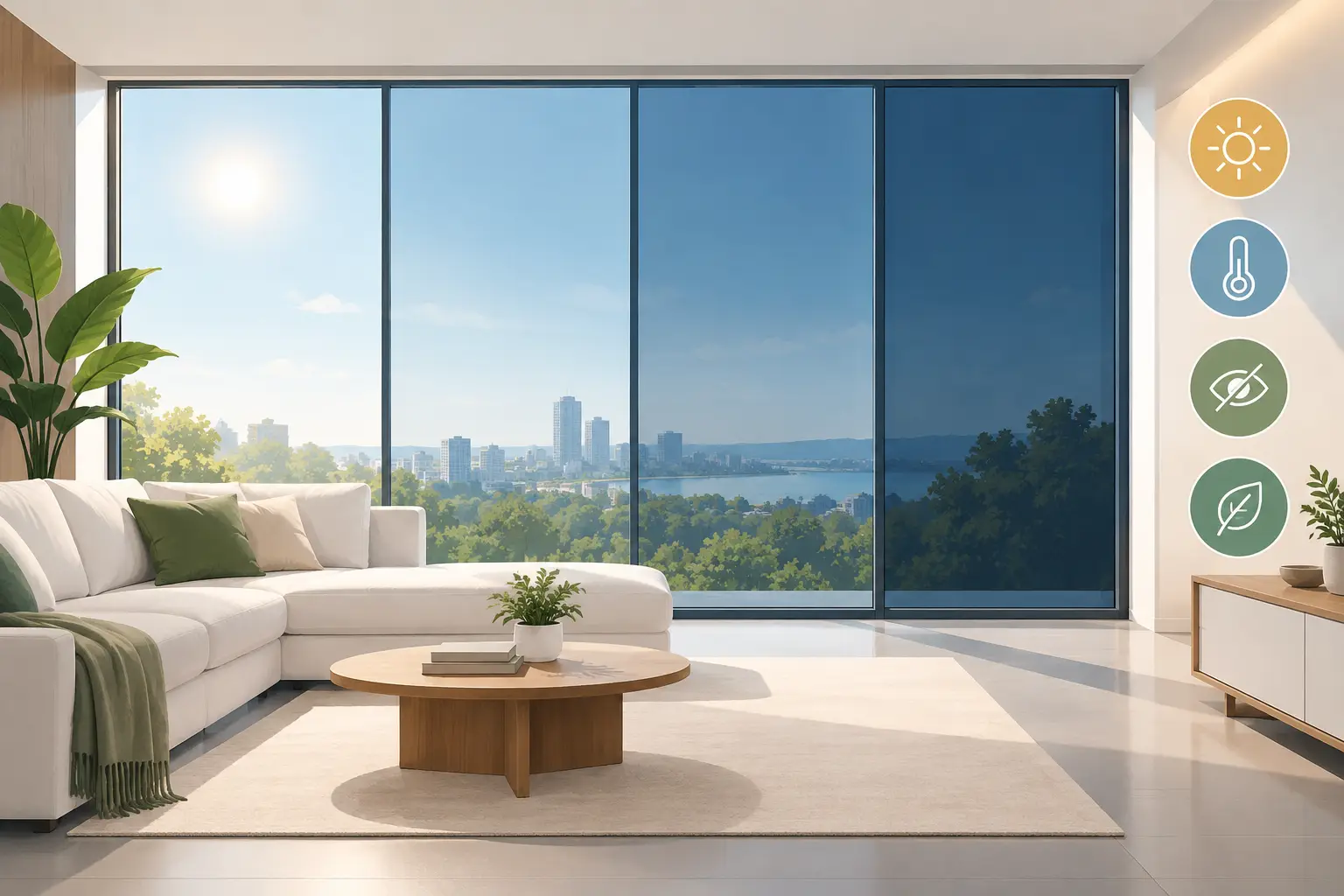
A wall of glass can make a home feel open and beautifully connected to the outdoors. It can also create the familiar frustrations of afternoon glare, overheated rooms, fading finishes, and a loss of privacy after dark. Smart tint trends are gaining attention because they address those everyday trade-offs without asking homeowners to choose between natural light and comfort.
For custom builders and homeowners planning a renovation, the appeal is not novelty. The best smart glass and window treatment systems work quietly in the background, adjusting a space to the time of day, the weather, and the way the room is used. The key is choosing the right technology for the problem it needs to solve.
What Smart Tint Actually Means
“Smart tint” is often used as a catch-all term, but several different products sit under that label. They do not produce the same result, and that difference matters when planning a home.
Electrochromic glass changes from clear to tinted when a low electrical charge is applied. The transition is gradual, typically taking several minutes rather than happening instantly. It preserves the view while reducing brightness and solar heat, making it especially appealing for large expanses of glass, sunrooms, and rooms with west-facing windows.
Privacy glass, often made with polymer-dispersed liquid crystal technology, works differently. When powered, the glass appears clear. When power is removed or adjusted, it turns translucent and obscures the view. This can be useful in bathrooms, interior glass walls, home offices, or other areas where on-demand privacy matters more than preserving a clear outdoor view.
There are also smart films that can be applied to existing glass. Retrofit film can be a practical option when replacing windows is not part of the project. However, it should be selected carefully. Film can change the appearance of the glass, may have limitations based on window construction, and is not always the best answer for intense heat or glare.
Smart Tint Trends Are Moving Toward Useful Automation
The most meaningful smart tint trends are less about making glass perform a trick and more about making rooms easier to live in. Homeowners increasingly want daylight when it feels good, reduced glare when they are working or watching TV, and privacy when the sun goes down. They do not want to think about it all day.
That is why scheduled control is becoming more common. A system may brighten in the morning, transition during the strongest afternoon sun, and return to a clearer setting in the evening. These routines can be adjusted for each room rather than applying one setting across the entire house.
Sun-responsive control is another practical direction. When sensors detect direct sun on a particular elevation, tinting glass or motorized shades can respond before a room becomes uncomfortable. This is especially helpful in great rooms and kitchens with large windows, where the amount of direct light can change quickly through the seasons.
The important distinction is that automation should remain understandable. A homeowner should be able to use a wall keypad, app, or simple scene control without needing to manage a complicated set of rules. Good programming makes the system feel predictable, with manual control always available when someone wants a different setting.
Glass and Shades Work Better as a Planned System
Smart glass is not automatically the best solution for every window. In many homes, motorized window treatments provide more flexibility, stronger room-darkening options, and a broader range of fabrics and finishes. Smart tint may be most effective where shades would interrupt a view, look out of place, or be difficult to install and operate.
For example, a room with expansive lake views may benefit from electrochromic glass that reduces harsh afternoon light while keeping the landscape visible. A media room may need blackout-capable shades instead, because tinted glass alone will not create the darkness needed for projection. A primary bathroom with interior glass may be a natural fit for privacy glass, while a street-facing bedroom may be better served by layered window treatments that bring softness and nighttime coverage.
In many well-designed homes, the answer is a combination. Smart tint can manage the daylight at the glass itself, while motorized shades handle privacy, light filtering, and décor. The system should be designed around the behavior of each room, not around a single product category.
Energy Comfort Needs a Clearer Conversation
Energy savings are often part of the smart tint conversation, but the result depends on several details: window orientation, glazing specifications, window size, roof overhangs, insulation, climate, and how the home is used. Northeast Ohio presents its own mix of bright summer afternoons, cold winters, and rapidly changing shoulder seasons. A glass strategy that works well in one climate or on one elevation may not deliver the same benefit elsewhere.
Electrochromic glass can reduce solar heat gain and help ease the load on cooling systems during warm, sunny periods. It can also reduce glare without closing off the room. But it is not a substitute for properly specified windows, insulation, or a well-designed heating and cooling system.
Privacy glass deserves an equally careful assessment. Its primary value is visual privacy, not necessarily heat reduction. If a homeowner expects it to solve a hot-room problem, the project may need additional shading or a different glass specification.
A professional plan starts with the glass already selected or proposed. From there, the design can account for where direct sun enters, what rooms need view preservation, which areas need privacy, and how control should fit into daily life.
New Construction Offers the Cleanest Path
Smart glass, powered film, and motorized treatments benefit from early planning. In a new build, wiring can be placed before drywall, power can be coordinated at the windows, and control locations can be chosen with the rest of the home’s low-voltage infrastructure. The result is cleaner installation and fewer visible compromises.
That does not mean retrofit projects are off the table. Existing homes can often add motorized shades, select smart film applications, or integrate window controls into an updated smart home system. Retrofit work simply requires a more detailed site review. Power availability, window type, trim details, and the route for concealed wiring all affect what is possible and how polished the final installation will look.
Wireless options can reduce disruption in some cases, but they still need thoughtful placement, dependable communication, and a plan for battery maintenance when batteries are used. Convenience should not create another household chore.
Design Details Still Matter
A smart tint system should support the architecture rather than compete with it. Clear glass that darkens gradually may suit a contemporary home with clean lines. Fabric shades can bring warmth and texture to traditional spaces. Privacy glass can create a light-filled interior division without leaving a room exposed.
Color consistency is also worth discussing. Tinted glass can shift the color of daylight and alter how exterior views appear. The change may be subtle, but it is noticeable in rooms with carefully selected paint, artwork, or finishes. Homeowners should ask to see samples and, when possible, observe the product under real daylight conditions before making a final decision.
Control design matters just as much. A single “Away” or “Evening” setting may coordinate window treatments throughout the home, while individual rooms retain their own adjustments. The goal is not to place technology at the center of attention. It is to make the home feel comfortable without adding friction.
Questions to Ask Before Choosing Smart Tint
Before selecting a product, it helps to ask what outcome matters most. Is the concern glare on a television? Heat in a west-facing great room? Privacy in a bathroom? Preservation of a view? The answer will narrow the options quickly.
Also ask how the system will be powered, how it will be controlled if the internet is unavailable, what maintenance it requires, and whether it can be serviced without disturbing finished walls or trim. For larger projects, builders should coordinate window decisions, electrical planning, shading, and controls early enough that each trade is working toward the same result.
Smart tint is at its best when it is treated as part of the home’s overall comfort plan, not as an isolated feature. A thoughtful design can let daylight remain one of the home’s strongest assets while giving residents the calm, privacy, and control they expect from a modern space.


No responses yet