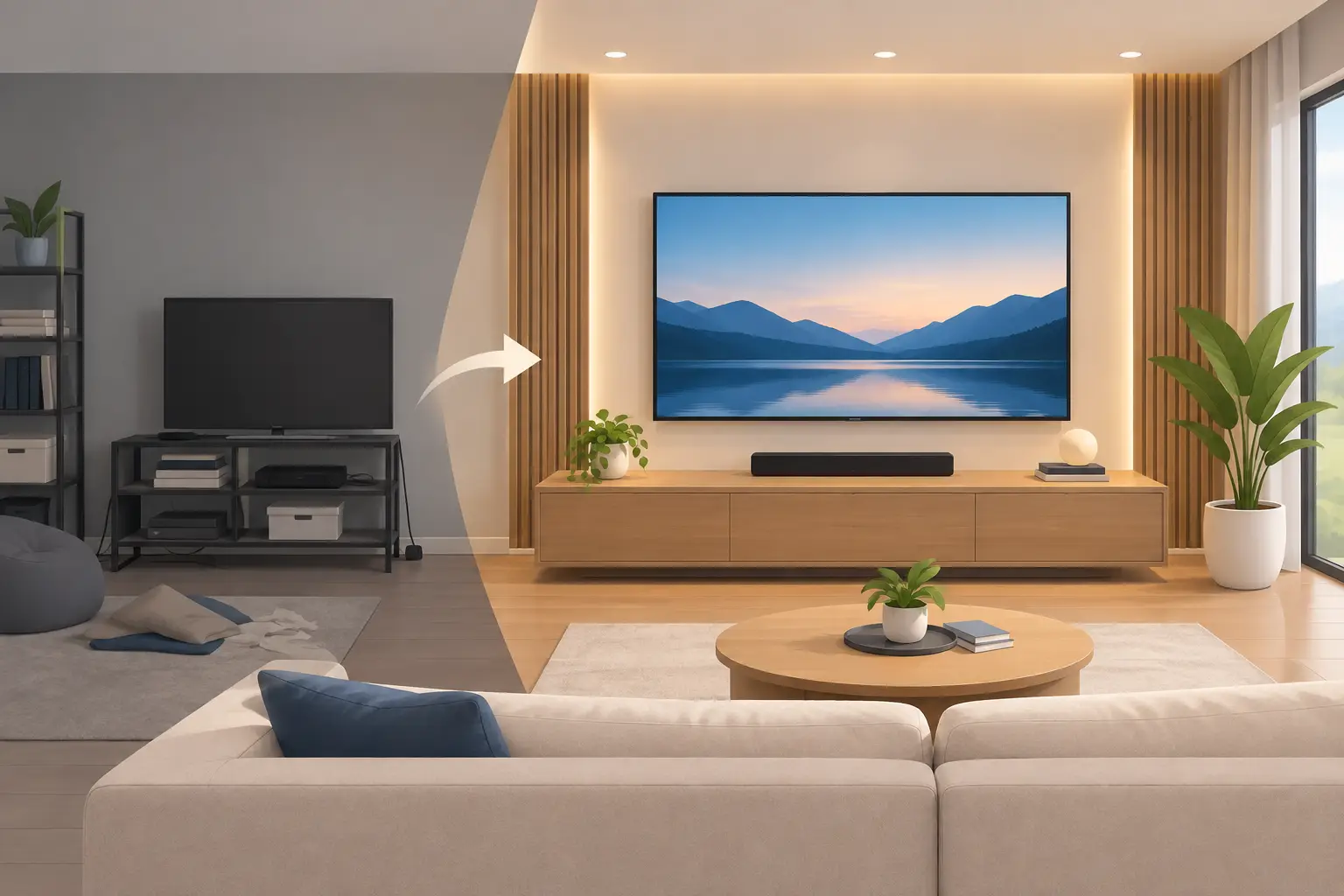
Friday night should not begin with hunting for remotes, adjusting settings, and asking why the picture will not fill the screen. A thoughtful media room transformation replaces that friction with a room that is ready when the family is: tap one button, settle in, and enjoy the movie, game, concert, or show.
The best media rooms are not built around the most equipment. They are built around how people actually spend time at home. That may mean a dedicated theater-style space with a projector and carefully placed speakers. It may also mean a finished basement that needs to work for Sunday football, kids’ gaming, and casual conversation when guests visit.
A professional plan brings the picture, sound, lighting, Wi-Fi, wiring, furniture layout, and control experience together before small decisions become expensive compromises.
What a media room transformation should improve
A successful room feels comfortable before anyone notices the technology. The screen is easy to see from every seat. Dialogue is clear without turning the volume too high. Equipment stays out of sight, and controls make sense to everyone in the home.
That requires more than mounting a television. Screen placement affects viewing comfort, especially in rooms with low ceilings or several seating rows. Speaker placement affects whether viewers hear a full soundtrack or only a loud front channel. Window light, wall finishes, furniture, and the room’s shape all influence the final experience.
The goal is not to make every room look like a commercial cinema. For many households, the better choice is a welcoming multipurpose room with a large TV, discreet audio, dimmable lighting, and a simple controller. For others, a projector, acoustically considered layout, and dedicated seating make more sense. The right answer depends on the room and the routines it needs to support.
Start with the room, not the equipment list
A media room plan begins with a conversation about use. How many people typically watch together? Is live sports the priority, or are movies and gaming equally important? Will the room host overnight guests, serve as a playroom, or need to remain bright during the day?
These answers guide practical choices. A bright family room with large windows may favor a premium TV that holds up well in daylight. A lower-light basement with a long viewing distance may be an excellent candidate for projection. A projector can create a more cinematic scale, but it also needs intentional light control, appropriate screen selection, and periodic maintenance. A TV is usually simpler for daytime viewing and everyday use, although very large sizes can change the budget quickly.
Seating deserves the same attention as the display. The viewing distance, screen height, and location of primary seats should be established early. A screen mounted too high can create neck strain, while a screen that is too small for the room can make an otherwise strong system feel underwhelming.
Sound is where comfort becomes convincing
A sharp picture draws people in. Clear, balanced sound keeps them there. Good audio does not mean every moment needs to be loud. It means voices remain understandable, music has presence, and action scenes feel full without becoming harsh.
Speaker choices should fit both the room and the homeowner’s expectations. In-wall and in-ceiling speakers can provide a clean appearance, while cabinet speakers may offer more flexibility in certain rooms. A subwoofer adds weight to movies and music, but its placement matters. In an open-concept space, sound can travel farther than expected. In a finished basement, room construction can create boomy or uneven bass if it is not considered during design.
Acoustic treatments may be useful in dedicated media rooms, particularly where hard floors, glass, and open walls create echoes. They do not have to make the room feel technical. Fabric panels, rugs, upholstered furniture, and carefully selected finishes can improve sound while preserving a polished residential look.
Plan the infrastructure before walls close
For new construction and major renovations, low-voltage planning is one of the highest-value parts of the project. Conduit, speaker wire, video cabling, network wiring, and power locations are far easier to install before drywall. They also give the room flexibility when equipment changes later.
A hardwired network connection is especially valuable for streaming devices, gaming systems, and modern TVs. Wi-Fi remains essential for phones, tablets, and portable devices, but a wired connection helps reduce congestion and supports consistent performance for the equipment that stays in one location.
Equipment placement should be planned early as well. A nearby cabinet may be convenient, but it needs proper ventilation and enough space for service. A centralized equipment location can keep the room clean and reduce visible wires, though it may require more wiring and coordination. Neither approach is automatically better. The best choice balances appearance, access for maintenance, cooling, and the home’s layout.
For retrofits, the approach changes but the standard should not. Existing walls and finishes may limit certain cable routes, yet experienced installers can often use attic, basement, crawlspace, or trim paths to keep the finished result clean. The key is to assess the room before promising a solution.
Make control simple enough for every guest
A beautiful media room can become frustrating if operation requires several remotes and a memorized sequence of inputs. The control experience should be designed around common moments: watch TV, start a movie, play music, pause everything, or turn the room off.
A single handheld remote, wall keypad, or app can manage the room’s key functions with clear commands. One action can turn on the display, select the right source, set audio levels, and adjust lights to a comfortable viewing level. The system should also recover gracefully when a device needs to be restarted or a family member chooses the wrong input.
Reliability matters more than novelty. A control system that is straightforward and well-programmed is more valuable than an elaborate interface no one wants to use. This is where professional configuration and support make a visible difference after installation day.
Use lighting and window treatments to protect the experience
Light is often the deciding factor between a room that looks good in photos and one that works at 2 p.m. on a sunny Saturday. Layered lighting gives the room more range. Recessed fixtures can brighten the space for cleanup or conversation, while accent lighting and step lights can support a relaxed viewing setting.
Motorized window treatments can be especially helpful in rooms with large windows or difficult-to-reach shades. They reduce glare at the press of a button and help maintain the room’s comfort without interrupting the moment. In a multipurpose room, this flexibility matters because the space may need to shift from bright and active to calm and focused within minutes.
Avoid treating lighting as an afterthought. The wrong fixture placement can reflect on the screen, while overly bright task lighting can compete with the image. Coordinating lighting, shades, and AV components early creates a more natural result.
Choose improvements that will still make sense later
Technology changes, but a well-planned room should not become outdated every few years. The most durable investment is often the infrastructure: quality wiring, thoughtful pathways, adequate power, ventilation, and a layout that allows equipment to be replaced without opening walls.
It is also wise to leave room for growth. A homeowner may start with a soundbar and later add surround speakers. A family that rarely games today may want a dedicated console connection later. Builders can create real long-term value by coordinating these possibilities while the home is still being designed.
Tri-County Technology approaches media rooms as part of the home’s daily rhythm, not as a collection of boxes and cables. The result should be clean, dependable, and comfortable to use whether the room is hosting a crowd or just a quiet weeknight movie.
A good next step is to stand in the room at the time of day it will be used most, then picture the first five minutes of a movie night. If glare, clutter, confusing controls, or weak connectivity appear in that picture, they are worth addressing before the room is finished.


No responses yet