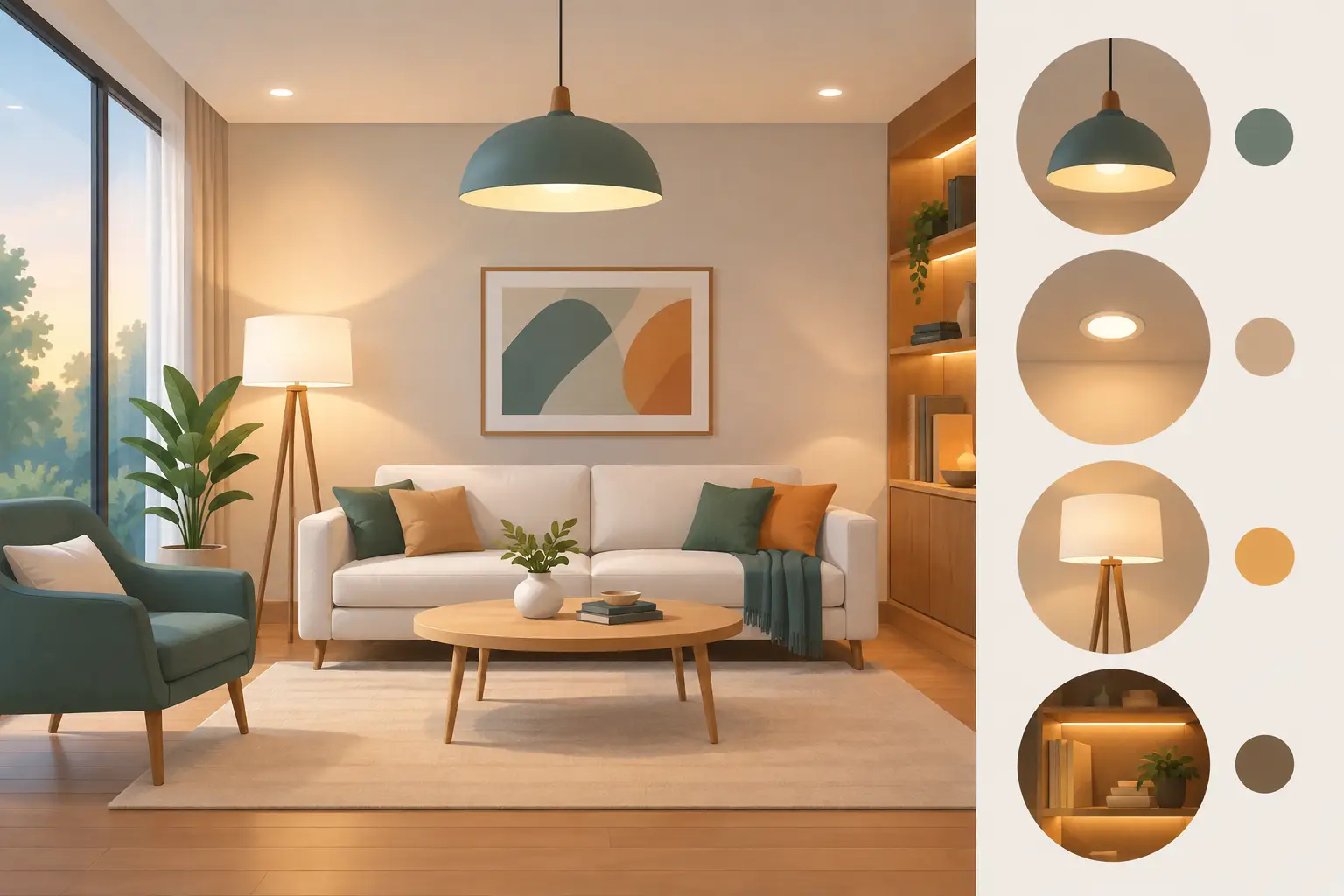
A room can have beautiful finishes, thoughtful furniture, and plenty of square footage yet still feel unfinished when the lighting is flat, harsh, or difficult to control. This residential lighting design guide focuses on the decisions that make a home feel comfortable at breakfast, productive during the workday, welcoming at dinner, and calm at night.
Good lighting is not about adding the most fixtures. It is about putting the right light in the right place and making it easy to use. When lighting is planned alongside the home’s architecture, furnishings, window treatments, and daily routines, it quietly supports the way people actually live.
Start With How Each Room Will Be Used
Before choosing fixtures, consider what happens in the room from morning through evening. A kitchen may be a place for cooking, homework, casual meals, and entertaining. A great room may need bright light for cleaning, softer light for conversation, and focused light for reading. One switch setting cannot serve all of those moments well.
Think about who uses the room, what tasks occur there, and whether the room is used primarily during the day or after dark. Also consider sightlines. A fixture that looks attractive from one angle can create glare from a sofa, dining chair, or bed.
Natural daylight belongs in the plan, too. Large windows can reduce the need for electric light during the day, but direct sun can also make screens difficult to see and make rooms feel overly bright. Coordinated motorized window treatments can help manage glare and privacy while preserving the natural light that makes a home feel open.
Build Every Room With Layers of Light
The most inviting rooms use more than one type of light. Each layer has a job, and together they create flexibility without visual clutter.
Ambient Light Creates a Comfortable Base
Ambient lighting provides the general illumination that lets people move comfortably through a room. This might come from recessed fixtures, a decorative ceiling fixture, indirect lighting, or a combination of sources. The goal is even, comfortable coverage, not maximum brightness.
Recessed fixtures are useful when a clean ceiling line matters, especially in kitchens, hallways, and open-concept living spaces. Their placement should follow the room’s layout, not a simple grid. Fixtures set too close to walls can create harsh scallops; fixtures placed without regard for furniture may leave the seating area in shadow.
Task Light Makes Daily Activities Easier
Task lighting puts useful light exactly where work happens. Under-cabinet lighting makes food preparation easier without casting shadows from overhead fixtures. A reading lamp beside a favorite chair reduces eye strain. Focused vanity lighting helps with grooming more than a single ceiling fixture ever could.
In kitchens, task lighting deserves special attention. Countertops, sinks, islands, and cooking areas all benefit from dedicated illumination. Decorative pendants over an island can add character, but they should not be expected to light the entire workspace on their own.
Accent Light Adds Depth and Character
Accent lighting directs attention to the details that give a home personality: artwork, shelving, a fireplace surround, architectural texture, or a carefully chosen display. It is often the difference between a room that is merely bright and one that feels considered.
Accent light should be restrained. Too many focal points compete with one another, while a few intentional highlights create visual depth. Dimming is especially valuable here, since accent lighting usually works best at a lower level than ambient lighting.
Choose Light Color and Brightness With Care
Lighting specifications can feel technical, but two decisions have an immediate effect on comfort: color temperature and brightness.
Color temperature is measured in kelvins. Lower numbers produce warmer, softer light, while higher numbers appear cooler and crisper. Many living spaces feel most natural around 2700K to 3000K. A warmer setting is often welcoming in bedrooms, family rooms, and dining areas. Kitchens, bathrooms, laundry rooms, and home offices may benefit from a slightly clearer white light, depending on the finishes and the work being done.
Consistency matters more than choosing one number for the entire house. A sudden shift from warm light in a hallway to very cool light in an adjacent room can feel disconnected. The right approach is usually a coordinated range, with small adjustments based on each room’s purpose.
Brightness should be planned in layers rather than judged by a single wattage number. LED fixtures use less energy than older lamps, so wattage alone no longer tells the full story. Look at lumens, beam spread, fixture location, and dimming range. A room with several well-placed, dimmable sources will feel more useful than one dominated by a very bright central fixture.
Make Control Simple Enough to Use Every Day
A well-designed lighting system should not require a lesson every time someone enters a room. The best controls feel obvious: a wall keypad near the entry, a familiar dimmer where it is needed, and simple options that match everyday routines.
Lighting scenes are particularly helpful in rooms with multiple uses. A “Cooking” setting can brighten work surfaces. “Dinner” can soften the room while keeping the table comfortably lit. “Evening” can leave a gentle path of light through the main living areas. The value is not novelty. It is being able to set the room correctly with one touch instead of adjusting several switches.
Smart control can also support schedules. Exterior and entry lighting can follow sunset and sunrise, while indoor lights can gently transition through the evening. The right level of automation depends on the household. Some homeowners want a few reliable scenes; others prefer broader whole-home coordination. Both approaches can be intuitive when the system is designed around real habits.
Plan Room by Room, Not Fixture by Fixture
A residential lighting design guide should account for the distinct needs of each space. Kitchens need task light and glare control. Bathrooms need clear, even illumination at the mirror. Bedrooms benefit from soft bedside control and low-level light for nighttime movement. Hallways and stairs need safe, comfortable navigation without feeling overlit.
In a home office, place lighting so it supports the work surface without reflecting in a monitor. A combination of indirect room light and a focused desk lamp often works better than an overhead fixture alone. For media rooms, keep fixtures away from screen reflections and use dimmable, low-level lighting that helps people move around without distracting from the picture.
Outdoor living areas also deserve a plan. Light should define steps, paths, seating areas, and cooking zones without spilling aggressively into neighboring properties or washing out the night sky. Warm, shielded fixtures usually create a more comfortable result than bright floodlighting.
Coordinate Lighting Early in New Builds and Renovations
The best time to plan lighting is before drywall, cabinetry, and finish selections lock the project into place. Early coordination gives the design team room to position fixtures around beams, vents, ceiling details, furniture plans, and artwork. It also makes it easier to provide power and low-voltage infrastructure where future controls, shades, and integrated systems may need it.
For renovations, a thoughtful design is still possible, but the available paths for wiring and the existing electrical layout may shape the options. Wireless controls can be useful in retrofit projects, especially where opening walls is not practical. However, a dependable wired foundation can be preferable in major renovations and new construction, where long-term reliability and clean installation are priorities.
This is also the time to confirm dimming compatibility. Not every LED fixture, driver, bulb, and dimmer works well together. Poorly matched components can cause flicker, limited dimming range, buzzing, or lamps that do not turn fully off. Professional design and installation help avoid those frustrating details before they become part of daily life.
Avoid the Most Common Lighting Mistakes
The first mistake is relying on one ceiling fixture to do everything. It rarely provides flattering, useful light across a whole room. The second is selecting decorative fixtures without considering their output, mounting height, or view from seated positions.
Another common issue is treating every room as equally bright. Comfort comes from contrast and control. A dining room should not need the same light level as a laundry room, and a late-night hallway should not feel like a workspace.
Finally, do not wait until the end of the project to think about controls. If lighting, shades, audio, and the home’s connectivity are planned together, the finished space is easier to use and cleaner in appearance. Tri-County Technology helps homeowners and builders turn those decisions into systems that feel natural from the first day in the home.
The right lighting plan does more than show off a room. It gives a home a calmer rhythm: clear light when attention is needed, softer light when the day slows down, and simple control that lets every space feel ready for the moment.


No responses yet