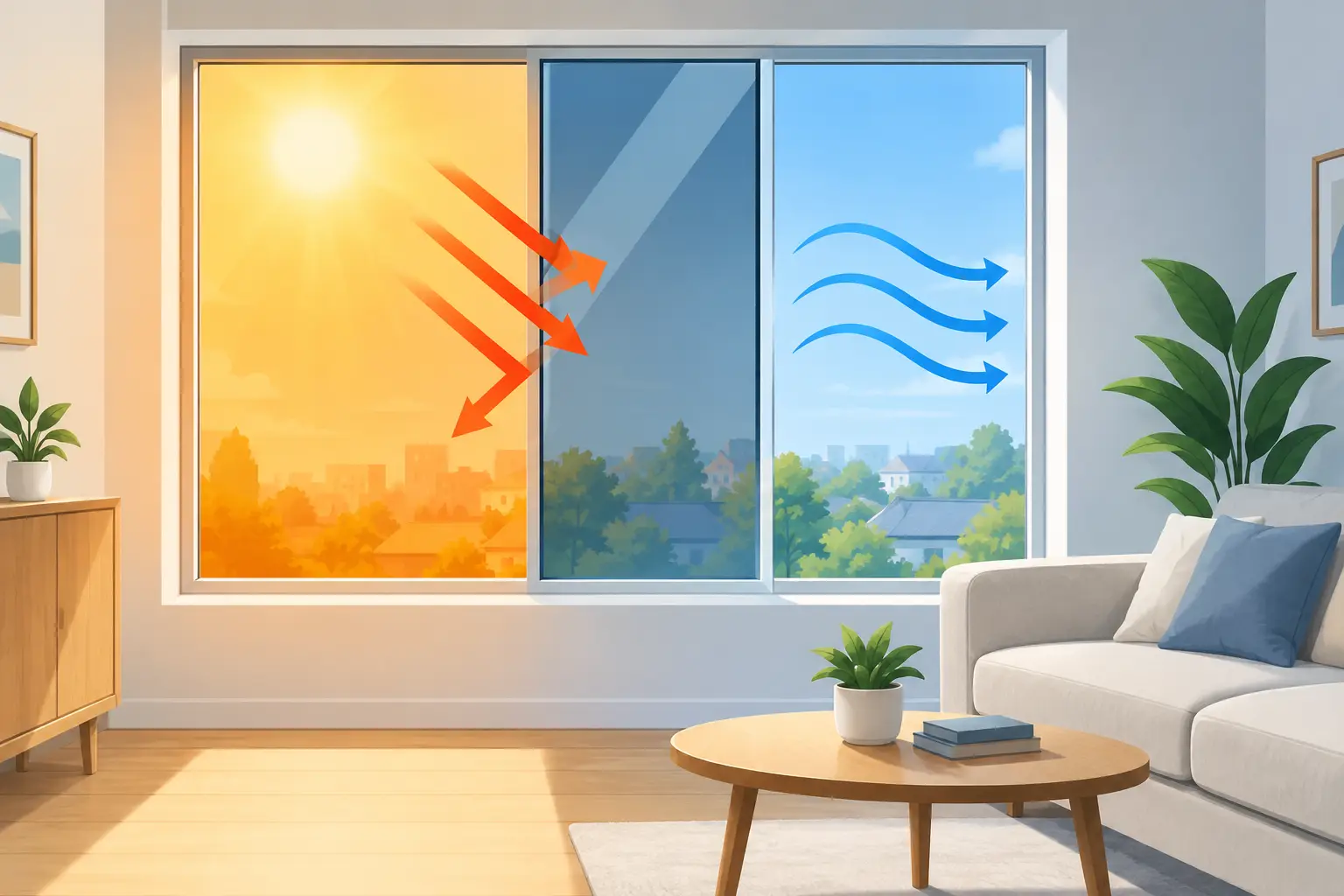
A west-facing room can feel uncomfortable long before the thermostat says there is a problem. The sun hits the glass, floors and furnishings warm up, glare takes over the TV, and the air conditioner works harder to keep up. So, can window film reduce heat? Yes. The right film can noticeably reduce solar heat gain through existing windows, especially in rooms with long afternoon sun exposure.
Window film is not a substitute for insulation, proper HVAC design, or high-performance windows. It is, however, a practical upgrade for homeowners who want better comfort without the cost and disruption of replacing every window. The results depend on the glass you have, the direction the windows face, the film selected, and how the space is used.
Can Window Film Reduce Heat From Sunlight?
Solar window film works by managing the energy that passes through glass. Depending on the product, it can reflect, absorb, or selectively block a portion of the sun’s infrared heat while still allowing visible light into the room. Many films also filter nearly all UV rays, which can help protect flooring, artwork, fabrics, and furniture from fading.
The key measure is solar heat gain. This refers to how much of the sun’s energy enters through a window and becomes heat indoors. A quality solar-control film lowers that amount. In a sunny room, that can mean less radiant heat on the couch, fewer hot spots near windows, and a more even temperature from one side of the room to the other.
The improvement can be meaningful, but it is not identical in every home. Film has the greatest impact where the problem is direct sun through glass: large patio doors, tall living-room windows, glass-heavy offices, and rooms facing south or west. If a room is hot because the attic lacks insulation, ductwork is undersized, or air circulation is poor, window film may help but will not solve the entire issue.
What Window Film Can Improve
Comfort is usually the first benefit homeowners notice. A room that once felt harsh and overheated in the afternoon can become easier to use throughout the day. Reduced glare can also make a major difference in media rooms, home offices, and open living spaces where screens compete with sunlight.
Film may also reduce cooling demand. By limiting solar heat before it enters the home, the air conditioner has less heat to remove. That can lower energy use during warm weather, although the exact savings depend on window area, local weather, shading from trees, thermostat settings, and the efficiency of the HVAC system.
There is a winter trade-off to consider. In Northeast Ohio, some homeowners welcome solar warmth through south-facing windows during colder months. A more reflective or darker film can reduce that beneficial winter heat gain along with the summer heat. The goal is not simply to choose the darkest film. It is to select a product that fits the orientation of the glass, the home’s design, and the way the room is used year-round.
Choosing the Right Film Matters More Than Choosing a Dark Film
Not all window film is designed for the same result. Some products prioritize heat rejection, while others focus on privacy, decorative appearance, glare control, or UV filtering. A film that looks nearly clear can still provide significant solar control, which is often a better fit for homeowners who want to preserve natural light and the appearance of their windows.
Visible light transmission is one of the most noticeable differences. Lower transmission means a darker window and less daylight indoors. That may be appropriate for a bright theater space or a west-facing room with intense glare, but it can make other rooms feel dimmer than expected. A lighter, spectrally selective film often provides a balanced result by rejecting a substantial amount of heat without making the glass look heavily tinted.
Glass type matters as well. Single-pane, double-pane, tempered, laminated, and low-emissivity windows react differently to absorbed heat. Applying the wrong film to certain insulated glass units can increase thermal stress and may affect a manufacturer warranty. Professional evaluation is worth the time, particularly for large custom windows, older glass, or windows with existing coatings.
A good recommendation should account for more than a product sample held against the glass. It should consider the direction of the window, size of the opening, interior finishes, exterior shading, and whether preserving views and daylight is a priority.
Window Film vs. Motorized Shades
Window film and motorized window treatments address the same comfort problem in different ways. Film is always working. Once installed, it quietly reduces solar gain, UV exposure, and glare without requiring daily adjustments. It is especially useful where a clean, minimal look is important and homeowners do not want window coverings blocking a view.
Motorized shades offer more control. They can lower automatically during the hottest part of the afternoon, open to welcome morning light, and close for privacy in the evening. With the right fabric, shades can significantly reduce glare and help manage heat while adding softness and style to a room.
For the strongest result, many homes benefit from both. A solar film can reduce the baseline heat load at the glass, while automated shades respond to changing sun angles and the needs of the room. In a living area, for example, shades can lower during direct glare and raise again when the sun moves, all without anyone needing to stop what they are doing.
This combination is particularly useful in homes with large windows and open floor plans. The system can support comfort without making the space feel closed off or cluttered. It also helps protect electronics, finishes, and furnishings from prolonged direct sunlight.
When Replacement Windows May Be the Better Answer
Window film is a retrofit solution, not a cure for failing windows. If you feel drafts around the frame, see condensation between panes, notice damaged seals, or have aging single-pane windows throughout the home, replacement may deliver more complete benefits. Modern insulated windows can improve comfort, sound control, and overall energy performance beyond what film alone can provide.
That does not mean replacement is always necessary. Many homes already have structurally sound double-pane windows but still struggle with afternoon heat and glare. In those cases, film can be a cost-conscious way to improve the experience of a room without turning a comfort upgrade into a major construction project.
It is also worth separating hot glass from a hot room. If the room becomes uncomfortable only when the sun is shining directly through specific windows, solar control is a sensible place to start. If the issue continues after sunset or affects the entire home, the answer may involve insulation, HVAC performance, air balancing, or window condition.
A Smarter Way to Plan a Comfort Upgrade
Start by identifying when and where the discomfort happens. Is the room hottest from 2 to 6 p.m.? Does glare prevent you from using the television or computer? Are the windows west-facing? Does the space cool down quickly once the sun moves? These details point toward the right solution.
Then consider how you want the room to function. A home office may need clear views and reduced screen glare. A family room may benefit from automated shades that adjust around entertainment and daily routines. A glass-heavy great room may call for subtle solar film plus window treatments that can operate on a schedule.
At Tri-County Technology, comfort-focused home technology is designed to feel simple in daily life. Motorized window treatments can be planned as part of a new build, renovation, or retrofit, with controls that are easy to use and dependable over time.
The best heat-control upgrade is the one that solves the actual problem without taking away what you enjoy about the space. When sunlight is managed thoughtfully, your home can stay brighter, more comfortable, and easier to live in through every season.


Comments are closed