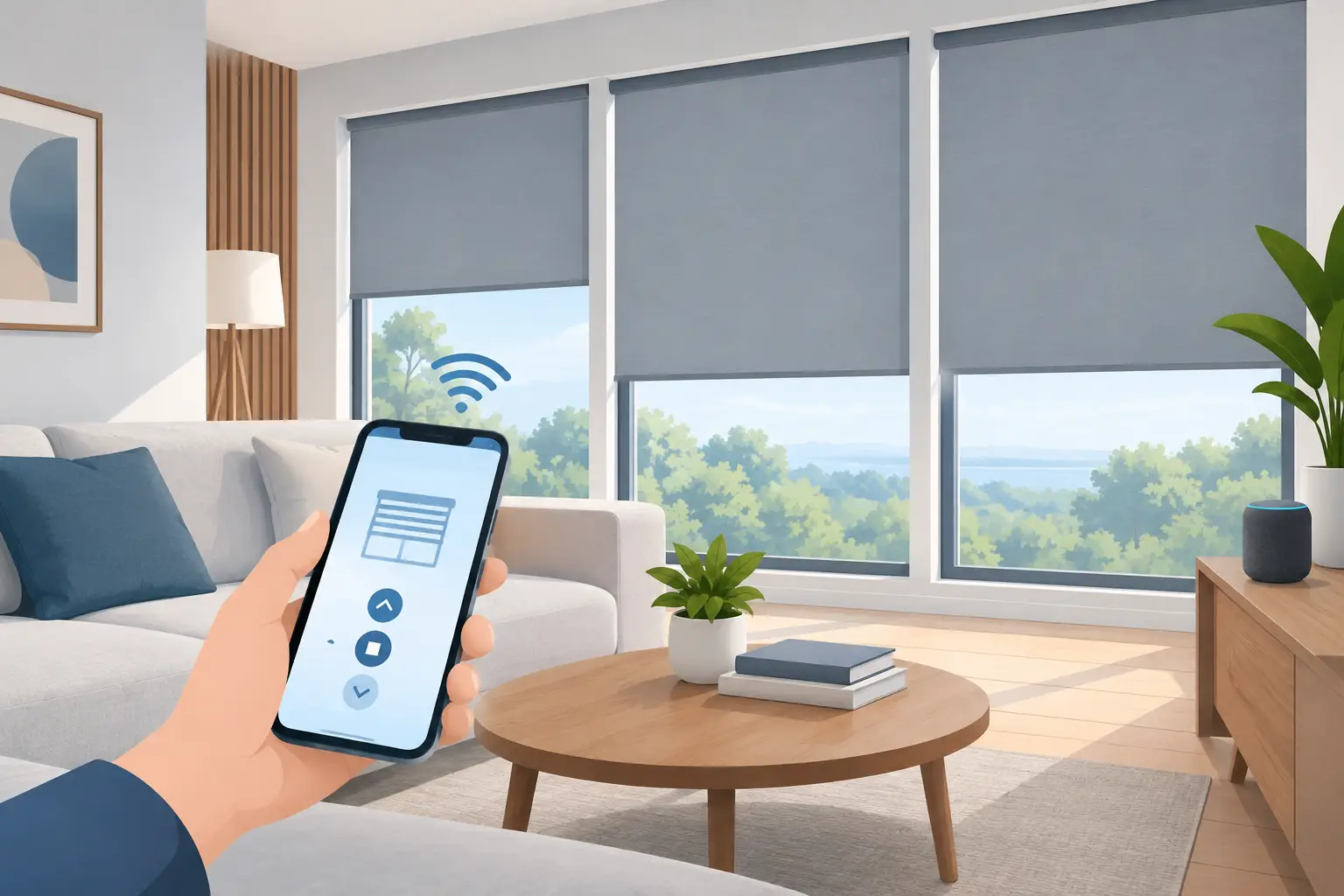
The best answer to how to automate window shades is not simply to add a motor. It is to create a window-treatment system that responds naturally to the way your household lives: raising with the morning light, reducing afternoon glare, and closing when you are ready to settle in. Done well, automated shades disappear into the routine. You use them when you want to, and they handle the repetitive moments without asking for attention.
For homeowners building, renovating, or improving an existing room, the choices can feel larger than expected. Power, fabric, window shape, control method, and installation details all affect the finished experience. A little planning upfront helps ensure the shades look refined, operate reliably, and remain easy for everyone in the home to use.
Start With the Experience You Want
Before choosing a motor or control app, think room by room. A bedroom may need room-darkening shades on a schedule that respects a different wake-up time on weekends. In a family room, the priority might be managing bright late-day sun without losing the view. A home office may benefit from glare reduction during work hours, while still allowing soft daylight into the space.
This is where automation becomes more useful than a remote control alone. Presets can group several shades together and place them at the right position with one command. Schedules can follow predictable routines. Some systems can also respond to available daylight, although that approach should be planned carefully. A sun-facing room may need a different strategy in July than it does during an Ohio winter.
The goal is not to move every shade at every possible moment. It is to make the common moments easier: wake-up, departure, movie time, afternoon sun, and evening privacy.
Choose the Right Way to Power Motorized Shades
Power is one of the first practical decisions when you automate window shades. Most residential projects fall into three categories: rechargeable battery power, replaceable battery power, or low-voltage wired power.
Battery-operated shades are often a strong choice for retrofit projects because they avoid opening walls or running new wiring. They can work especially well for a modest number of accessible windows. The trade-off is maintenance. Battery life varies based on shade size, fabric weight, use frequency, and temperature, so occasional charging or replacement is part of ownership.
Hardwired low-voltage shades are usually the cleanest long-term option for new construction and major renovations. Wiring can be concealed before drywall, leaving the finished window area free of charging ports, visible cords, and repeated battery upkeep. They are particularly practical for tall windows, large shade groups, and hard-to-reach locations.
Solar charging accessories can extend the time between battery charges in suitable windows, but they are not a universal answer. Their performance depends on window orientation, exposure, and whether the charging panel fits the design of the treatment. A professional site review can identify where each power option makes the most sense instead of forcing one approach throughout the home.
Match the Shade Style to the Room
Automation works with more than one shade style. Roller shades offer a clean, modern look and can be specified in fabrics ranging from light-filtering to room-darkening. Roman shades bring a softer, more tailored appearance. Cellular shades can support temperature comfort, while drapery tracks provide a fuller, more architectural finish for larger openings.
The fabric matters as much as the motor. A light-filtering material softens harsh daylight while preserving a bright room. A blackout fabric is better for bedrooms, media spaces, and windows exposed to early morning sun. Solar screen fabrics can reduce glare and heat while maintaining an outside view, though openness level changes how much detail remains visible.
It depends on what you want the room to do. A beautiful fabric that does not provide enough glare control will be frustrating in a home office. A room-darkening treatment may be perfect for sleep but feel too enclosed for a kitchen. Looking at real fabric samples in the actual room is worth the time because daylight changes color and transparency throughout the day.
Consider Window Shape and Hardware Early
Large windows, corner windows, French doors, and unusually deep trim all require closer attention. A motorized shade needs appropriate clearance, stable mounting, and a properly measured opening. The goal is a finished treatment that looks intentional, not like an accessory added after the room was complete.
For new builds, coordination with the builder, electrician, and finish teams helps protect sightlines and allows wiring to be placed before walls are closed. For an existing home, careful measurements and mounting options can still produce a clean result without turning the project into a major disruption.
Select Controls That Feel Natural
A well-designed shade system gives you more than one simple way to operate it. Wall keypads are useful at room entrances and beside the bed. Handheld remotes work well for familiar, immediate control. Mobile apps add convenience when you are elsewhere in the house or away from home. Voice control may be helpful for hands-full moments, but it should complement physical controls rather than replace them.
For most households, the best setup includes a few named scenes. “Good Morning” might raise bedroom shades gradually and open the main living areas. “Away” could set shades to a preferred daytime position. “Relax” might lower glare-control shades in the family room. Clear labels matter. If a guest or family member cannot understand the controls in a few seconds, the system is more complicated than it needs to be.
Integration with lighting, entertainment, and whole-home control can make these scenes feel more complete. For example, a media-room scene can lower shades and adjust the room for viewing with one simple command. The key is thoughtful programming. More options do not automatically create a better experience.
How to Automate Window Shades With Schedules
Scheduling is where motorized window treatments begin to earn their place in daily life. Rather than operating on a rigid clock alone, start with your household’s dependable patterns. Set bedroom shades to open at a gentle morning time on weekdays, then use a later schedule for weekends. Program west-facing shades to lower before the strongest afternoon glare reaches the room.
Avoid over-automating at first. A shade that moves at the wrong time can be more noticeable than one that requires a button press. Live with a few simple schedules for several weeks, then adjust them based on how the rooms actually feel. Seasonal updates may also be appropriate, especially in Northeast Ohio where daylight hours shift considerably across the year.
Many homeowners prefer schedules that stop short of fully raising or lowering every treatment. A partial position can preserve daylight while reducing glare, or provide privacy while still leaving a view at the top of the window. These small adjustments often make automation feel more comfortable and less mechanical.
Plan for Reliability, Not Just Features
Motorized shades should operate quietly, stop evenly, and respond consistently. That depends on more than the brand of motor. Reliable operation starts with proper sizing, secure mounting, correct power planning, and dependable wireless coverage where applicable.
Large shades and heavier fabrics need motors sized for the load. Windows that are difficult to reach need a power plan that does not turn routine charging into a chore. If shades are controlled wirelessly, the home network and system communication should be evaluated before installation, especially in larger homes or areas with dense construction materials.
Professional installation also protects the visual details. Clean alignment across a row of windows, concealed wiring where possible, carefully placed keypads, and programming that matches the family’s habits all contribute to a system that feels finished. Tri-County Technology approaches motorized window treatments as part of the home environment, not as a standalone gadget.
Know When a Retrofit Is Enough
You do not need to wait for a new build to add automation. Battery-powered shades and thoughtfully selected controls can make an existing bedroom, family room, or home office much more comfortable with limited disruption. This is often the right starting point for homeowners who want to solve a specific glare, privacy, or convenience issue.
A larger renovation is the better time to consider wired power, recessed pockets, or coordinated control across multiple rooms. If walls are already open, it is wise to consider future windows and likely furniture layouts, even if every shade is not installed immediately. Planning the infrastructure now keeps options open later.
The right system is the one you will enjoy using every day. Start with the rooms where sunlight, privacy, or hard-to-reach windows create the most friction, then build from there. A well-planned automated shade system makes the home feel calmer at the exact moments that matter most.


Comments are closed