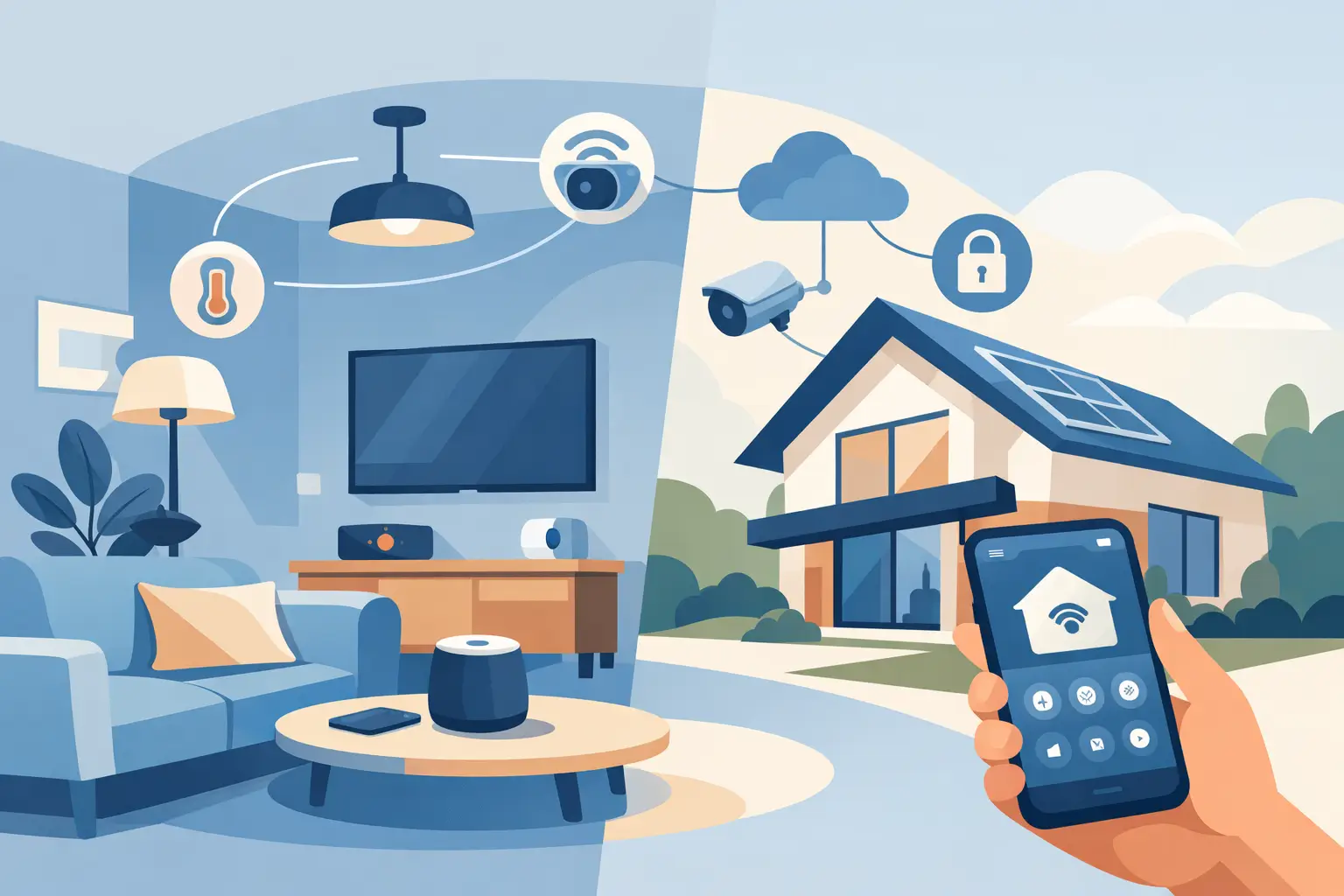
A home can have premium finishes, beautiful furniture, and plenty of smart devices yet still feel frustrating to use. The usual problem is not the technology itself. It is the lack of a plan for how everything should work together. Connected home design starts with daily life: the morning routine, the room where everyone gathers, the areas where Wi-Fi drops out, and the moments when you want the house to respond without asking for attention.
For a new build, the best time to make these decisions is before drywall covers the walls. For a renovation or an existing home, a thoughtful design can still bring order to scattered equipment, confusing apps, and unreliable connections. The goal is not to fill a home with gadgets. It is to create a dependable foundation that makes lighting, entertainment, shading, and connectivity easier to live with.
Start With Routines, Not Devices
A good connected home plan does not begin with a product list. It begins with questions about how the home is used. Does the family spend evenings in the media room? Is the kitchen the center of activity? Are there work-from-home spaces that need stable video calls? Does bright afternoon sun make a favorite room uncomfortable?
Those answers guide the design. In one home, the priority may be whole-home audio that follows a family from the kitchen to the patio. In another, it may be motorized window treatments that help manage glare and privacy in a two-story great room. A homeowner planning a theater may need the equipment and wiring placed where they can be serviced without becoming part of the room’s décor.
This lifestyle-first approach also prevents a common disappointment: buying several capable products that do not behave like one system. Individual devices may work well on their own, but daily use becomes harder when every room requires a different app, remote, or troubleshooting routine. Thoughtful planning gives each component a clear role and a simple way to control it.
Build the Connected Home Design Around a Strong Foundation
The technology homeowners notice most is often the technology they touch: a wall keypad, a tablet, a remote, or a phone. What makes those controls dependable, however, is usually behind the scenes. Structured wiring, properly placed network equipment, clean power management, and thoughtful equipment locations do much of the quiet work.
Structured wiring keeps options open
Wiring is one of the most valuable investments during construction because it is difficult and expensive to add later. Running the right low-voltage cabling to televisions, offices, wireless access points, audio locations, and future equipment areas gives a home flexibility as needs change.
A wired connection is especially useful where performance matters most. Streaming devices, gaming systems, office computers, and fixed television locations can benefit from the consistency of a hardwired network connection. Wi-Fi remains essential for phones, tablets, and mobile devices, but it should not be asked to carry every task when a wire is practical.
The exact wiring plan depends on the home. A compact ranch has different needs than a large custom build with multiple floors, outdoor living areas, and detached spaces. Planning for a few future pathways, extra cable runs, or accessible equipment space can make upgrades far simpler years from now.
Wi-Fi deserves a real design
Strong Wi-Fi is no longer a convenience reserved for a home office. It supports streaming, video calls, music, smart controls, and the many devices households use every day. Yet a single router placed near a utility room often cannot serve an entire home evenly.
A professional Wi-Fi design considers square footage, construction materials, floor plan, equipment placement, and outdoor coverage needs. Brick, plaster, metal, stone, and dense insulation can all affect signal strength. The answer is not always adding more equipment. Poor placement or too many competing wireless signals can create problems of their own.
The best result is coverage that feels unremarkable. A call stays clear as someone moves through the house. A movie does not pause to buffer. A device connects where it should without requiring a reset. That kind of reliability is planned, tested, and supported.
Give Every Room a Purposeful Experience
Connected systems work best when each room has an appropriate level of technology. Not every space needs the same controls or equipment. The primary bedroom may benefit from easy light and shade adjustments, while a family room may need a polished entertainment setup that is simple for guests to use.
Lighting and shades shape the feel of a room
Lighting control can make a home more comfortable without making it complicated. Instead of adjusting several switches one at a time, a single control can set the kitchen for cooking, lower the lights for dinner, or create a calmer evening setting. The right approach respects the homeowner’s habits rather than forcing a new routine.
Motorized window treatments add another layer of everyday comfort. They can reduce glare on a television, soften harsh afternoon sun, help protect furnishings from direct light, and make tall or hard-to-reach windows practical to manage. They are particularly useful in open rooms where manual treatments would be inconvenient or visually distracting.
There are trade-offs to consider. Motorized shades require careful measuring, fabric selection, power planning, and coordination with trim details. Lighting controls should be chosen with the number of loads, fixture types, and desired control points in mind. These are design decisions, not afterthoughts, which is why early coordination with builders, electricians, and designers matters.
Entertainment should not require a lesson
A well-designed television or projection system disappears into the room until it is time to enjoy it. Equipment can be placed neatly, wiring can remain out of sight, and controls can be kept intuitive. The goal is simple: choose what to watch, listen, or play without sorting through a pile of remotes.
Whole-home audio can extend that ease beyond one room. Music in the kitchen, a podcast in the office, and sound on the patio can be controlled independently or grouped when the occasion calls for it. Speaker placement, source selection, and volume control should fit the home’s architecture and the way people gather.
For a dedicated theater, the details matter even more. Screen position, projector placement, speaker layout, room lighting, seating distance, and equipment ventilation all affect the final experience. A high-end display alone cannot correct a poor room plan. Good design creates an enjoyable space before the first movie begins.
Plan for Change Without Overbuilding
Connected home design should account for the next several years, but it should not become an exercise in adding technology just because it is available. The most useful systems are the ones a household will actually use.
A growing family may want extra network capacity, flexible media areas, and wiring that supports future room changes. A downsizing homeowner may value fewer controls, straightforward operation, and dependable support. Builders may need a practical baseline package that can be tailored for each buyer. The right solution depends on the project, budget, and the people who will live with it.
It is also wise to think about serviceability. Equipment should be located where it can be reached, labeled clearly, ventilated properly, and organized cleanly. A beautiful installation should remain practical after move-in. When a system eventually needs an update, diagnosis, or adjustment, orderly infrastructure saves time and reduces disruption.
Professional Coordination Makes the Difference
Connected systems touch multiple parts of a project: framing, electrical work, drywall, millwork, window treatments, interior design, and finish installation. When those decisions happen in isolation, conflicts are easy to create. A television location may lack the right backing, a wireless access point may end up inside a cabinet, or a shade power location may be missed until the walls are finished.
Professional integration brings those details together early. It translates lifestyle goals into placement plans, wiring requirements, equipment locations, and simple controls. It also gives homeowners one knowledgeable point of contact when systems need attention rather than leaving them to sort through several manufacturers and installers.
Tri-County Technology approaches each project with that practical perspective: technology should support the home quietly, look clean, and work the way people expect. Whether the project is a custom build, a renovation, or an upgrade to an underperforming system, the right plan turns separate components into a home that feels easier from the first day.
The best connected home is rarely the one with the most technology. It is the one where the Wi-Fi works in the room you need, the lights respond naturally, the entertainment is ready when you are, and the details stay out of the way so life can take center stage.


Comments are closed