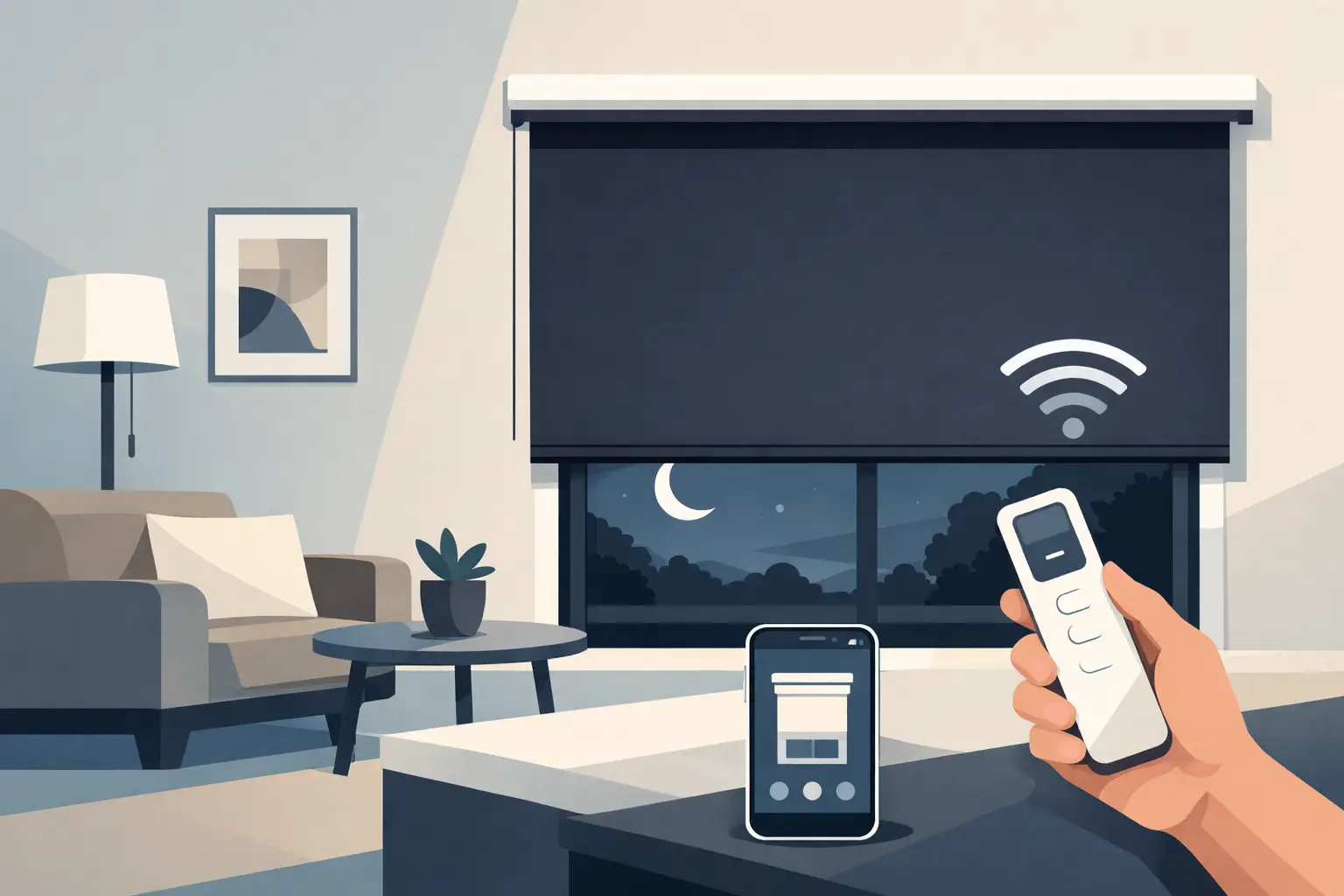
A bedroom can look finished, feel quiet, and still let in enough early-morning light to end a good night’s sleep. That is the practical problem behind this motorized blackout shades review. These shades are not simply a luxury upgrade. When specified and installed well, they give homeowners reliable darkness, more privacy, and an easier way to manage comfort throughout the day.
They are also more nuanced than the name suggests. The motor is only one part of the experience. Fabric selection, window coverage, mounting details, power planning, and controls all determine whether a shade performs beautifully or becomes an expensive version of a standard roller shade.
What motorized blackout shades do well
The strongest case for motorized blackout shades is convenience that quickly becomes part of a routine. A bedside keypad, wall control, handheld remote, phone app, or scheduled setting can lower shades without walking from window to window. In a primary bedroom, nursery, media room, or west-facing living space, that small change can have a noticeable effect on daily comfort.
They are especially useful for large or hard-to-reach windows. Tall windows above a stair landing, a bank of glass behind furniture, or windows in a vaulted room are difficult to cover consistently by hand. Motorization makes those windows practical to use instead of leaving them open because the manual treatment is inconvenient.
Blackout fabrics also help reduce glare and create a more controlled environment for sleep and screen viewing. They can contribute to energy efficiency by limiting direct sun during hot afternoons and adding an insulating layer at the glass. In Northeast Ohio, where a home may need help managing bright summer sun and cold winter windows, that added control can be worthwhile.
The quiet operation matters, too. Quality motors move at a measured pace with a soft sound, rather than announcing every adjustment. A professionally planned system should feel calm and unobtrusive – there when needed, out of the way when it is not.
The blackout expectation deserves a closer look
Here is the most important point in any motorized blackout shades review: blackout fabric is not always the same as a blackout room. A shade may block light through the material while still allowing a glow around the edges, especially on a bright morning.
A standard roller shade mounted inside the window opening usually leaves small gaps at the sides. That may be perfectly acceptable in a family room or office where glare control and privacy are the primary goals. It may disappoint someone expecting near-total darkness in a bedroom.
For stronger room darkening, the installation design matters. An outside mount that extends beyond the window opening can reduce side gaps. Fascia, side channels, drapery panels, or layered treatments can further limit light leakage. The right approach depends on the window trim, the room’s style, and how dark the room truly needs to be.
This is where a design conversation is more valuable than choosing a fabric sample alone. A beautiful dark fabric will not correct an undersized shade or an installation that leaves too much exposed glass.
Room-darkening versus true blackout
For many homeowners, “room-darkening” is the better description of what they need. It reduces light enough for comfortable sleep, movie watching, and privacy without requiring every edge to be sealed. It also allows more flexibility in how the treatment is mounted and styled.
True blackout performance is a more exacting request. It is most appropriate for people who sleep during daylight hours, children with early bedtimes, dedicated media spaces, or rooms affected by strong exterior lighting. Expect more attention to fit, coverage, and layered materials. The result can be excellent, but it should be designed intentionally rather than assumed.
Control options should match how you live
Motorized shades are easy to operate, but the best control method varies by household. A remote is simple and familiar. A wall-mounted control gives every family member an obvious place to adjust the shades. App control adds flexibility when you are away from home, while schedules remove the need to think about routine adjustments at all.
For many homes, a combination works best. A homeowner may use a wall control in the morning, rely on an automatic evening schedule, and keep app access for travel or an occasional change. The goal is not to add more ways to control the home. It is to make the preferred action available without making daily use feel complicated.
Integration with other home systems can also be useful when it solves a real habit. Shades can lower for a movie, rise gradually in the morning, or close during the part of the day when direct sun is strongest. Those settings should stay simple enough that everyone in the household understands them.
Power is a design decision, not an afterthought
Motorized shades can be battery-powered, plug-in, or hardwired. Each option has a place, and the best choice often depends on whether the project is a new build, renovation, or finished-home retrofit.
Battery-powered shades are often the cleanest retrofit option. They avoid opening walls and can look polished when planned carefully. Their trade-off is maintenance. Battery life varies based on shade size, fabric weight, use frequency, and temperature, so homeowners need to be comfortable recharging or replacing batteries periodically.
Plug-in power avoids battery maintenance, but it requires a nearby outlet and thoughtful wire management. A visible cord can undermine an otherwise clean installation, particularly on prominent windows.
Hardwired shades are typically the best long-term choice for new construction and major renovations. Power can be placed where it belongs before drywall is complete, leaving no battery cycle and no exposed cord. It requires coordination early in the building process, which is why custom home builders benefit from bringing motorized window treatments into the plan alongside other low-voltage decisions.
Appearance and fabric still come first
The motor should support the design, not dominate it. Modern blackout shades are available in fabrics that range from tailored and architectural to soft and textured. The best selection balances opacity, color, openness, and how the material looks in both daylight and evening light.
A dark fabric is not automatically the best blackout choice. Lighter fabrics can still have an opaque backing, and the exterior-facing side may be selected to create a more consistent appearance across the home. Sample the fabric at the actual window whenever possible. Light direction, wall color, and the view outside can change how a shade reads in a room.
Also consider the shade’s top treatment. A clean fascia can conceal the roller and create a finished line. In some rooms, that minimal look is exactly right. In others, drapery or a valance may better suit the architecture while improving light control at the same time.
Where the investment makes the most sense
Motorized blackout shades are usually most valuable where manual operation is inconvenient or where light control affects how a room is used. Bedrooms and nurseries are common choices, but they are not the only ones. Media rooms, home offices with afternoon glare, and tall-windowed living areas can all benefit.
They may be less compelling on one small, easily reached window that is rarely covered. In that case, a well-made manual blackout shade may deliver most of the practical benefit for less cost. Motorization earns its place when it improves consistency, reach, comfort, or the overall look of the room.
Cost also rises with larger shades, specialty fabrics, wired power, custom trim details, and integrated controls. That does not make those choices excessive. It means the project should be scoped around the rooms and outcomes that matter most rather than applying the same solution everywhere.
Our motorized blackout shades review verdict
Motorized blackout shades are a worthwhile home upgrade when the system is designed around the room, not just selected from a catalog. They offer meaningful comfort, refined convenience, and better control of daylight, but they cannot guarantee a pitch-black room unless the mounting and side-light details support that goal.
For homeowners planning a renovation or new build, early coordination is the difference between a clean, dependable installation and a last-minute compromise. Tri-County Technology approaches these projects with that practical mindset: choose the right coverage, plan power carefully, and keep controls simple enough to feel natural from the first day. The best shade system is not the one with the most features. It is the one that quietly makes the room more comfortable every time the sun comes up.
Comments are closed